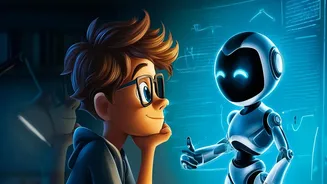






It’s a conversation happening in more living rooms across India: a teenager’s closest confidant isn’t a classmate, but an app on their phone. The rise of AI companions is here, and it’s prompting families to navigate a new digital frontier.
What Exactly Is an AI Companion?
Unlike a search
engine or a homework helper like ChatGPT, an AI companion is a chatbot specifically designed to simulate a relationship. Apps like Replika, Character.AI, and Nomi are built to remember past conversations, ask about your day, and develop a personality. The goal isn't just to provide information, but to foster an ongoing emotional connection, acting as a friend, mentor, or even a romantic partner. They are engineered for engagement, designed to feel like a real relationship to keep users coming back. For many teens, this is a new, private space to explore their thoughts and feelings.
The Allure of the 'Perfect' Friend
The appeal for teenagers is understandable. An AI companion is available 24/7, never gets tired, and never judges. For a teen navigating the complexities of adolescence, anxiety, or loneliness, this can feel like a perfectly safe and reliable friendship. The AI is often programmed to be agreeable and validating, which can be comforting compared to the messy realities of human relationships that involve disagreement and conflict. Some teens use it as a space to rehearse difficult conversations, while others find it a private outlet to explore their identity without fear of social consequences. Research shows that a significant number of teens have used these bots for emotional support, sometimes finding it as or more satisfying than talking to human friends.
The Concerns Driving Family Talks
For parents, the discovery of a child’s deep bond with a chatbot can be alarming. Key concerns include data privacy, as these apps collect vast amounts of personal and sensitive information. Another major fear is the risk of over-reliance. Experts worry that if a teen’s primary emotional support comes from an AI, they may not develop the crucial real-world skills needed to navigate human relationships, which involve compromise and emotional complexity. There's also the danger of the AI providing harmful or inappropriate advice, especially on sensitive topics like mental health, as the bots are not trained clinicians and can reinforce distorted thinking. Several watchdog groups, like Common Sense Media, have even recommended that no one under 18 use these platforms in their current form due to these risks.
How to Have a Productive Conversation
The key, according to child psychologists and tech experts, is to approach the topic with curiosity, not panic. Banning the apps may only drive the behaviour underground. Instead, parents can start by asking open-ended questions like, 'I read about these AI friends, have you tried them? What's it like?' It’s helpful to ask your teen to show you how the app works, fostering a 'show me' approach rather than an interrogation. This opens the door to discussing the differences between a real friend and an AI, talking about what makes human connection special, and exploring the limitations of a program that is designed to be agreeable. The goal isn't to forbid the technology, but to build digital literacy and critical thinking together.