




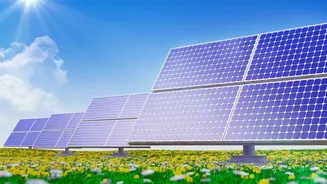
As India chases ambitious renewable energy targets, a significant hurdle has emerged: land. With space at a premium, the country is now turning to an innovative solution that allows it to generate power and grow food on the very same land.
The Great Land Dilemma
India has set
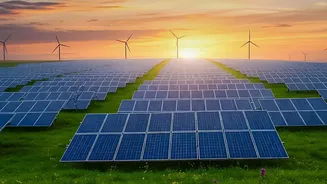
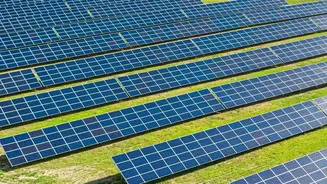
a monumental goal of achieving 500 gigawatts (GW) of non-fossil fuel energy capacity by 2030, with solar power forming the backbone of this transition. However, conventional, large-scale solar farms are land-intensive, often requiring about four acres to produce one megawatt (MW) of power. In a densely populated country where land is a finite and fiercely contested resource needed for agriculture, housing, and industry, this presents a major challenge. The push for clean energy has created a direct conflict with the need for food security, raising concerns that vast solar parks could displace fertile agricultural land.
A Dual-Purpose Solution Emerges
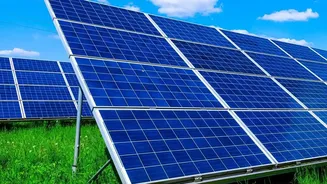
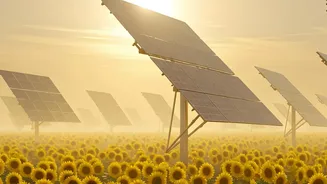
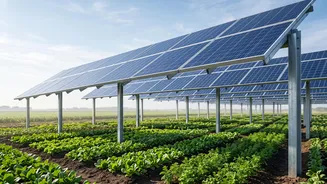
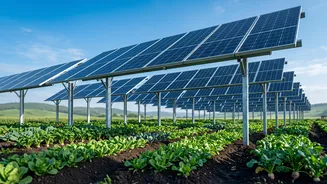
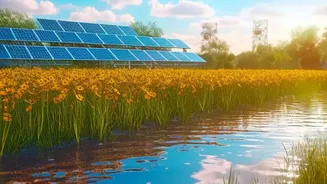
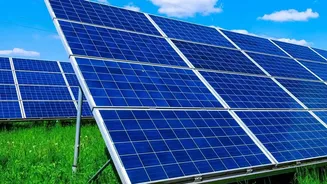
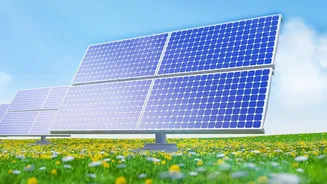
To solve this problem, India is championing 'agrivoltaics', a model that combines solar power generation with agricultural activities on the same piece of land. The concept is simple yet transformative: solar panels are installed on elevated structures, high enough to allow crops to be cultivated underneath. This dual-use approach, also called agrisolar, maximises land productivity and turns what was once a land-use conflict into a synergistic relationship. By bringing food production and electricity generation together, agrivoltaics offers a path toward efficient land use, greater farm resilience, and sustainable rural prosperity.
From 'Annadata' to 'Urjadata'
The primary driver behind this push is the government's flagship PM-KUSUM scheme (Pradhan Mantri Kisan Urja Suraksha evam Utthaan Mahabhiyan). This programme is designed to help farmers become energy producers—transforming them from 'annadatas' (food providers) to 'urjadatas' (energy providers). Under the scheme, farmers receive subsidies and financial assistance to install solar power plants on their land. They can use the generated electricity to power their own irrigation pumps, reducing their dependence on unreliable grid power and expensive diesel fuel. More importantly, they can sell any surplus power back to the grid, creating a stable, secondary source of income.
More Than Just Power
The benefits of agrivoltaics extend beyond energy and income. The shade from the overhead solar panels can be beneficial for certain crops, especially in hotter regions. This partial shading helps reduce heat stress, lowers water evaporation from the soil, and can lead to increased crop yields for shade-tolerant plants like leafy vegetables and some fruits. Studies and pilot projects have shown that agrivoltaics can improve land productivity, sometimes significantly. Furthermore, the water used to clean the solar panels can be collected and repurposed for irrigation, promoting water conservation.
Hurdles on the Horizon
Despite its immense potential, the widespread adoption of agrivoltaics faces several challenges. The primary obstacle is the high upfront cost; agrivoltaic systems are about 25–30% more expensive than conventional ground–mounted solar projects due to the need for elevated structures. There are also technical questions that need addressing. Not all crops are suitable for cultivation under solar panels; staples like rice and sugarcane, for example, have not been found suitable in initial studies. Since over 85% of India's farmers are small or marginal landholders, the policy must be carefully designed to work for them without compromising agricultural productivity. As most projects in India are still at the pilot stage, more research is needed to understand the long–term effects on different crops and soil health.