





The Annual Problem of Crop Waste
Across North India, the end of the harvest season often marks the beginning of a severe pollution crisis. Farmers, needing to clear their fields quickly and cheaply for the next crop, resort to burning millions of tonnes of leftover paddy straw and stubble.
This practice releases vast clouds of smoke containing harmful pollutants like carbon monoxide, methane, and particulate matter, contributing significantly to the toxic haze that chokes cities and rural areas alike. The environmental and health costs are immense, leading to respiratory illnesses and degrading soil quality over time. For years, this has seemed like an intractable issue, pitting agricultural timelines against public health. While solutions like specialised seeding machines exist, the sheer scale of the waste product has called for more comprehensive, value-driven alternatives.
Nature's Solution: What is Mycelium?
Enter mycelium, the unsung hero of the fungi kingdom. Mycelium is the intricate, thread-like root network of mushrooms that grows beneath the soil. Think of it as a natural, self-assembling glue. In nature, mycelium's job is to break down organic matter, and as it grows, its web of fibres (called hyphae) binds soil and plant debris together. Innovators have realised that this natural process can be harnessed. By feeding mycelium a diet of agricultural waste, such as chopped stubble, they can essentially 'grow' materials. The mycelium network expands, consuming the waste and binding it into a solid, cohesive composite material in a matter of days.
From Farm to Factory Floor
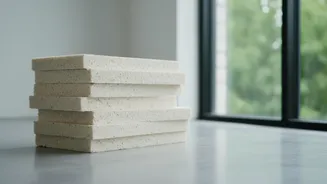
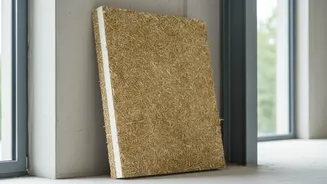
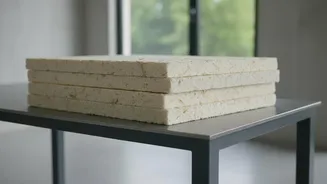
A handful of Indian startups are now pioneering this bio-fabrication process to create value from stubble. Companies like Dharaksha Ecosolutions and Mycocycle are at the forefront of this movement. The process, while scientifically sophisticated, is elegantly simple in concept. First, agricultural waste like rice straw is collected from farmers, providing them with an alternative source of income for something they would otherwise burn. The stubble is sterilised and then inoculated with a specific strain of fungal mycelium. This mixture is placed into moulds of a desired shape—in this case, flat panels. Over several days in a controlled environment, the mycelium grows through the stubble, binding it together. Once the panel has formed, it's gently heat-treated to stop the fungal growth, resulting in a rigid, lightweight, and completely natural material.
A Greener Material for Greener Buildings
The final product is a game-changer for the construction industry. Mycelium-based insulation panels offer excellent thermal and acoustic properties, outperforming many conventional synthetic materials like polystyrene foam (often known as thermocol). The tiny air pockets created by the mycelium network are highly effective at trapping air, which helps regulate indoor temperatures and reduce the need for heating and cooling. Furthermore, these panels are naturally fire-resistant and breathable, managing humidity without trapping moisture, which can prevent mould. Unlike their petrochemical-based counterparts, mycelium panels are made from renewable resources, sequester carbon during their growth, and are fully biodegradable, returning to the earth as compost at the end of their life.
Challenges on the Road to Adoption
Despite the immense potential, the path to widespread adoption is not without hurdles. The primary challenge is scale and cost-competitiveness. Startups need to scale up their production capacity to compete with the massive, established industries that produce traditional insulation materials. Convincing the construction sector—an industry often slow to adopt new materials—of the durability and long-term benefits of mycelium panels is another key step. Building robust supply chains for collecting stubble from thousands of farms and establishing standardised quality controls are also critical for growth. However, with the global market for sustainable materials expanding and a growing demand for green building solutions in India, the future for these fungal innovations looks bright.