



A Human Connection in the Cosmos
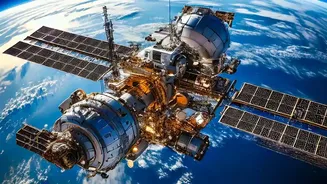
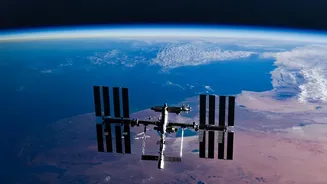
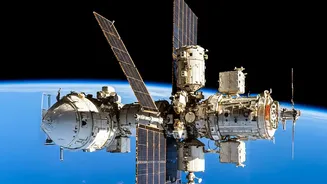
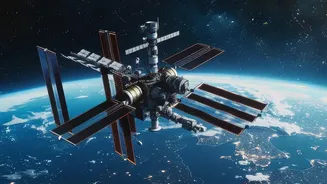
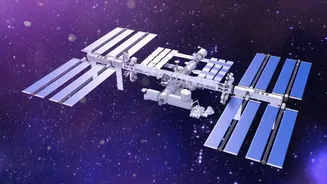
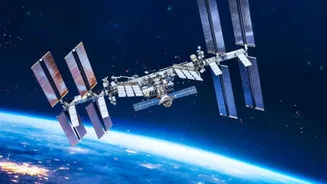
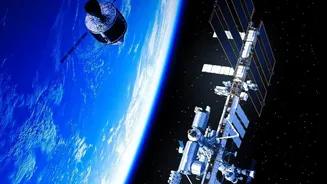
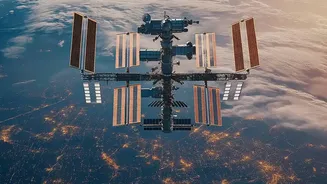
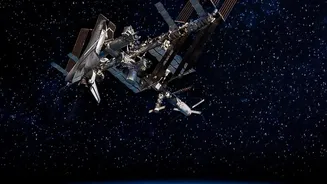
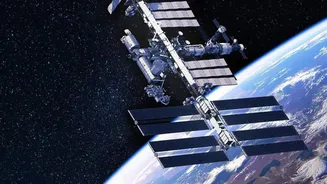
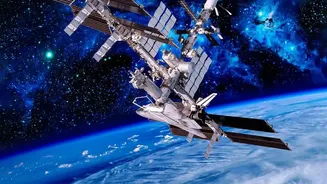
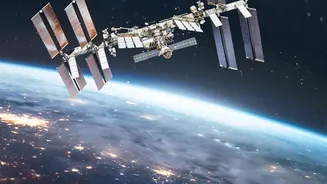
The International Space Station is a marvel of engineering and collaboration, a football-field-sized laboratory orbiting roughly 400 kilometres above Earth. It travels at a staggering 28,000 kilometres per hour, completing about 16 orbits of our planet
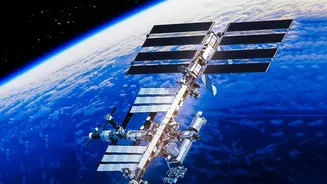
every single day. For over two decades, it has been continuously inhabited by astronauts conducting research that benefits us on the ground. Spotting it is a profound experience; a direct, visible link to humanity's presence in space. To the naked eye, it appears as a very bright, fast-moving point of light, like a plane but without blinking lights. Sometimes, it can outshine every other object in the night sky except for the Moon. This brightness isn't from its own lights, but from its massive solar arrays reflecting sunlight back to us.
The Magic of a Predicted Pass
So, how can you know when to look up? For the ISS to be visible, two conditions must be met: it needs to be flying overhead, and it must be doing so around dawn or dusk. During these times, the station is high enough to be bathed in sunlight while it’s dark on the ground, allowing it to reflect light and become visible. While its path covers over 90 percent of the world's population, you can't just look up at any time and expect to see it. This is where mobile apps come in. Using your phone's GPS and internal clock, these applications calculate the precise time, duration, and path of upcoming visible passes for your exact location. They take the complex orbital mechanics and turn them into simple, actionable alerts and sky maps.
Top Apps for a Perfect Sighting
Dozens of apps can help you spot the station, but a few stand out for their features and ease of use. NASA's official Spot The Station app is a fantastic starting point. Available for both iOS and Android, it provides a simple list of upcoming sighting opportunities, including direction, maximum height, and duration. It also offers push notifications to remind you a few hours before a pass is about to happen. For a more interactive experience, apps like SkyView or Star Walk use augmented reality (AR). You simply point your phone at the sky, and the app will overlay the station’s trajectory onto your camera view, showing you exactly where to look. Other popular choices include ISS Detector, which provides detailed pass information and can also track other satellites, and ISS Live Now, which not only predicts passes but also provides live video feeds from the station itself.
Tips for the Best Viewing Experience
Once you have your pass time from an app, the rest is simple. Find a location with a clear view of the sky, away from tall buildings or trees if possible. Head outside a few minutes early to let your eyes adjust to the darkness. Your app will tell you which direction the station will appear from—typically rising in the west—and where it will travel. The pass might only last for a few minutes, so be ready. Remember, you're looking for a steady, bright light moving silently and purposefully across the sky. You don’t need binoculars or a telescope; the station is easily visible to the naked eye. In fact, its speed makes it difficult to track with a telescope, though binoculars can enhance the view and even reveal its golden hue.