



The Enduring Appeal of Texture
An accent wall serves as a room's focal point, a canvas for expressing style and adding character. While a bold paint colour is a common choice, textured materials like wood and brick elevate this concept by engaging both sight and touch. They introduce
an architectural element that feels permanent and intentional, grounding the space and adding a layer of visual warmth that paint alone cannot replicate. Whether you aim for a cozy, rustic feel or a sleek, industrial vibe, these materials provide a rich backdrop that enhances furnishings and decor.
Wood Panelling: A Warm, Natural Embrace
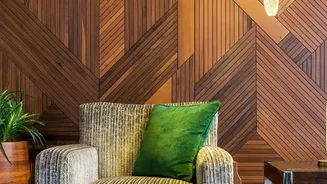
Wood panelling has a long and storied history, evolving from a practical insulator in stone castles to a symbol of status in Tudor and Elizabethan estates. After falling out of favour for a time, it has made a major comeback, shedding its dated reputation for a fresh, modern appeal. Today's options are incredibly versatile, ranging from the clean, horizontal lines of shiplap, popular in farmhouse and coastal designs, to the formal structure of board and batten, and the subtle grooves of beadboard. Reclaimed barnwood and modern slatted panels offer even more ways to bring this natural material indoors.
Why Go with Wood?
The primary draw of wood is the undeniable warmth and organic character it brings to a room. It can make a large space feel cozier and a minimalist room feel more layered and inviting. Wood is also stylistically versatile; it can be painted for a clean, Scandinavian look, stained to highlight its grain for a mid-century modern feel, or left raw for a rustic aesthetic. Certain applications, like vertical board and batten, can even create the illusion of height, making ceilings feel taller. From an acoustic standpoint, wood can also help absorb sound, making a room feel calmer and more comfortable.
Brick Veneer: Urban and Rustic Charm
Brick veneer offers the timeless, robust look of a true masonry wall without the immense weight and structural requirements. It consists of thin slices of real brick, which are applied to a wall much like tile. This makes it an ideal solution for adding the industrial charm of a loft or the historic feel of an old townhouse to a modern home. Available in a wide array of colours—from classic reds and earthy browns to whitewashed and charcoal grey tones—brick veneer can be adapted to suit numerous styles. It provides a rugged, textural quality that serves as a powerful visual anchor in any room.
The Case for Brick
Brick veneer is celebrated for its durability and low-maintenance nature. Made from the same fired clay as full bricks, it is resistant to fire, pests, and fading. Its textured surface is excellent at hiding minor scuffs and wear, making it a practical choice for high-traffic areas. A brick accent wall can serve as a stunning backdrop for a living room, a rustic headboard wall in a bedroom, or a character-filled kitchen backsplash. The material's inherent variations in colour and texture ensure that no two walls are exactly alike, lending a unique and authentic personality to the space.
Making the Choice: Wood vs. Brick
Choosing between wood and brick often comes down to the desired mood. Wood panelling generally imparts a feeling of warmth, comfort, and natural elegance. It's softer visually and physically. Brick, on the other hand, provides a harder, more industrial or historic edge. It offers a different kind of texture—one that is more rugged and raw. Consider your existing decor; wood pairs well with a variety of styles from modern to rustic, while brick excels in industrial, farmhouse, and traditional settings. Lighting is another factor, as the deep texture of brick creates more pronounced shadows than the smoother surfaces of most wood panels.
Installation and Cost Insights
Both wood panelling and brick veneer can be DIY-friendly projects, though professional installation is recommended for a flawless finish. In terms of cost, pricing varies widely based on the specific material and style. Generally, some simple wood panel options like MDF can be more budget-friendly, while high-end reclaimed wood can be more of an investment. Brick veneer typically falls into a mid-to-high price range, but is significantly more affordable than building a full structural brick wall. Faux brick panels made from other materials offer a more cost-effective alternative.