



From Vague Words to Vivid Worlds
Imagine this: a client sends you a one-paragraph brief for a new luxury perfume campaign. They want it to feel 'ethereal, inspired by ancient mythology, with a touch of urban grit.' In the past, this would trigger a multi-hour scavenger hunt across Pinterest,
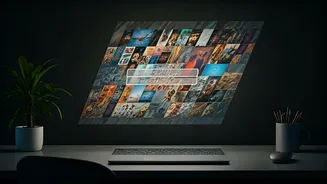
stock photo sites, and design archives to assemble a moodboard. Today, that same paragraph can be fed into a generative AI tool. Within minutes, you have a dozen unique, high-fidelity images capturing that exact aesthetic. This is the new reality of creative ideation. AI image generators like Midjourney, DALL-E 3, and Stable Diffusion are being adopted by designers, art directors, and marketers as powerful brainstorming partners, instantly translating abstract text into tangible visual concepts.
The Creative Co-Pilot Advantage
This isn't about replacing human creativity; it's about augmenting it. The primary benefit is speed. What once took a day of sourcing and curating can now be accomplished in a lunch break. This acceleration allows for rapid iteration. Don't like the first batch of images? Tweak a few words in your prompt and generate another set. This feedback loop helps creatives explore a wider range of possibilities than ever before, pushing them past their usual visual habits and clichés. Furthermore, it bridges the communication gap with clients. Showing a client an AI-generated moodboard provides a much clearer starting point for discussion than a collection of disparate images, ensuring everyone is aligned on the visual direction from the get-go and reducing costly revisions down the line.
Mastering the Art of the Prompt
The quality of the output depends entirely on the quality of your input. 'Garbage in, garbage out' still applies. Writing an effective text brief, or 'prompt', is the new essential skill. Forget single-word commands. The best prompts are descriptive and layered. Start with the core subject (e.g., 'A minimalist living room'). Then, add stylistic details and mood ('bathed in warm, afternoon sunlight, with a serene and calming atmosphere'). Incorporate specifics about composition and lighting ('wide-angle shot, cinematic lighting, shallow depth of field'). Finally, you can reference artistic styles or specific artists ('in the style of a Scandinavian design magazine photograph'). For instance, instead of 'futuristic car,' a better prompt would be: 'Sleek electric sports car on a rain-slicked neon-lit street in Tokyo, photorealistic, cinematic shot, reflections on the wet asphalt, anamorphic lens flare.' The more detail you provide, the closer the AI will get to your vision.
Your AI Toolkit for Visuals
While many tools exist, a few have become industry favourites for moodboarding. Midjourney, accessed through the chat app Discord, is celebrated for its artistic, often painterly, and highly stylised outputs. It excels at creating atmospheric and aesthetically beautiful images that are perfect for setting a tone. DALL-E 3, integrated into ChatGPT Plus and Microsoft's Bing Image Creator, is known for its incredible prompt adherence and ability to generate more literal, photorealistic, and coherent scenes. It's excellent when you need the AI to follow complex instructions precisely. Stable Diffusion is an open-source model that offers the most customisation, allowing users to train it on their own datasets for highly specific styles, though it requires more technical know-how. For most creatives, starting with Midjourney for artistic flair or DALL-E 3 for conceptual clarity is the best entry point.
The Human Element Is Still Key
Despite their power, these tools are not a magic button for good design. They are ideation engines, not strategists. An AI can generate a beautiful image, but it can't tell you if that image aligns with the brand's long-term goals, resonates with the target audience, or communicates the right message. That's where the human creative remains irreplaceable. The role of the designer is shifting from just a creator to a curator and director. Your job is to guide the AI, filter its outputs through your professional taste and strategic understanding, and then refine the chosen direction into a polished, final campaign. The AI provides the raw material; the creative provides the soul.