


Ladoo: The Essential Festive Sphere
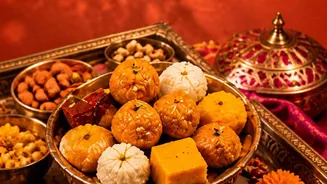
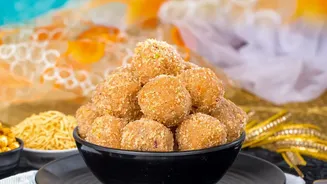
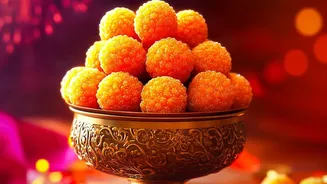
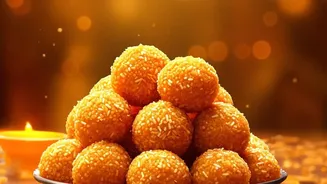
Arguably the most iconic Indian sweet, the ladoo is a mandatory presence during Diwali. These spherical treats come in numerous varieties, but two reign supreme: Besan Ladoo and Motichoor Ladoo. Besan Ladoo is made by slow-roasting gram flour (besan)
in ghee until it emanates a rich, nutty aroma, then mixing it with sugar and shaping it into dense, crumbly balls. Motichoor Ladoo, meaning 'crushed pearls', is made from tiny, deep-fried droplets of besan batter soaked in sugar syrup before being pressed together. The former offers a wholesome, melt-in-your-mouth texture, while the latter is soft, delicate and syrupy. Both are symbols of celebration and are often the first sweet offered to guests and deities.
Gujiya: The Sweet Crescent Dumpling
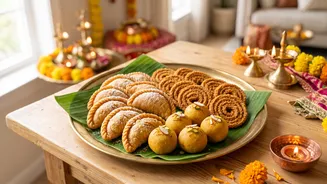
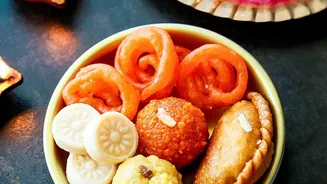
Known as Karanji in Maharashtra and Gujiya in North India, this crescent-shaped pastry is a festive delight. It features a crisp, flaky crust made from flour that encases a rich, sweet filling. This filling typically consists of sweetened khoya (reduced milk solids), desiccated coconut, semolina, and a fragrant mix of cardamom and chopped nuts like almonds and pistachios. The edges are often intricately crimped by hand, a testament to the care put into making them. Deep-fried to a perfect golden-brown, each bite offers a satisfying contrast between the crunchy pastry and the soft, aromatic filling. While strongly associated with Holi, gujiyas are also a popular treat during Diwali in many regions.
Barfi: The Simple, Versatile Diamond
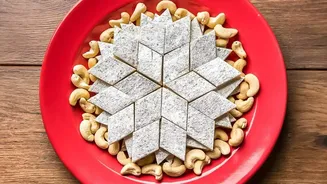
Barfi is a type of milk-based fudge that serves as a canvas for a wide array of flavours. Its name is derived from the Persian word for 'snow', alluding to its smooth, dense texture. The most basic form is made by condensing milk and sugar, but the variations are endless. Kaju Katli, a luxurious version made from cashew nuts, is perhaps the most famous and is often gifted in decorative boxes. Other popular types include Pista Barfi (pistachio), Badam Barfi (almond), and Coconut Barfi. Cut into diamonds, squares, or rectangles, these sweets are often adorned with a thin, edible silver leaf called 'vark'. Their relatively low moisture content also means they keep well, making them a practical and delicious part of the Diwali spread.
Jalebi: The Tangled, Syrupy Spiral
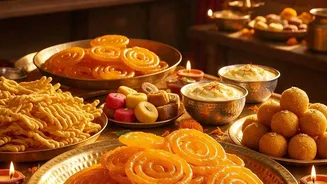
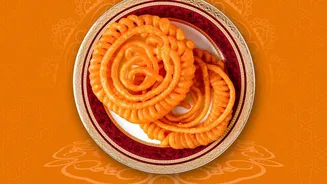
Instantly recognisable by its chaotic, spiral shape, Jalebi is a treat best enjoyed warm. It’s made from a fermented batter of flour, which is piped in swirling patterns directly into hot oil. Once fried to a crisp, the spirals are immediately plunged into a warm sugar syrup, often scented with cardamom, saffron, or rose water. This process gives jalebi its signature dual texture: a crispy exterior that yields to a chewy, syrup-filled centre. The slight tang from the fermented batter perfectly balances the intense sweetness of the syrup. Often paired with rabri (a thickened, sweet milk), jalebi is a comforting and indulgent sweet that brightens up Diwali mornings and evenings.
Chakli: The Savoury, Crunchy Spiral
To balance the array of sweets, every Diwali celebration needs its savoury counterparts, and Chakli is a star contender. Also known as Murukku in South India, its name means 'twisted' in Tamil, referring to its distinctive spiral shape. It is made from a dough of rice flour, gram flour, and sometimes other lentil flours. This dough is seasoned with spices like cumin, sesame seeds, and a hint of chilli before being extruded through a press into its signature shape and deep-fried until golden and crunchy. The result is a light, crispy, and utterly addictive snack that provides a much-needed savoury crunch amidst the festive sweetness.
Samosa: The Evergreen Triangular Treat
While enjoyed year-round, miniature, bite-sized versions of the samosa are a popular snack during Diwali gatherings. This iconic triangular pastry is typically filled with a savoury mixture of spiced potatoes and peas, though countless regional variations exist. The outer shell is made from a simple flour dough, which becomes wonderfully crisp and slightly flaky upon being deep-fried. Serving samosas hot with a side of tamarind chutney or mint-coriander chutney is a guaranteed way to please guests. Their hearty and familiar flavour provides a perfect savoury interlude, making them an indispensable part of the festive food landscape.