





Understanding the Complete System
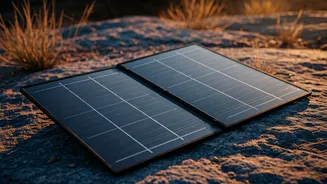
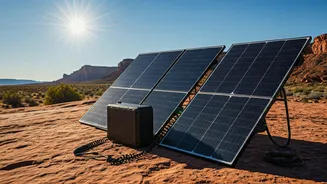
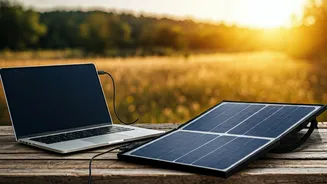
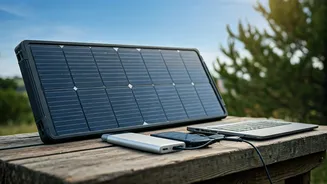
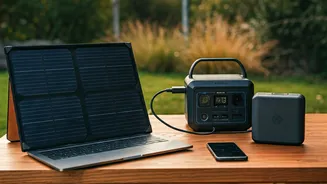
First, let's clarify what a 'portable solar panel system' really is. It’s not just the panel. A complete, functional setup has two core components: the solar panel itself, which captures sunlight, and a power bank or portable power station, which stores
that energy for later use. Think of the panel as the generator and the power station as the fuel tank. You cannot effectively charge your phone directly from most portable panels because the power output fluctuates with the sun's intensity. The battery provides a stable, consistent current that your sensitive electronics need.
How It All Works Together
The science is simple but effective. The solar panel is made of photovoltaic cells. When sunlight (photons) hits these cells, it excites electrons, creating a direct current (DC) of electricity. This DC electricity flows through a cable to your power station, charging its internal battery. The power station contains an inverter that can convert this stored DC power into the AC power needed for larger devices (like laptops using a three-pin plug) or deliver it as DC through USB ports for phones and tablets. This two-step process—capture and store—is what makes the system reliable, even when clouds temporarily block the sun.
Choosing Your Panel: Power in Watts
Solar panels are rated in watts (W), which measures their potential power output under ideal conditions. A small, 20W foldable panel might be enough to slowly top up a power bank over a sunny day, making it ideal for a backpacker charging just a phone. A larger, 100W or 200W panel can charge a high-capacity power station much faster, enabling you to run a small fan, a laptop, and multiple phones. For most weekend trips or treks, a panel between 20W and 60W is a good starting point. Remember, these ratings are based on perfect, direct sunlight. On a cloudy day, a 100W panel might only produce 20-30W, so it's wise to have a slightly larger panel than you think you need.
Choosing Your Battery: Capacity in Watt-Hours
The power station's capacity is measured in watt-hours (Wh). This tells you how much energy it can store. To figure out what you need, check the battery capacity of your devices. A typical smartphone has a battery of around 15-20Wh. A laptop might be 50-80Wh. A 100Wh power station could therefore charge your phone about 5-6 times or your laptop once. To calculate your needs, list the devices you want to charge and how many times you'll need to charge them. For example: a phone (20Wh x 2 charges) + a camera battery (10Wh x 2 charges) = 60Wh. In this case, a 100Wh power station would give you a comfortable buffer.
Essential Features to Consider
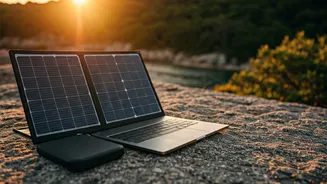
Beyond raw power, look at these features. Portability is crucial; foldable fabric panels are lightweight and pack easily, while rigid panels are more durable but heavier. Check for weather resistance—at least an IP65 rating is good for protection against dust and rain. Connectivity is also key. Ensure the power station has the ports you need: USB-A for older devices, USB-C with Power Delivery (PD) for fast-charging modern phones and some laptops, and a standard AC outlet for everything else. Some advanced models also include a car-style 12V socket, which can be useful for certain camping appliances.
Tips for Maximum Efficiency
To get the most out of your setup, you need to work with the sun. Always angle your panel to face the sun directly. The angle should change throughout the day for optimal charging. Keep the panel surface clean from dust, dirt, and bird droppings, as any obstruction reduces efficiency. Understand that charging will be fastest between 10 a.m. and 4 p.m. on a clear day. Finally, be realistic. A portable solar setup gives you freedom, but it’s not as fast or effortless as a wall socket. Plan your energy usage, charge the power station whenever the sun is out, and enjoy the independence it provides.