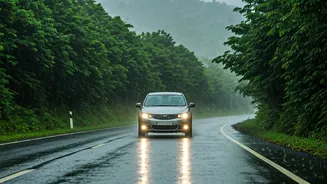











The Wisdom of an Earlier Start
The single most effective change you can make during the monsoon is to leave earlier. This isn't about beating traffic, but about giving yourself the gift of time. Rushing is the enemy of safe wet-weather driving. An earlier start allows you to drive
at a deliberately slower pace without feeling pressured. It gives you the mental bandwidth to be more observant, anticipate the actions of others, and handle unexpected hazards like a suddenly flooded underpass or a hidden pothole. It also means you won't be tempted to make risky manoeuvres, like sharp braking or sudden lane changes, which are significantly more dangerous on slick surfaces.
Your Car's Monsoon Health Check
Before the rain sets in, a pre-monsoon vehicle check is non-negotiable. First, inspect your tyres. They are your only connection to the road. Ensure they have adequate tread depth—at least 3mm is recommended for monsoon safety—to effectively channel water away and prevent skidding. Worn tyres are a primary cause of accidents on wet roads. Second, check your wiper blades. If they leave streaks or make noise, replace them. Clear visibility is priceless in a downpour. Finally, test all your lights: headlights, tail-lights, and indicators. In heavy rain, being seen is just as important as seeing.
The Physics of Wet Roads
Driving on wet roads dramatically alters your car's behaviour. Braking distances can increase by up to three times compared to dry conditions. To compensate, you must double your following distance from the vehicle in front. This gives you more space and time to react. Apply your brakes gently and progressively; jamming the brakes can cause the wheels to lock and the car to skid. Similarly, avoid sudden acceleration or sharp turns, which can easily break traction. Using low-beam headlights during the day will also significantly improve your visibility to other drivers.
Understanding Hydroplaning
Hydroplaning is one of the most dangerous rainy driving phenomena. It occurs when a layer of water builds up between your tyres and the road surface, causing a sudden loss of traction and control. It feels as if your car is floating. It's more likely to happen at higher speeds or when driving through standing water. If you feel your vehicle start to hydroplane, the most important thing is not to panic. Do not slam on the brakes or jerk the steering wheel. Instead, ease your foot off the accelerator and keep the steering wheel pointed in the direction you want to go. As the car slows, the tyres should regain contact with the road, and you will feel control return.
Navigating Waterlogged Roads
Indian cities are notorious for waterlogging. Never drive into standing water if you cannot gauge its depth. Just six inches of water can be enough to cause many cars to stall or lose control. A foot of water can float some vehicles, turning them into helpless boats. Furthermore, that murky water could be concealing massive potholes, open manholes, or other debris that can cause severe damage. If you must proceed through a puddle, do so slowly and steadily in a low gear. Afterwards, tap your brakes gently a few times to help dry the brake pads and rotors.