






The Gaganyaan Era: India in Orbit
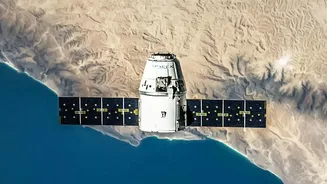
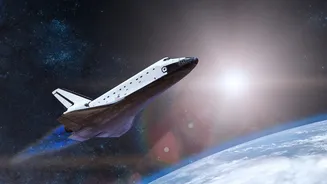
The cornerstone of India's immediate space ambition is the Gaganyaan programme, which aims to send Indian astronauts, or 'Gaganyatris', into Low Earth Orbit. After a series of uncrewed test flights, the first human spaceflight mission is currently targeted
for 2027. This mission will make India only the fourth country in the world to independently launch humans into space, a monumental achievement for national prestige and scientific capability. The four astronaut-designates are already undergoing extensive training for this historic flight. The programme is not just a single mission but the beginning of a sustained human spaceflight capability for the nation.
To the Moon, For Samples
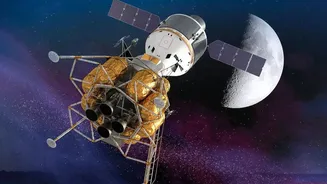
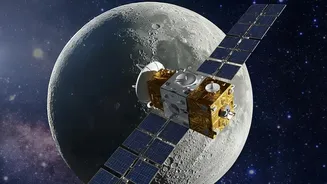
Building on the triumph of Chandrayaan-3, ISRO is planning its most complex lunar mission yet: Chandrayaan-4. Scheduled for around 2028, this ambitious mission aims to perform a soft landing, collect lunar soil and rock samples, and return them to Earth for analysis. This sample-return is a feat achieved by only a handful of nations and requires mastering multiple advanced technologies, including a lunar ascent and in-orbit docking. The mission will be instrumental in studying the Moon's geology and resource potential, particularly the water ice confirmed to exist in the south polar region.
Interplanetary Goals: Mars and Venus
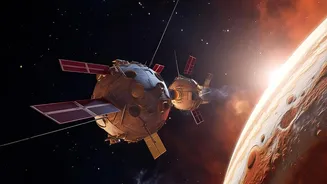
ISRO is not limiting its ambitions to the Earth-Moon system. After the groundbreaking success of the first Mars Orbiter Mission (MOM), a follow-up is in the works. Tentatively known as Mangalyaan-2 or the Mars Lander Mission, it aims for a launch around 2030. This time, the objective is far more challenging: to land on the Martian surface, a significant step up from the previous orbiter. Concurrently, ISRO is preparing Shukrayaan-1, its first mission to Venus, planned for launch around 2028. This orbiter will study the dense, hot atmosphere and volcanic surface of our 'twin' planet, exploring one of the solar system's most enigmatic worlds.
A Home in Orbit: The Bharatiya Antariksha Station
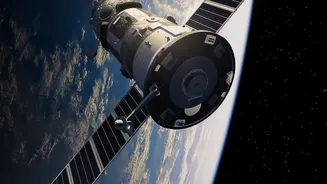
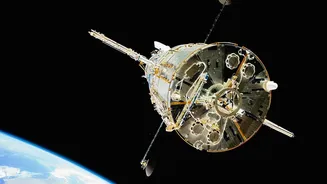
Perhaps the most definitive symbol of India's expanding space horizons is the plan for its own space station. The Bharatiya Antariksha Station (BAS) is envisioned as a modular outpost in Low Earth Orbit, with the first module slated for launch in 2028. The complete station is targeted for completion by 2035, providing a platform for Indian astronauts to conduct long-duration experiments in microgravity. This will position India as a major player in the next era of space exploration, enabling continuous scientific research and technology development in space, and serving as a potential base for future missions.
The Engine of Ambition: Reusable Rockets
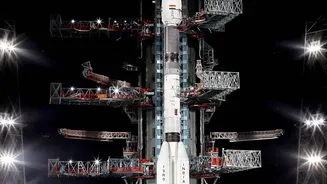
Underpinning all these ambitious goals is the development of a Next Generation Launch Vehicle (NGLV). This new heavy-lift rocket is being designed with partial reusability, a crucial step towards making space access more affordable and sustainable. With a capacity to lift significantly heavier payloads than the current LVM3, the NGLV will be essential for launching the modules of the Bharatiya Antariksha Station and for deep space missions. By developing this cost-effective launch capability, ISRO is laying the financial and logistical foundation to support its long-term vision, including a crewed lunar landing by 2040.