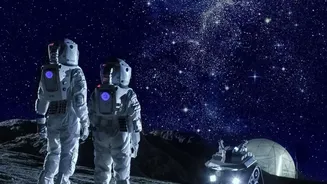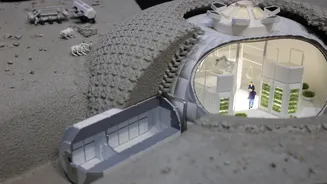




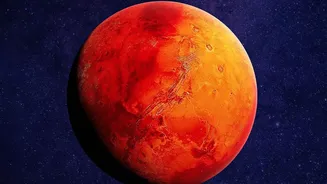
The dream of setting foot on Mars is a powerful one, but it raises a critical question: who, or what, should go first? The debate between sending robotic pioneers and human astronauts is a complex one, driven by massive differences in cost and risk.
The Colossal Cost of Human Life Support
The
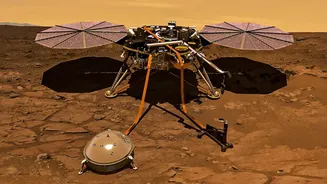
most significant difference between robotic and human missions is the price tag, and the gap is astronomical. A robotic mission, like NASA's highly successful Perseverance rover, costs under $3 billion. In contrast, estimates for a single crewed mission to Mars range from hundreds of billions to potentially over a trillion dollars. The reason for this huge disparity is simple: keeping humans alive. Astronauts require food, water, and breathable air for a mission that could last up to three years. All of this life support adds immense weight to a spacecraft, which in turn demands more powerful rockets and exponentially more fuel. Robots, on the other hand, don't need a return ticket, food, or oxygen, making them vastly cheaper and simpler to send.
The Ultimate Risk: Human Health and Safety
Beyond the financial cost, there's the human cost. A journey to Mars is fraught with peril for the human body. Outside the protection of Earth's magnetic field and atmosphere, astronauts are exposed to high levels of deep-space radiation, which can damage DNA and significantly increase the lifetime risk of cancer. The long duration in reduced gravity—Mars' gravity is only 38% of Earth's—leads to muscle atrophy, loss of bone density, and cardiovascular issues. There are also profound psychological risks associated with isolation and confinement, compounded by communication delays with Earth of up to 22 minutes each way. In an emergency, the crew is almost entirely on their own.
When Robots Take the Fall
Robotic missions are not without their own risks, but the stakes are fundamentally different. The 'seven minutes of terror'—the complex entry, descent, and landing sequence—is a notoriously difficult phase where a single error can lead to mission failure. Several past missions have been lost during this phase. Robots are also vulnerable to the harsh Martian environment, from pervasive dust that can cover solar panels to extreme temperatures. However, the loss of a rover, while a major financial and scientific setback, does not involve the loss of human life. This allows engineers to take calculated risks and push the boundaries of technology in ways that would be unethical with a human crew.
The Irreplaceable Human Element
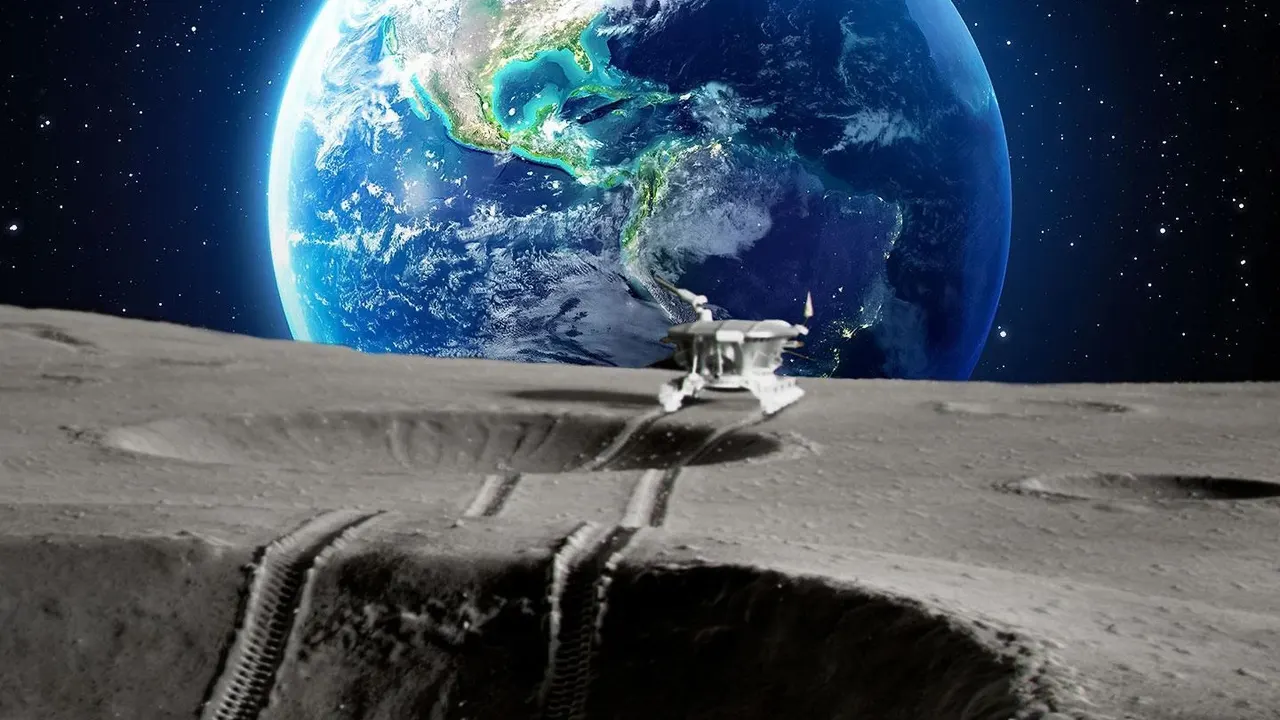
Despite the cost and risk, there's a powerful argument for sending people. Humans possess a level of adaptability, intuition, and problem-solving that no robot can currently match. A human geologist could explore a region and identify samples of interest in hours or days, a task that might take a rover years to complete. During the Apollo 17 moon mission, astronauts collected over 110 kg of samples in just three days; after more than a decade on Mars, the Curiosity rover had collected just a few dozen small samples. Humans can react to unexpected discoveries, repair equipment, and perform complex tasks that are far beyond the capabilities of our most advanced robots, potentially yielding a far greater scientific return.
A Partnership, Not a Rivalry
Ultimately, the choice isn't a simple binary of 'robots or humans'. The most effective strategy for exploring Mars involves using both in partnership. Robotic missions have been our indispensable scouts for decades, mapping the surface, analyzing the atmosphere, and identifying potential resources like water ice. They test technologies and gather crucial data on hazards like radiation, paving the way to make future human missions safer. Robots like Perseverance are laying the groundwork and helping scientists identify the most compelling locations for future human explorers to visit. The goal is for robots to handle dangerous or repetitive tasks, working alongside astronauts to maximize scientific discovery and ensure human safety.