





Cleopatra’s Legendary Milk Baths
The legend of Cleopatra bathing in donkey’s milk is one of history's most famous beauty tales. While the image of her submerged in a full tub of milk is likely an exaggeration, the science behind it is sound. Milk contains lactic acid, a natural alpha-hydroxy
acid (AHA) that gently exfoliates the skin by dissolving dead cells. This practice, combined with other Egyptian staples like honey for its antibacterial properties and rich oils like castor and olive oil for moisture, formed a sophisticated routine for its time. Ancient Egyptian papyri show a deep understanding of skincare as a form of nourishment, not just decoration. So, while her baths may not have been the 'fountain of youth', they were an effective, science-backed way to maintain soft, smooth skin using available resources.
The Mughal Art of Fragrance and Ubtan
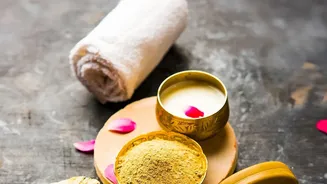
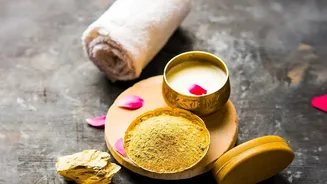
In Mughal India, beauty was an elaborate affair deeply intertwined with culture and daily life. Empresses like Nur Jahan were known for their mastery of fragrance, reportedly discovering rose oil or 'attar' after noticing a fragrant film on her bathwater. Mughal royals used perfumed oils made from jasmine, sandalwood, and rose in their hair and on their skin. Beyond fragrance, the use of ubtan was central. This paste, typically made from gram flour (besan), turmeric, sandalwood, and milk or rose water, was a daily ritual for cleansing and brightening the skin. Ingredients like multani mitti (Fuller's Earth) were also used in face packs to absorb excess oil. These practices were less about instant transformation and more about consistent, gentle care rooted in Ayurvedic principles.
Queen Elizabeth I and the Perils of Pale Skin
During the Elizabethan Era, a pale, white complexion was the ultimate symbol of nobility and wealth, indicating that a woman did not have to labour in the sun. To achieve this look, Queen Elizabeth I reportedly used a cosmetic called Venetian ceruse, a thick white paint made from white lead mixed with vinegar. This potent concoction effectively masked blemishes and smallpox scars, creating a porcelain-like finish. However, the beauty came at a deadly cost. Lead is a toxic heavy metal, and prolonged use caused skin damage, hair loss, and gradual lead poisoning. Some historians believe it may have contributed to her deteriorating health and eventual death. This ritual serves as a stark reminder that historical beauty standards sometimes involved dangerous, even lethal, ingredients.
The Enduring Wisdom of Indian Royal Skincare
Across the diverse kingdoms of India, royal beauty was a celebration of regional botanicals. In Rajasthan, queens used saffron-infused milk and rose water to combat the dry desert climate. In the south, royalty in Kerala and Mysore relied on coconut milk, wild turmeric (kasthuri manjal), and the world-renowned Mysore sandalwood to soothe and brighten the skin. The nightly use of herbal elixirs like Kumkumadi Tailam, a blend of saffron and other herbs, was common for tackling pigmentation. These rituals were holistic, often incorporating cooling pastes and oil massages (abhyanga) that connected skincare with overall wellness. They highlight a tradition where beauty was not about chasing miracles but about a deep, practical knowledge of nature’s offerings.