





Pune: The Birthplace of Public Celebration
To understand the Ganpati festival as a public event, you must start in Pune. While private celebrations have existed for centuries, it was here in 1893 that freedom fighter Lokmanya Tilak transformed the festival into a sarvajanik (public) movement to unite
people against British rule. This legacy is deeply felt today. Pune's celebrations are rooted in tradition, most famously through the 'Manache Paach' or the five honoured Ganpati mandals that lead the immersion procession in a fixed, centuries-old order of precedence. The atmosphere here is less about Bollywood glamour and more about historical reverence, with traditional dhol-tasha drum troupes providing a thunderous, rhythmic heartbeat to the processions.
Mumbai: The Epicentre of Grandeur
If Pune is the historical heart, Mumbai is the festival's grand, pulsating soul. Home to the legendary Lalbaugcha Raja, known as the 'Navsacha Ganpati' or the one who fulfils wishes, the city hosts a celebration of unparalleled scale. Founded in 1934 by fishermen and vendors, the Lalbaug mandal now attracts over 1.5 million devotees daily, with queues for darshan often lasting many hours. The festival here is a spectacle of faith, celebrity visits, and immense community organisation, culminating in the massive visarjan (immersion) processions that snake their way to beaches like Girgaon Chowpatty and Juhu.
Hyderabad: The Land of the Colossal Idol
Hyderabad's contribution to the festival is a story of ever-increasing scale. The city is famous for the Khairatabad Ganesha, an idol renowned for its towering height. Started in 1954 by freedom fighter S. Shankaraiah with a humble one-foot idol, the tradition grew to have the idol's height increase by a foot each year until 2014. Though the height is now managed for practical reasons, the idol remains one of the tallest in India, drawing millions of visitors. The making of this colossal statue is an event in itself, involving months of work by skilled artisans and culminating in a grand immersion procession at Hussain Sagar Lake.
Goa: A Celebration of Nature and Family
In Goa, the festival, known locally as 'Chavath', moves away from public pandals and turns inwards, focusing on family and nature. A unique and beautiful tradition here is the 'matoli'—a wooden canopy suspended over the Ganesh idol at home. This canopy is painstakingly decorated with a rich diversity of local, seasonal, and wild produce, including fruits, vegetables, flowers, and herbs. The matoli serves as a tribute to nature's bounty and a way of passing down ecological knowledge through generations. The celebrations are intimate, eco-conscious, and deeply connected to the land.
Bengaluru: The Hub of Eco-Conscious Innovation
Known for its environmentally aware citizens, Bengaluru has pioneered the movement for a 'Green Ganesha' festival. For years, community groups and the city's administration have actively promoted the use of eco-friendly idols made from clay, cow dung, or paper pulp instead of Plaster of Paris. This focus on sustainability has become a core part of the city's festive identity. Many residents now opt for idols that can be immersed at home in a bucket of water, with the dissolved clay then used for plants. This approach blends devotion with a strong sense of civic and environmental responsibility.
Jaipur: A Festival with a Royal Touch
In the Pink City of Jaipur, Ganesh Chaturthi celebrations are centered around the historic Moti Dungri Ganesh Temple. Situated at the foot of a palace, the temple itself is a major spiritual anchor for the city. During the festival, it becomes a hub of devotion, drawing thousands of devotees who queue for hours for a darshan. Local tradition holds that the first invitation for any auspicious event, like a wedding, is offered to the Lord Ganesha here. The festival is celebrated with a distinct Rajasthani cultural flair, blending age-old temple rituals with the city's royal heritage.
Chennai: A Quietly Devout Southern Tradition
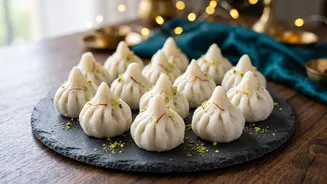
In Chennai, Vinayaka Chaturthi, as it's known, begins quietly in homes. The focus is on small, clay idols that are worshipped privately for a few days. The signature festive food here is the sweet, steamed rice dumpling called 'kozhukattai'. While not on the same massive public scale as in Maharashtra, the festival culminates in vibrant immersion ceremonies as processions from various neighbourhoods make their way to the coast. The celebration in Chennai offers a unique southern perspective, where deep-rooted family traditions and community spirit create a festival that is both devout and deeply personal.