


More Than Just Dirt
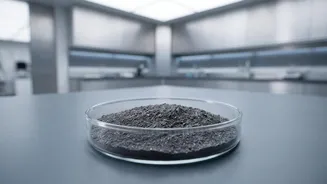
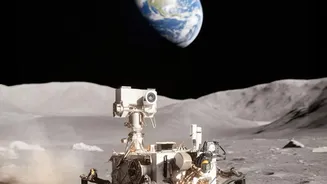
The Moon’s surface is covered in a material called regolith. Unlike the soil on Earth, which is weathered smooth by wind and water, lunar regolith is the product of billions of years of meteorite impacts and bombardment by charged solar particles. This
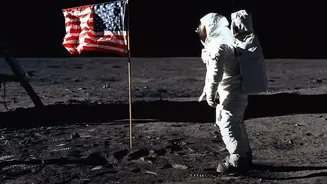
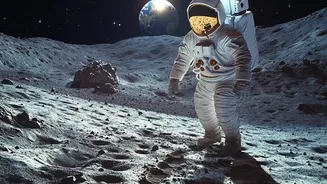
constant process has pulverised the rock into a fine powder composed of microscopic, jagged shards of glass and minerals. Because the Moon has no atmosphere to soften these edges, the particles remain incredibly sharp and abrasive. Adding to the challenge, solar radiation gives the dust an electrostatic charge, causing it to cling to everything it touches, from spacesuit visors to sensitive electronics. During the Apollo missions, astronauts found this clinging dust to be a major nuisance, getting into every crevice and even causing 'lunar hay fever' when brought back into the lander.
A Major Hazard for Artemis
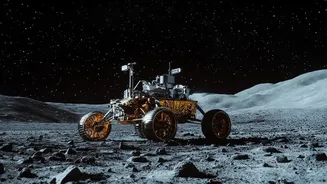
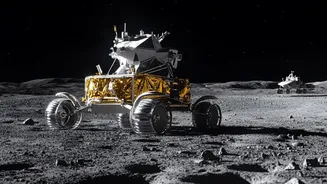
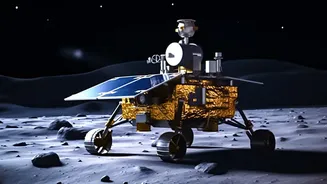
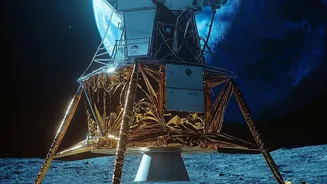
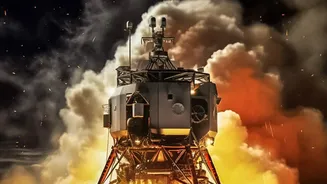
For NASA's Artemis program, which aims to establish a long-term human presence on the Moon, lunar dust is more than a nuisance; it's a critical safety and operational risk. The abrasive nature of the dust can wear down spacesuit fabrics, scratch helmet visors, and clog the seals on habitats and equipment, potentially leading to catastrophic failures. It can also coat solar panels, reducing their ability to generate power, and interfere with scientific instruments. Furthermore, there are significant health concerns. Inhaling these sharp particles could cause respiratory issues for astronauts, similar to silicosis on Earth. The biggest single dust event, however, happens during landing. The powerful rocket engines of a lunar lander can blast this regolith outwards at extreme velocities, creating a sandblasting effect that could damage the lander itself or any nearby assets like habitats or rovers.
Simulating a Moon Landing on Earth
To understand and mitigate these risks, you can't just brush the problem aside. NASA is conducting sophisticated experiments to study exactly how rocket plumes interact with the lunar surface. At facilities like the Langley Research Center, engineers have begun a series of plume-surface interaction tests inside a massive 60-foot spherical vacuum chamber. Inside, they fire scaled-down rocket engines at bins filled with a special 'lunar simulant'—a material developed from volcanic ash in Arizona that closely mimics the texture, composition, and jagged properties of actual Moon dust. The vacuum chamber is crucial because it allows the rocket exhaust to expand as it would in the airless environment of the Moon. High-speed cameras and an array of sensors capture every detail of the six-second controlled blasts.
What NASA Hopes to Learn
The primary goal of these simulated landings is to gather precise data to build better predictive models. Researchers are measuring how deep and wide the crater under the lander becomes, how fast the ejected dust particles travel, and the shape and density of the resulting dust cloud. This information is pivotal for designing safer landers and planning future missions. For instance, understanding the physics of the plume interaction will help engineers design engine nozzles and landing legs that minimize dust disturbance. It will also inform the placement of sensitive equipment on the lander to protect it from being sandblasted. For a future lunar base, this data will be essential for designing landing pads and protective berms to shield habitats, rovers, and personnel from the hazardous, high-velocity ejecta created by arriving and departing spacecraft.
Paving the Way for a Lunar Future
Beyond simulating landings, NASA is developing a suite of technologies to actively combat the dust problem. One of the most promising is the Electrodynamic Dust Shield (EDS), a technology that uses transparent electrodes to create an electric field that actively repels and removes dust from surfaces. The EDS has been successfully tested on the Moon and can clean everything from solar panels to camera lenses and even fabrics. Other innovative ideas include using liquid nitrogen sprays to blast dust off spacesuits. Ultimately, learning to manage lunar dust is a non-negotiable step toward establishing a sustainable human presence on the Moon. These detailed simulations are providing the foundational knowledge needed to build the reliable, long-lasting hardware that will make the Artemis generation's lunar ambitions a reality.