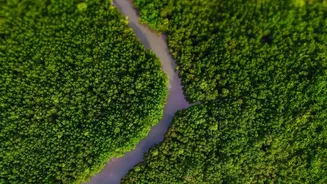







Our Eyes in the Sky
For decades, coastal residents have anecdotally known that mangrove forests offer a buffer against storms. But proving it with hard data, especially across a vast, complex, and often inaccessible region like the Sundarbans, was a major challenge. Now,
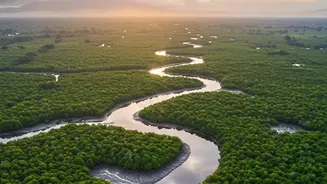
a new generation of satellite technology is changing the game. Using platforms like Sentinel-1 and Sentinel-2, scientists can see what was previously hidden. Advanced Synthetic Aperture Radar (SAR) can pierce through the dense cloud cover of a cyclone, allowing researchers to measure wave height, wind speed, and floodwater inundation in near real-time. By comparing images and data from before, during, and after a storm passes over the mangroves, a clear picture emerges of the forest's protective power.
The Great Green Wall
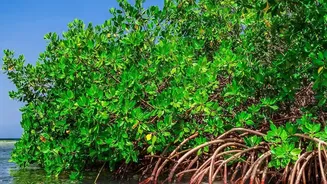
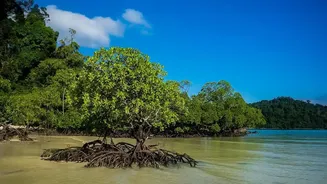
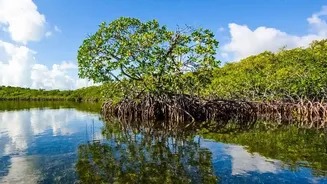
So what have these eyes in the sky shown us? Studies focusing on recent powerful cyclones like Amphan have been revelatory. Satellite analysis demonstrates that wide belts of dense mangrove forest can significantly reduce the devastating impact of storm surges. Research has shown that mangroves can reduce wave heights by up to 66% and, in some cases, a wide enough forest can reduce water flow velocity by over 90%. For communities living behind this green wall, this is the difference between manageable flooding and a catastrophic inundation. During Cyclone Amphan in 2020, analysis showed that areas protected by restored mangrove forests suffered significantly less damage to vital embankments, which protect homes and agricultural land from saltwater intrusion. The data confirms that the complex web of roots, trunks, and leaves acts like a giant, living brake, absorbing and dissipating the storm's fury before it can reach vulnerable inland areas.
Nature vs. Concrete
For years, the default solution for coastal protection has been to build hard infrastructure: concrete sea walls, dikes, and embankments. While these have a role to play, the new data underlines the superiority of a nature-based approach. A concrete wall is expensive to build, costly to maintain, and can fail catastrophically under extreme pressure. Worse, it can sometimes increase erosion in adjacent areas. Mangroves, in contrast, are a living, self-repairing system. They grow stronger over time, adapt to changing conditions, and actually build up land by trapping sediment in their roots, helping to counteract erosion and sea-level rise. Furthermore, they provide a host of co-benefits that a concrete wall never could: they act as crucial nursery grounds for fish and crustaceans, support local livelihoods like honey collection, and are powerhouses of carbon sequestration, capturing and storing vast amounts of CO2.
An Invaluable Economic Asset
The protection offered by the Sundarbans isn't just an environmental service; it's an economic necessity. Studies have begun to put a price tag on this protection, and the numbers are staggering. Globally, mangroves are estimated to prevent over $60 billion in annual flood damages and protect 14 million people. For India and Bangladesh, which have densely populated coastlines, the value is particularly high. One analysis following Hurricane Irma in Florida found that mangroves prevented $1.5 billion in damages, reducing losses by nearly 25% in the counties they protected. A 2024 meta-analysis found that the economic value of storm and surge protection was three times higher for the Indian Sundarbans compared to the Bangladeshi side, highlighting its immense importance to India's coastal economy. Losing this natural shield would not just be an ecological tragedy but an economic catastrophe, exposing millions of people and billions of rupees in assets to the full force of future storms.
A Future Rooted in Nature
The satellite data sends a clear and urgent message: protecting the Sundarbans is a matter of national security and economic stability. Unfortunately, this vital ecosystem is under threat from all sides—sea-level rise, pollution, deforestation, and reduced freshwater flow are all taking their toll. The increasing frequency of powerful cyclones also damages the very forest that protects us, creating a dangerous feedback loop. The conclusive evidence from space-based monitoring should galvanize policy and action. It proves that investing in mangrove conservation and restoration is not an expense, but one of the most cost-effective investments India can make in its own climate resilience. It’s time to view these forests not just as wildlife habitats, but as critical, living infrastructure.