





What are Front-of-Pack Warning Labels?
For years, the only way to judge a packaged food's health impact was to flip it over and decipher the dense nutrition table. Now, the Food Safety and Standards Authority of India (FSSAI) is moving towards a system called Front-of-Pack Labelling (FoPL).
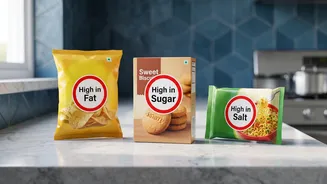
The idea is simple: place clear, easy-to-understand information right on the front, where you can't miss it. Spurred by a directive from the Supreme Court, which has framed this as a constitutional right to health, the FSSAI has proposed mandatory warning labels for products high in salt, sugar, or fat—often called HFSS foods. The proposed design is a red hexagon with a white background, clearly stating if a product is 'HIGH IN SUGAR', 'HIGH IN SALT', or 'HIGH IN FAT'.
The Core of the Debate: Warning Labels vs. Star Ratings
The path to clearer labels isn't straightforward. Two main systems have been at the center of the debate. On one side are the simple, direct warning symbols, like the red hexagons FSSAI has recently proposed. These are championed by public health experts and consumer groups. On the other side is the Health Star Rating (HSR) system, which was part of an earlier FSSAI draft in 2022. The HSR model rates a food from half a star (least healthy) to five stars (healthiest). This system is generally preferred by the food industry, which argues it provides a more nuanced overall score. However, critics say star ratings can be misleading, as companies might add minor 'healthy' ingredients like fibre or nuts to get a better rating, masking dangerously high levels of sugar or fat.
Why Experts Say Simple Warnings Work Best
Public health advocates argue that in a country with diverse languages and literacy levels, a simple, pictorial warning is the most effective tool. You don't need to read or do calculations; you just see the red hexagon and know to be cautious. Studies, including some conducted in India, have found that consumers are better able to identify unhealthy products when shown warning labels compared to star ratings or other systems. Countries like Chile that have implemented similar black octagon warnings saw a significant drop in the consumption of sugary drinks, demonstrating the real-world impact of such labels. The goal of these symbols is to help consumers make a quick, informed decision in the few seconds they typically spend choosing a product in a store.
The Food Industry's Concerns
Food manufacturers have expressed concerns that stark warning labels might unfairly 'demonize' certain products and cause commercial losses. They argue that the Health Star Rating system encourages reformulation—motivating them to improve their products to earn more stars—rather than simply punishing them. Initially, there were also concerns from the industry that a phased rollout was necessary to allow time to reformulate products and use up existing packaging materials. In a recent move, FSSAI has proposed a single-phase rollout but with a voluntary compliance window of one year to address these concerns and avoid commercial hardship for food businesses.
What This Means For Your Next Grocery Trip
While the final regulations are still being finalized—FSSAI has indicated a timeline of about four months to issue the draft—this debate marks a major shift towards consumer empowerment. The Supreme Court has been firm, pushing for swift implementation and rejecting arguments that the labels would unfairly target traditional Indian foods. The latest proposals state that a warning label will be required even if a product is high in just one of the nutrients of concern (sugar, salt, or fat). This is a significant change from an earlier, more lenient proposal that would have required a warning only if a product was high in two or more nutrients. For you, this means a future where spotting unhealthy packaged foods could become as simple as seeing the red or green dot for non-vegetarian and vegetarian products.