





Meet 'Pushpak': India's Reusable Space Shuttle
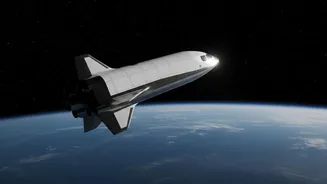
At the heart of ISRO's reusability program is the Reusable Launch Vehicle (RLV), nicknamed 'Pushpak'. This uncrewed, winged vehicle is the centrepiece of a series of technology demonstration missions. Unlike traditional rockets that are discarded after
launch, Pushpak is designed to fly back to Earth and land on a runway like an airplane, allowing its most valuable components to be refurbished and flown again. The vehicle is a testbed for crucial technologies like hypersonic flight, autonomous navigation, and precision landing. Recent tests have focused on mastering this last, critical phase of the mission: bringing the vehicle home safely.
The Challenge of a Perfect Landing
Landing a winged vehicle returning from space is no simple task. In a recent series of Landing Experiments (LEX), ISRO has demonstrated remarkable capability. For these tests, a Chinook helicopter lifted Pushpak to an altitude of 4.5 kilometres before releasing it. From there, the vehicle had to autonomously navigate, correct its course against challenging wind conditions, and execute a perfect, high-speed landing on a runway at the Aeronautical Test Range in Chitradurga. With landing speeds exceeding 320 km/h—faster than a typical fighter jet—these tests successfully simulated the high-stakes conditions of a vehicle returning from orbit. Critically, the final test used the same vehicle as the one prior, proving the hardware's robustness and reusability.
From Throwaway to Reusable: A Fundamental Shift
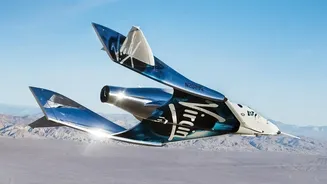
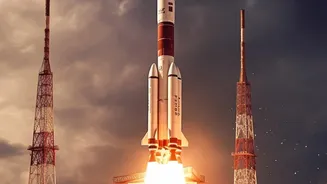
For decades, spaceflight has operated on a 'use once and discard' model. Rockets, costing hundreds of crores, are expended in a single mission. This is like building a brand-new aircraft for every single flight. Reusable technology fundamentally changes this economic equation. The goal is to recover the most expensive parts of the launch vehicle—particularly the booster and upper stages which house complex engines and electronics—so they can be reused for multiple missions. This shift, pioneered globally by companies like SpaceX with its Falcon 9 rocket, has already proven to dramatically lower the cost of accessing space.
The Economics of Reusability
So, how does this lower costs? By spreading the massive manufacturing cost of a rocket across many launches instead of just one. ISRO's goal is to make space access significantly cheaper. Currently, launching a kilogram of payload can cost thousands of dollars. With reusable technology, ISRO aims to bring this cost down by a factor of ten, a move that would revolutionise the market. This dramatic cost reduction makes launching satellites viable for a much wider range of customers, including startups, universities, and smaller nations that were previously priced out of the market. Lower launch costs stimulate demand, creating a virtuous cycle of more frequent launches and even greater cost efficiencies.
India's Place in the Global Space Race
While ISRO is developing its own unique winged-body vehicle, the broader push for reusability is a global trend. The success of these landing tests positions India to compete in the rapidly growing commercial launch market, which is projected to be worth over $1.6 billion by 2030. India already holds a reputation for cost-effective missions, and mastering reusable technology will further solidify its competitive edge. This capability is crucial for deploying large satellite constellations, supporting the burgeoning private space sector, and achieving India's ambition of becoming a $100 billion space economy by 2040.
The Road Ahead for ISRO
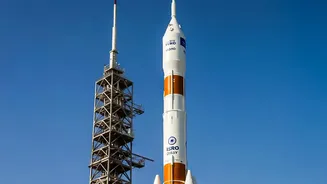
The successful landing experiments are a major milestone, but they are just one step in a longer journey. Having proven its ability to autonomously land the vehicle, ISRO's next major challenge is the Orbital Re-entry Experiment (OREX). This future mission will involve launching Pushpak into orbit, having it re-enter Earth's atmosphere at hypersonic speeds, and then performing a complete runway landing. This will test the vehicle's heat shields and its ability to handle the extreme thermal and aerodynamic stresses of re-entry. Success in the OREX phase will pave the way for a fully operational, two-stage-to-orbit reusable launch vehicle, bringing the goal of routine, low-cost space access closer to reality.