




The Persistent Problem of Weeds
For organic farmers, weeds are more than just a nuisance; they are a primary threat to profitability and yield. Weeds aggressively compete with cotton plants for essential resources like water, sunlight, and soil nutrients. In conventional farming, chemical
herbicides offer a widespread solution, but this option is off the table in organic systems. The alternative has traditionally been manual labour—a costly, time-consuming, and often back-breaking process. Uncontrolled weeds can slash crop yields by more than half and complicate harvesting, making effective, non-chemical weed management one of the biggest hurdles for organic growers.
Enter the Smart Robot: How It Works
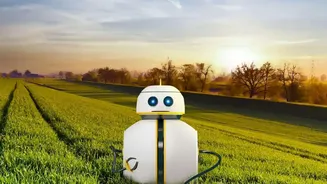
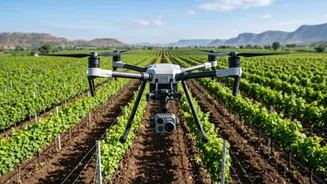
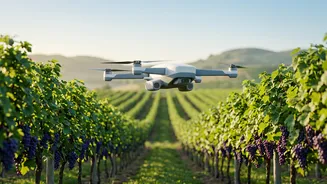
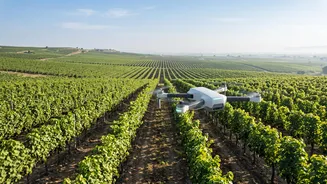
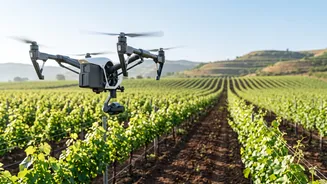
Imagine a small, solar-powered robot navigating crop rows on its own. This is the new reality in precision agriculture. These machines are guided by a powerful technology called Edge AI. Unlike traditional AI that sends data to a distant cloud for analysis, Edge AI processes information directly on the device itself. This is crucial for a farm robot, as it allows for instant decision-making without depending on an internet connection. The robot uses advanced vision sensors—essentially its eyes—to capture a real-time view of the field. The onboard AI then analyses these images, distinguishing a cotton seedling from an unwanted weed with remarkable accuracy.
From Seeing to Removing
Once the AI identifies a weed, the robot takes immediate action. The method of removal can vary. Some robots use tiny, precise mechanical tools to pluck or disturb the weed, killing it without disturbing the nearby cotton plant. Others employ a highly targeted micro-dose of an organic herbicide or even a concentrated laser beam to eliminate the weed. Because the processing happens on the 'edge', the robot can identify and act in milliseconds, making it incredibly efficient as it moves through the field. This precision prevents the soil compaction caused by larger, heavier machinery and minimizes any damage to the crop itself.
A Breakthrough for Organic Principles
This technology is a game-changer for the principles of organic farming. The primary benefit is the elimination of broadcast spraying of herbicides, which protects soil health and biodiversity. By automating what was once a highly manual task, these robots can significantly reduce labour costs and free up farmers to focus on other aspects of their operation. Furthermore, the data collected by the robots about weed density and location can provide valuable insights for future planting seasons, helping farmers create more resilient and efficient systems over time. This move towards data-driven farming represents a major step forward in making sustainable agriculture more scalable and profitable.
The Future of Farming in India
In India, where agriculture is a cornerstone of the economy, such technologies hold immense promise. As the nation pushes towards more sustainable farming practices and digital innovation in agriculture, autonomous solutions are becoming increasingly relevant. The ability to manage crops with greater precision can lead to higher yields, better profitability for small and large farms alike, and a stronger position in the global market for high-quality organic textiles. While adoption is still in its early stages, the convergence of AI, robotics, and agriculture signals a future where farming is smarter, more efficient, and more environmentally responsible.