



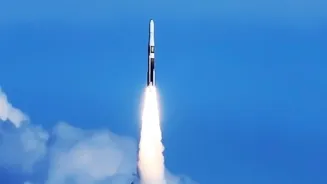
Meet 'Pushpak', India’s Space Shuttle
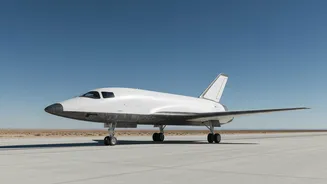
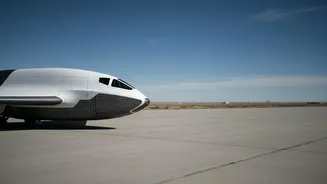
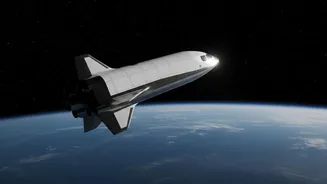
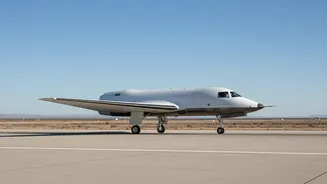
At the heart of this ambitious project is the Reusable Launch Vehicle (RLV), affectionately named 'Pushpak'. It is a winged vehicle that looks like a miniature space shuttle, designed to combine the power of a rocket with the flexibility of an aircraft.
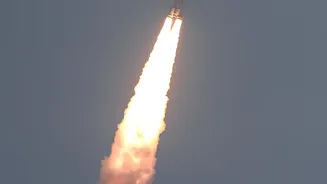
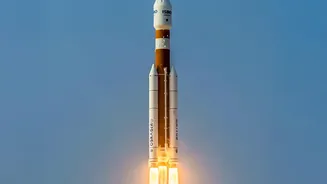
The ultimate goal for Pushpak is to act as the first stage of a two-stage orbital launch vehicle, which would fly back to Earth after deploying its payload, landing horizontally on a runway just like a plane. This technology demonstrator is the testbed for several crucial technologies that will make future space missions more efficient and affordable for India.
The High-Stakes Landing Experiment
The most recent and critical phase of testing was the Landing Experiment (LEX) series. In these tests, conducted at the Aeronautical Test Range in Chitradurga, Karnataka, a prototype of Pushpak was lifted to an altitude of 4.5 km by an Indian Air Force Chinook helicopter and released mid-air. From there, the vehicle had to do everything on its own. Using its onboard navigation, guidance, and control systems, it had to autonomously find the runway, correct its flight path for wind and other conditions, and execute a precise, high-speed landing. The final test in June 2024 was the most challenging, with the vehicle being released further from the runway and in tougher wind conditions, yet still managing a perfect touchdown.
The Brains Behind the Autonomous Landing
Pushpak's ability to land itself is not magic; it's the result of incredibly sophisticated technology. The vehicle uses a system called multi-sensor fusion, integrating data from an array of sensors like inertial sensors, radar altimeters, and India's own NavIC satellite navigation system to understand its exact position and orientation. An advanced guidance algorithm processes this information in real-time, making corrections to its flight path using aerodynamic control surfaces like elevons and rudders. This entire system has to work flawlessly to manage a landing speed of over 320 kmph, which is faster than a commercial aircraft. After touchdown, a brake parachute and landing gear brakes bring the vehicle to a safe stop.
Why Reusability Is a Game-Changer
So, why go through all this trouble? The answer is cost. Currently, most rockets are expendable, meaning they are discarded after a single use. This is like throwing away an entire airplane after just one flight. The structure and engines of a rocket account for roughly 80% of its total cost. By developing a vehicle that can be recovered, refurbished, and reused for multiple missions, ISRO can drastically reduce the cost of launching satellites. The goal is to bring down launch costs by a factor of ten, from around $20,000 per kilogram of payload to as low as $2,000. This would make India an even more competitive player in the billion-dollar global satellite launch market.
What’s Next for India’s RLV Programme?
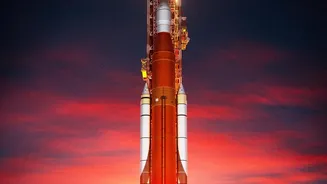
With the successful completion of the three LEX missions, ISRO has mastered the crucial terminal phase of landing. The next major step is the Orbital Re-entry Experiment (ORE). For this test, a larger version of Pushpak will be launched into a 400 km orbit by a conventional rocket. It will then de-orbit, re-enter the Earth's atmosphere, and perform an autonomous landing. This experiment will validate the vehicle's thermal protection systems and its ability to withstand the extreme heat of re-entry. Successfully completing the ORE mission will be the final major milestone before ISRO can integrate this technology into an operational, fully reusable two-stage-to-orbit launch vehicle.