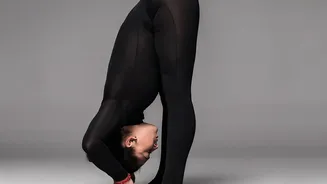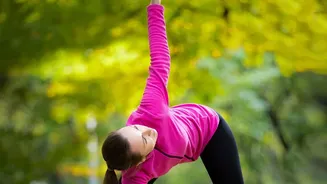





Long hours at a desk can leave your spine feeling stiff, compressed, and sore. The 'desk slump' is a modern reality, leading to poor posture and back pain. Yoga offers a gentle yet powerful way to counteract these effects and reintroduce mobility.
Cat-Cow Stretch (Marjaryasana-Bitilasana)
This
foundational yoga sequence is the perfect starting point for waking up your spine. It involves moving between two positions, which helps to warm up the back, improve flexibility, and release built-up tension from your neck to your tailbone. The gentle, rhythmic movement increases blood flow and circulation along the spine, making it an excellent warm-up or a quick reset during your workday. To begin, position yourself on all fours in a tabletop position, with your wrists directly under your shoulders and your knees under your hips. As you inhale (Cow Pose), drop your belly towards the mat, lift your chest and tailbone, and look forward. As you exhale (Cat Pose), round your spine toward the ceiling, tucking your chin to your chest and releasing your neck. Flow between these two poses for 8-10 breaths, synchronizing the movement with your breathing to calm the mind and gently mobilize each vertebra.
Seated Spinal Twist (Ardha Matsyendrasana)
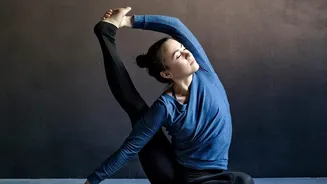
A seated twist is incredibly therapeutic for a spine that has been held in a static, forward-facing position all day. This pose encourages healthy rotation, which can help relieve lower back pain, reduce stiffness, and even aid digestion by gently massaging the abdominal organs. You can perform a version of this right in your office chair. For the floor version, sit with your legs extended. Bend your right knee and place your right foot on the floor outside your left thigh. You can keep the left leg straight or bend it, tucking the foot near your right hip. Inhale to lengthen your spine, sitting up tall. As you exhale, twist your torso to the right, placing your right hand on the floor behind you for support. Hook your left elbow outside your right knee to gently deepen the stretch. Hold for five deep breaths, using each inhale to lengthen and each exhale to explore a little more rotation, then repeat on the other side.
Bridge Pose (Setu Bandhasana)
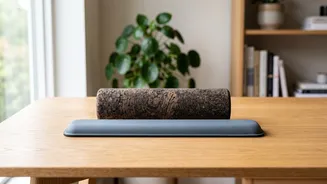
Bridge Pose is a gentle backbend that helps counteract the forward hunch of desk work by opening the chest and shoulders. It also strengthens the glutes and hamstrings, which often become weak from prolonged sitting and are crucial for supporting the lower back. To perform this pose, lie on your back with your knees bent and feet flat on the floor, hip-width apart. Your arms should be alongside your body with palms down. Inhale and press through your feet and arms to lift your hips off the floor. Keep your thighs and feet parallel and engage your glutes. For a more restorative version, you can slide a yoga block or a firm cushion under your sacrum (the flat part of your lower back) for support. This allows your body to relax into the backbend, releasing tension in the hip flexors and lower back without strain. Hold for 5-10 breaths before slowly lowering your spine back to the floor.
Sphinx Pose (Salamba Bhujangasana)
Sphinx Pose is a beginnerndary backbend that provides a gentle way to open the chest and strengthen the spine, making it a perfect antidote to slouching. By creating a mild extension in the spine, it helps to reset posture after hours spent hunched forward over a keyboard. Lie on your stomach and prop your upper body up on your forearms, with your elbows directly under your shoulders. Press your pubic bone gently into the floor and lengthen through your tailbone to protect your lower back. Draw your chest forward between your arms and keep the back of your neck long. You should feel a gentle stretch in your lower back and abdomen. This is a passive pose, so allow your muscles to soften into the shape. It's especially beneficial for releasing tension and calming the nervous system after a stressful day. Hold for up to a minute, breathing steadily.
Child's Pose (Balasana)
No spinal mobility routine is complete without a restorative finishing pose. Child's Pose offers a gentle, passive stretch for the entire back, from the neck to the sacrum. It helps to decompress the vertebrae, relieve fatigue, and calm the mind. From a tabletop position, bring your big toes to touch, spread your knees wide, and sit back on your heels. Fold your torso forward, resting it between your thighs, and allow your forehead to rest on the mat. You can stretch your arms forward for a more active shoulder stretch or rest them alongside your body with palms facing up for a deeper sense of release. Focus on breathing deeply into your back, feeling the ribs expand with each inhale. This pose is not about pushing or forcing; it's about surrendering to gravity and letting go of any lingering tension.