


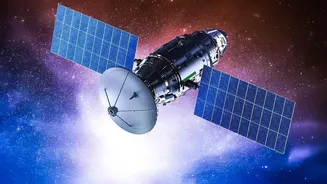
The Dangerous Junkyard Above Our Heads
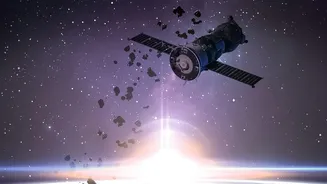
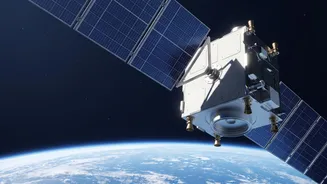
Space may seem vast and empty, but the region just above Earth's atmosphere is becoming dangerously crowded. Decades of satellite launches have left a legacy of junk: defunct satellites, spent rocket stages, and millions of smaller fragments from collisions
and breakups. This space debris travels at incredible speeds of up to 28,000 kilometres per hour. At that velocity, even a tiny paint chip can hit with the force of a bowling ball, capable of crippling a multi-crore operational satellite. In 2025 alone, ISRO had to perform 20 collision avoidance manoeuvres (CAMs) to steer its satellites clear of danger, with another nine conducted in the first half of 2026. These numbers highlight a growing threat that requires constant vigilance and, increasingly, automated solutions.
Why India's Satellites Are National Assets
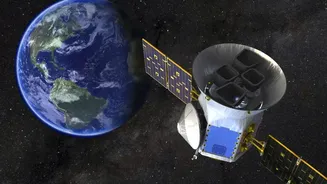
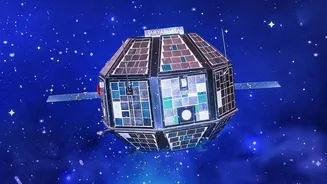
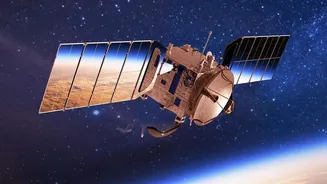
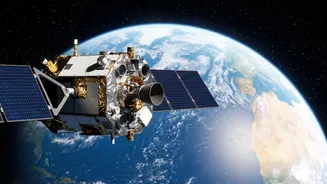
The satellites at risk are not just scientific instruments; they are vital pieces of national infrastructure. India's fleet of Earth-observation satellites provides critical data for a wide range of applications. They monitor weather patterns to predict cyclones, assess agricultural health to ensure food security, manage water resources, and provide invaluable imagery for urban planning and disaster management. Furthermore, these satellites are indispensable for national security, supporting communication, navigation, and surveillance that protect the country's borders and interests. With 20 of India's 22 active satellites in Low Earth Orbit (LEO) facing a higher collision risk, protecting them is a matter of strategic national importance.
ISRO's Intelligent Defence System
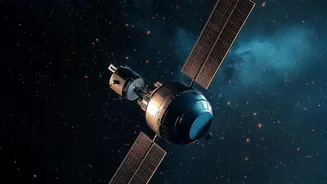
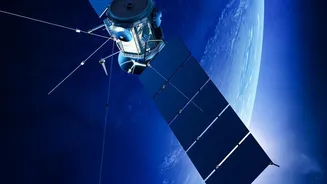
Manually tracking every potential threat and manoeuvring a satellite is a resource-intensive process. Each CAM consumes precious fuel, shortening the operational lifespan of a satellite. This is where autonomous thrusters come in. This technology represents a significant leap forward, moving from manual intervention to a self-driving defence system for spacecraft. Instead of waiting for commands from ground control, satellites equipped with these systems can use onboard sensors and processing to detect an imminent collision threat, calculate the necessary evasion path, and automatically fire their thrusters to move out of harm's way. This automation is crucial, as the window to avoid a collision can be incredibly small. While several satellite systems are now incorporating autonomous avoidance capabilities, the technology is a key part of India's broader strategy for sustainable space operations.
Securing India's Future in Space
The development of autonomous thrusters is part of a larger, multi-layered strategy by the Indian Space Research Organisation (ISRO) to secure its orbital assets. This initiative falls under the umbrella of ISRO's System for Safe and Sustainable Space Operations Management (IS4OM) and Project NETRA, which aim to enhance India's ability to track and monitor objects in space. By developing indigenous capabilities for Space Situational Awareness (SSA), India reduces its reliance on foreign data and asserts its role as a responsible and leading spacefaring nation. These efforts, combined with a commitment to achieving 'Debris-Free Space Missions by 2030', signal a proactive approach to not just protecting current assets but also ensuring the long-term sustainability of space for future generations.