
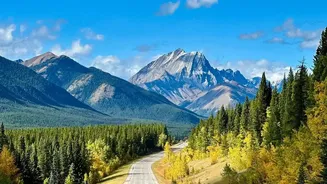
The Himalayan Gateways: Nepal and Bhutan
For Indian travellers, the most straightforward cross-border road trips remain those into Nepal and Bhutan, thanks to long-standing agreements. Travel to Nepal is famously convenient, with no visa required for Indian citizens. While you can drive your
personal vehicle across the border at points like Sunauli, you will need to have your Indian driving license and vehicle registration documents handy for local permits. Similarly, Bhutan offers visa-free entry to Indians, though it manages tourism carefully. To enter with your own car, you'll need to pre-register your vehicle and obtain entry permits at the border town of Phuntsholing. These permits are typically for a limited duration, usually around seven days. For many, these two nations represent the perfect introduction to international overland travel, offering stunning landscapes with minimal bureaucratic hurdles.
The Eastern Dream: The Road to Thailand
The ultimate goal for many Indian overlanders is the India-Myanmar-Thailand (IMT) Trilateral Highway. This ambitious project aims to create a seamless road link from Moreh in Manipur, through Myanmar, to Mae Sot in Thailand. While significant portions of this roughly 1,360-kilometre highway are complete, it is not yet the uninterrupted expressway some imagine. The route through Myanmar remains the most challenging section, with parts still under development. Driving this route requires more than just a sense of adventure; it demands careful planning around visa rules, permits, and regional stability. It is the backbone of India's 'Act East' policy, but for the average tourist in 2026, it remains a journey for the well-prepared, not a casual drive.
Navigating Myanmar's Overland Rules
Contrary to some popular belief, driving into Myanmar is not a visa-free affair. Indian citizens must secure a visa beforehand, with the eVisa system being the most common method for tourists. For those bringing their own vehicle, the process is more involved. You will need a special overland permit and a Carnet de Passages en Douane for your vehicle. Furthermore, it is often mandatory for foreign vehicles to be accompanied by a government-approved local guide and sometimes a liaison officer for the duration of your travel within the country. This makes a solo, spontaneous trip through Myanmar currently impractical. Travellers must plan their itinerary in advance and work with authorised tour operators to handle the necessary permissions, ensuring a safe and compliant journey.
Thailand’s Evolving Visa Landscape
Thailand has long been a favourite, but its visa rules for Indians saw significant changes in 2026. The previous 60-day visa-free entry scheme was revised. Recent updates suggest a shift towards a 30-day visa exemption for Indian nationals, replacing the older system. While this is still convenient for most tourists, it's a shorter duration than before. All travellers are also required to fill out the Thailand Digital Arrival Card (TDAC) online before their trip. For those arriving overland, it's crucial to ensure your documents, including proof of funds and accommodation, are in order, as immigration checks can be thorough. The key takeaway is that visa-free doesn't mean document-free, and rules can change quickly.
Your Essential Cross-Border Toolkit
Embarking on an international road trip requires a folder full of important documents. First is the Carnet de Passages en Douane (CPD), which essentially acts as a passport for your vehicle, guaranteeing that you will not sell it abroad. It is required for entry into countries like Myanmar and Thailand. An International Driving Permit (IDP) is also essential, serving as a translation of your Indian license. Beyond these, you will need your original passport with at least six months of validity, the vehicle’s registration certificate, a valid pollution certificate, and international travel insurance. Always carry multiple copies of all documents, both physical and digital. Planning for fuel stops, accommodation, and potential roadside assistance is just as critical as your visa and permits.