





From Dust to Breathable Air
The science-fiction dream of living off the land on another world is moving closer to reality. NASA is actively developing and testing technology designed to do something extraordinary: extract oxygen from lunar soil, known as regolith. This effort is part
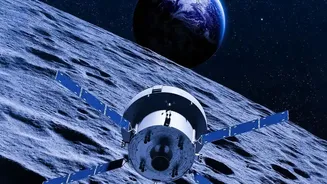
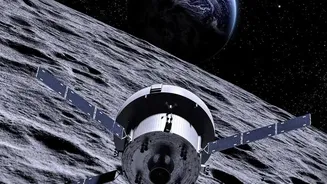
of a broader strategy called In-Situ Resource Utilization, or ISRU, which focuses on using local materials to support missions instead of hauling everything from Earth. The lunar surface might look barren, but its soil is surprisingly rich in oxygen, making up about 45% of its mass. However, this oxygen is not free-floating; it's chemically locked inside minerals like silicon dioxide and iron oxide. The challenge, which scientists and engineers are now solving, is how to efficiently break those chemical bonds and release the oxygen as a breathable gas. Successfully doing so would be a monumental leap for the Artemis program, which aims to establish a long-term human presence on the Moon.
The Science of Making Oxygen
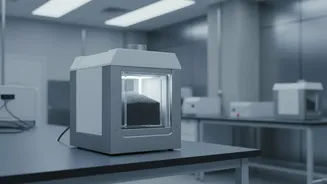
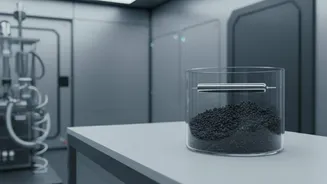
Several methods are being explored, but a leading candidate is a process called carbothermal reduction. In a project known as the Carbothermal Reduction Demonstration (CaRD), NASA engineers are perfecting a system that acts like a miniature refinery. The process involves heating the lunar regolith to extremely high temperatures—around 1,700 degrees Celsius—until it melts. At these temperatures, a carbon-based agent, like methane, is introduced. This causes a chemical reaction that pulls the oxygen atoms from the regolith's minerals, releasing them in the form of carbon monoxide (CO) and carbon dioxide (CO2). These gases can then be processed further to separate the pure, breathable oxygen. Recent tests have successfully demonstrated this process in vacuum chambers that simulate the lunar environment, confirming that the technology can work on the Moon. Some designs even use concentrated sunlight as the heat source, making the process more sustainable and reliant only on lunar resources.
A Game-Changer for Lunar Living
The ability to produce oxygen on the Moon has implications that extend far beyond life support. While providing breathable air for habitats is a primary goal, the vast majority of the oxygen produced would likely be used as rocket propellant oxidizer. Rockets require a massive amount of oxidizer to burn their fuel; for every kilogram of fuel, several kilograms of oxygen are needed. By producing liquid oxygen on the Moon, future missions could refuel spacecraft for return trips to Earth or for journeys deeper into the solar system, like to Mars. This dramatically reduces the mass that needs to be launched from Earth, which in turn cuts mission costs and complexity significantly. It effectively turns the Moon into a cosmic gas station, a critical piece of infrastructure for a sustainable, multi-planetary human presence. This technology is seen as a foundational element for building a true lunar economy.
What Happens Next?
With successful ground-based tests completed, the next major step is to prove the technology works on the lunar surface. NASA and its commercial partners, like Sierra Space and Blue Origin, are advancing prototypes toward flight readiness. These systems are being designed to be autonomous, with rovers capable of scooping up regolith and feeding it into the reactors without human intervention. Upcoming robotic missions under the Commercial Lunar Payload Services (CLPS) initiative are expected to carry these experiments to the Moon for real-world demonstrations. These missions will provide crucial data on the efficiency and reliability of oxygen extraction in the harsh lunar environment, which includes dealing with abrasive dust and extreme temperature swings. The knowledge gained will directly inform the design of the full-scale production plants needed to support the permanent lunar base envisioned by the Artemis program.