





Why Foldable Solar Is a Game-Changer
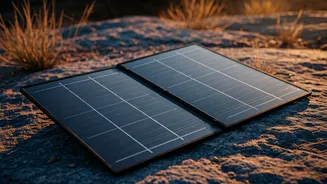
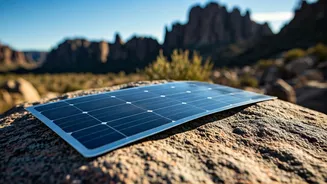
For years, campers faced a choice: go without electronics or haul heavy, noisy generators. Foldable solar sheets have completely changed this dynamic. These are not the rigid, cumbersome panels you see on rooftops. Instead, they are high-efficiency photovoltaic
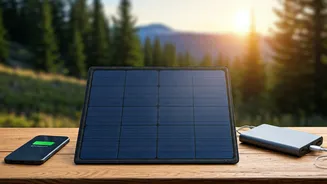
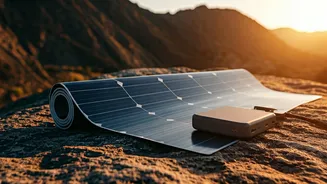
cells sewn into durable, foldable fabric canvases. Their key advantage is their power-to-weight ratio. A panel capable of charging a smartphone several times over can fold down to the size of a book and weigh less than a kilogram. This portability means you can bring power into the backcountry, on multi-day treks, or to any remote spot accessible by foot, bike, or boat. It’s about freedom—the freedom to explore further and stay longer, all while harnessing clean, silent energy from the sun.
Choosing the Right Solar Sheet
Not all solar sheets are created equal. The most important specification to understand is wattage (W). A higher wattage generally means faster charging. For most campers, a panel in the 20-30W range is the sweet spot. This is enough to charge a large power bank, smartphones, and headlamps efficiently. Panels under 15W may struggle to provide a meaningful charge, especially on overcast days. Also, check the output ports. Most modern panels come with built-in USB-A and often USB-C ports, allowing you to plug your devices in directly. Finally, consider durability. Look for panels with a high-denier fabric casing (like polyester) and some level of water resistance (an IP rating like IPX4 is good) to withstand the occasional splash or light rain. Your panel is an investment in your camping comfort, so choosing a robust model pays off.
Mastering the Art of Sun Harvesting
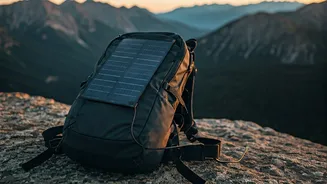
Owning a solar panel is one thing; using it effectively is another. The single biggest factor in your panel's performance is its orientation to the sun. To maximize energy capture, the panel must be angled directly at the sun. Laying it flat on the ground is rarely optimal. Most foldable panels have loops or grommets, allowing you to hang them from your tent, a tree branch, or the back of your backpack. The ideal angle changes throughout the day. In the morning, face it east. At midday, angle it more vertically. In the afternoon, face it west. A simple rule is to position the panel so it casts the smallest possible shadow. Even partial shade from a single leaf or branch can dramatically reduce its output. Making small adjustments every hour or two can make the difference between a trickle charge and a full battery by sundown.
Your Power Bank: The Essential Partner
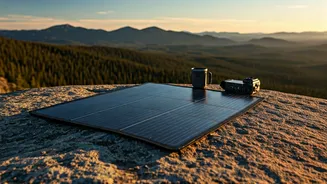
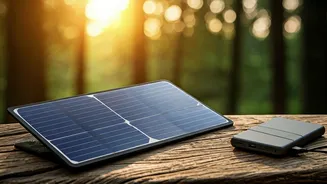
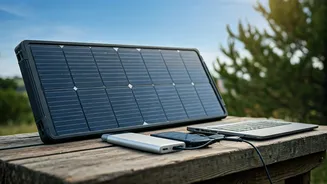
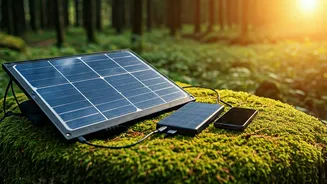
Charging your phone directly from a solar panel can be inefficient. A passing cloud can interrupt the current, causing your device to stop and start charging, which can be hard on its battery. The solution is to use your solar panel to charge a power bank first. Think of the power bank as your energy reservoir. It can accept a variable trickle of power from the sun all day long without issue. Then, in the evening or whenever you need it, you can draw a stable, fast charge from the power bank to juice up your phone, camera, or headlamp. This two-step process is far more efficient and reliable. A 10,000mAh to 20,000mAh power bank is a perfect companion for a 20-30W solar panel and will store enough energy for several days of typical device usage.
Managing Your Power Expectations
Foldable solar panels are fantastic, but they aren't magic. It's important to have realistic expectations about what they can power. They are perfect for low-draw electronics: smartphones, GPS devices, smartwatches, headlamps, camera batteries, and small USB-powered fans or lights. However, they are not designed for high-power appliances that generate heat. Forget about running an electric kettle, a toaster, or a hair dryer. Even powering a laptop is a challenge for most portable setups, requiring much larger, more expensive panels and power stations. The goal of a remote camping solar setup is to keep your essential communication and navigation tools running, not to replicate your home kitchen. Embrace it for what it is: a lifeline for your small-but-critical gadgets.