






In 2027, India’s Pink City will mark a monumental milestone: 300 years of history. But Jaipur’s upcoming anniversary is more than a celebration; it’s a tribute to a visionary king who planned a city that was centuries ahead of its time.
A King with a Cosmic Vision
The story of Jaipur
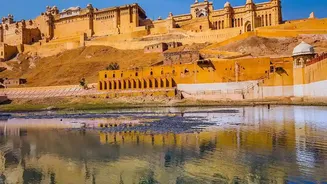
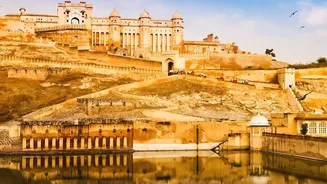
begins with Maharaja Sawai Jai Singh II, who ruled from 1699 to 1743. Facing overcrowding and water scarcity in his capital of Amber, he decided to build a new city on the plains. But Jai Singh was no ordinary ruler; he was a scholar with a deep passion for astronomy, mathematics, and architecture. He envisioned a capital that would be a hub for trade, science, and culture. Aided by architect Vidyadhar Bhattacharya, he designed a city that was a marvel of urban planning, a stark contrast to the organically grown settlements common in the region.
A City Built on Stars and Science
Jaipur is considered one of India's first planned cities, founded on November 18, 1727. Its design is a unique blend of ancient Hindu principles, Mughal aesthetics, and contemporary Western ideas. The city was laid out on a grid plan based on Vastu Shastra, an ancient Indian science of architecture. It was divided into nine blocks, or 'chaukris', representing the nine planets of Vedic astrology. Two blocks housed the state buildings and palaces, while the other seven were allocated for the public. The streets were broad and crossed at right angles, designed for commerce and easy movement. This rational design was so advanced that it continues to inspire urban planners today.
From Royal Capital to 'Pink City'
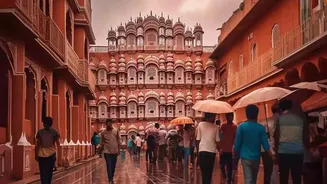
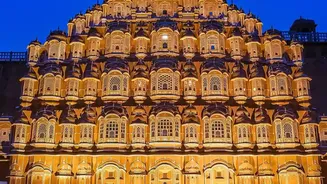
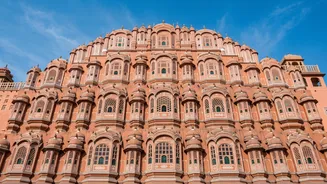
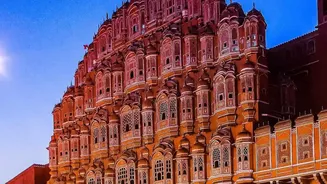
The city's famous nickname, the 'Pink City', came much later. In 1876, Maharaja Ram Singh II ordered the city to be painted a terracotta pink—a colour of hospitality—to welcome the Prince of Wales, Albert Edward. This distinctive hue became an integral part of Jaipur's identity, a visual legacy that endures today. Over the centuries, Jaipur flourished, adding iconic landmarks like the Hawa Mahal, or 'Palace of Winds', in 1799. The city’s well-preserved historic core, with its uniform facades and bustling bazaars, eventually earned it the status of a UNESCO World Heritage Site in 2019.
The Tercentenary Celebrations
As Jaipur's 300th anniversary approaches in November 2027, both the government and local communities are gearing up for the occasion. The Rajasthan government has planned a series of events to commemorate the milestone. Additionally, local trade associations are launching their own year-long campaigns starting from Diwali 2026. These initiatives aim not just to celebrate, but also to focus on heritage conservation, cleanliness, and better traffic management within the Walled City. The goal is to ensure that Jaipur's historic commercial core enters its fourth century more orderly and deeply connected to its unique architectural identity. The anniversary has also caught international attention, with National Geographic naming Jaipur as one of the best places to visit in 2027.