



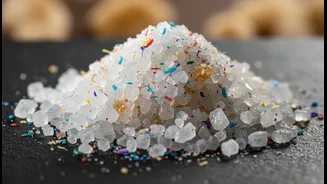



An Invisible Contaminant in Plain Sight
Microplastics are tiny plastic particles, less than five millimetres in size, that result from the breakdown of larger plastic items like bags, bottles, and industrial waste. These particles are now found nearly everywhere on Earth, from the deepest oceans
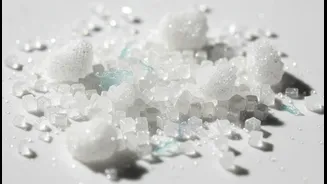
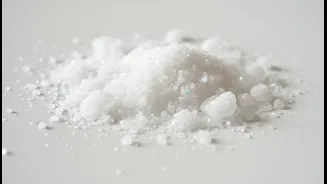
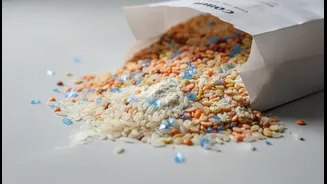
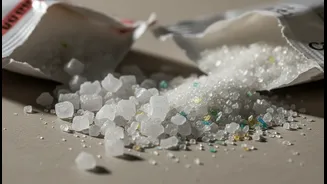
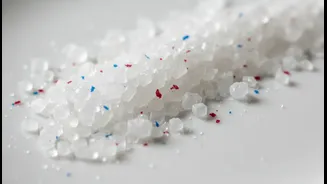
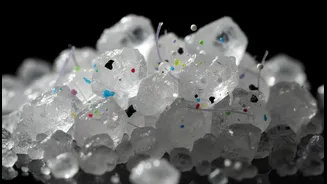
to the air we breathe. Recent studies have confirmed their presence in staple food items, including salt and sugar. A 2024 study by the environmental research organisation Toxics Link found microplastics in all tested samples of Indian salt and sugar brands, whether packaged or unpackaged. This contamination isn't necessarily the fault of a specific brand but rather a symptom of widespread environmental pollution.
How Plastics End Up on Your Plate
The pathways for contamination are varied. For sea salt, the primary source is plastic-polluted ocean water, which leaves behind microplastics during the extraction process. Sugar can become contaminated during processing, packaging, and storage, often from plastic machinery, containers, or even airborne plastic dust. The Toxics Link study found that the concentration of microplastics in salt samples ranged from 6.71 to 89.15 pieces per kilogram, with iodised salt showing the highest levels. In sugar, concentrations ranged from 11.85 to 68.25 pieces per kilogram, with non-organic sugar having the highest amounts.
The Unsettling Health Questions
While research into the direct effects of ingested microplastics on human health is still developing, initial findings from animal and cellular studies are concerning. These studies suggest links to inflammation, a compromised immune system, and metabolic changes. The particles can also carry toxic chemicals like bisphenol A (BPA) and heavy metals, which may leach into the body and disrupt hormonal functions. While authorities like the FDA state that current evidence does not yet demonstrate a definitive risk to human health from levels found in food, the presence of these particles in our bodies—from blood and major organs to the placenta—is a growing cause for alarm among scientists and the public.
The Rise of the Conscious Consumer
This growing awareness is fueling a significant shift in consumer behaviour in India. The demand for 'clean-label' products—those with simple, natural, and easy-to-understand ingredients—is surging. Consumers are increasingly scrutinising labels, researching ingredients, and showing a willingness to pay more for foods they perceive as safer and more transparently produced. The Indian organic food market, valued at over USD 1.9 billion in 2024, is projected to grow at over 20% annually, reaching nearly USD 11 billion by 2033. This is not just a trend but a long-term lifestyle shift towards healthier living.
Decoding 'Clean' and 'Certified'
In response to this demand, terms like 'organic', 'natural', and 'certified clean' are becoming more prominent. But what do they mean? Organic certifications, like the one regulated by FSSAI, generally focus on prohibiting synthetic pesticides and fertilisers. While this is a step towards cleaner food, it does not specifically test for microplastics. Some international certifications like 'Certified C.L.E.A.N.' aim for a more holistic standard, evaluating if products are Conscious, Live, Ethical, Active, and Nourishing. However, 'clean label' itself is not a regulated term and can often come down to a brand's commitment to minimal processing and additive-free ingredients. The Toxics Link study did note that organic rock salt had the lowest concentration of microplastics among the salts tested.
Making Informed Choices
Given the widespread nature of microplastic contamination, avoiding it entirely is difficult. However, consumers can take steps to minimise exposure. Choosing products with minimal processing and sustainable packaging can help. For salt, options like rock salt may contain fewer microplastics than sea salt. Supporting brands that are transparent about their sourcing and production methods also empowers consumers. In response to these concerns, the FSSAI has launched a project to develop methods for detecting micro and nano-plastics in food, which will help establish safety standards and regulations in the future. Ultimately, individual choices, when multiplied, send a powerful message to the food industry to prioritise safety and sustainability.