


Embrace Local and Seasonal Blooms
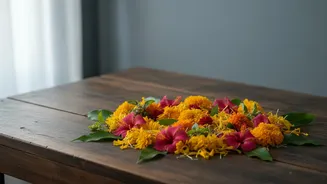
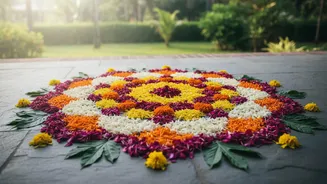
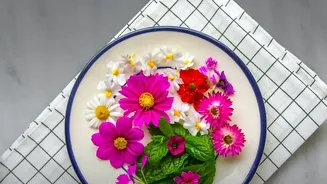
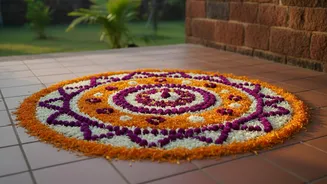
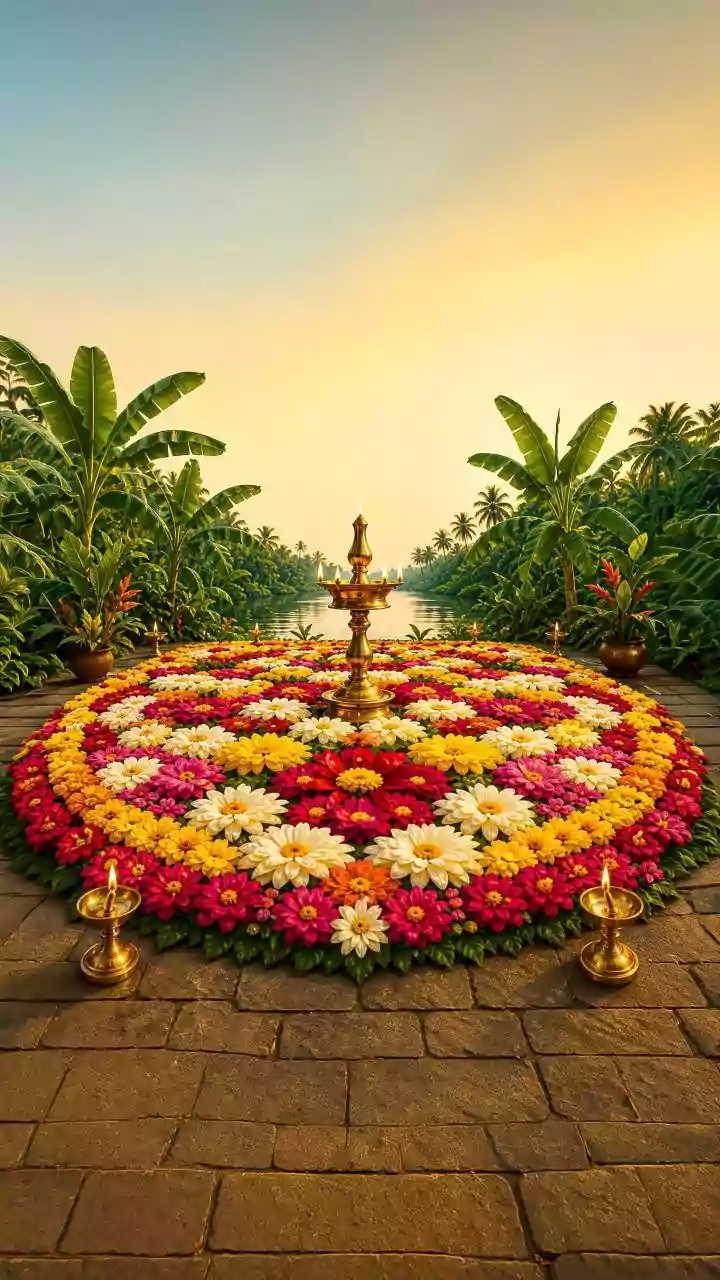
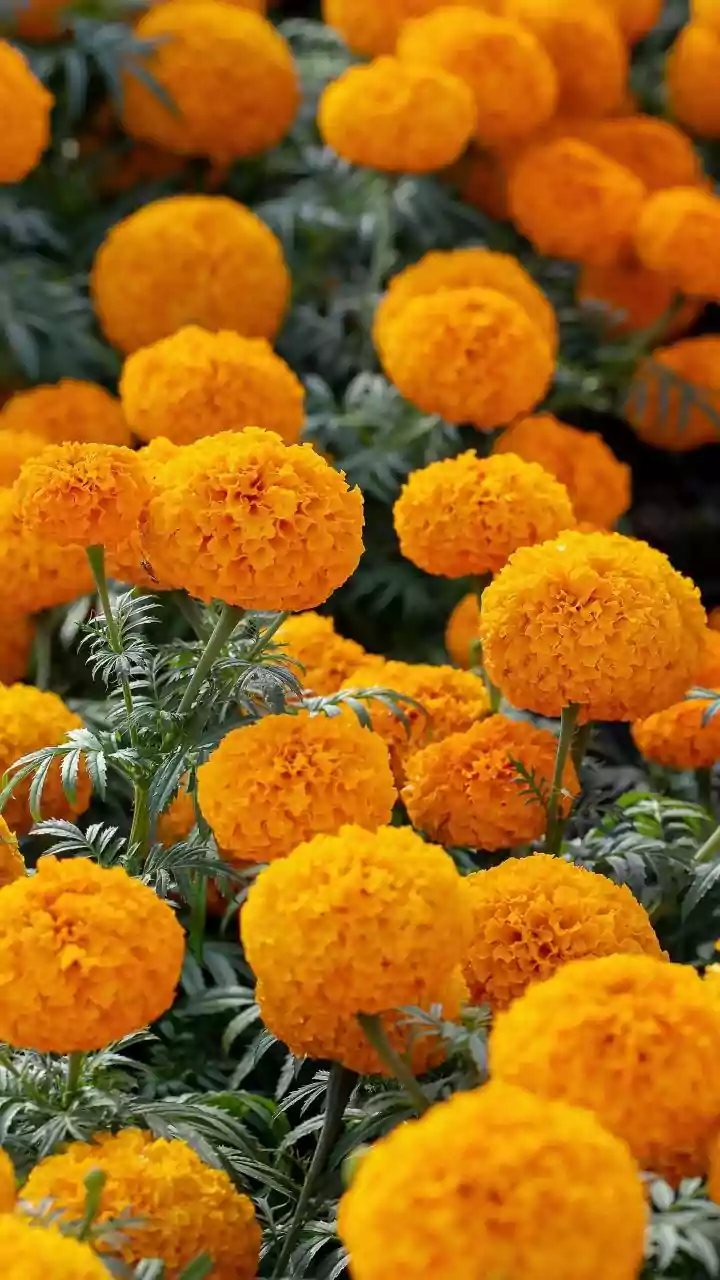
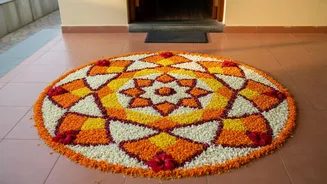
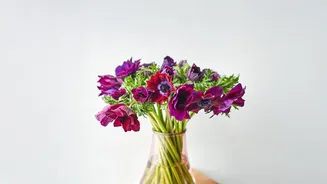
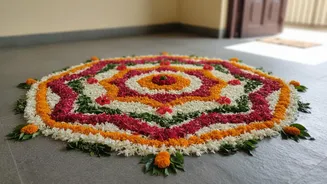
The most authentic Pookkalam is one that reflects its surroundings. Traditionally, these floral designs used flowers endemic to Kerala, like the white Thumba, red Chethi, and yellow Mukkutti. Modern Pookkalams often rely on commercially grown marigolds
and chrysanthemums, which are beautiful but can have a larger carbon footprint due to transportation. By consciously choosing locally sourced, seasonal flowers, you not only support local farmers and economies but also reduce environmental impact. Look for marigolds (Jamanthi), hibiscus (Chemparathy), jasmine, and globe amaranth (Vadamalli) from nearby markets or gardens. This practice connects your celebration directly to the harvest spirit of Onam.
Forage and Find in Your Own Backyard
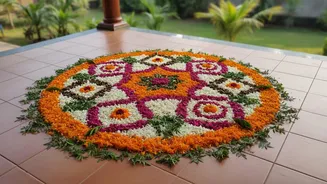
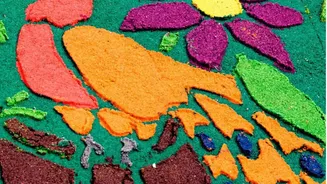
A truly personal and waste-free Pookkalam can begin in your own garden or neighbourhood. Before heading to the market, explore the natural materials available to you. Bright green leaves, fallen seed pods, and colourful twigs can be used to create beautiful borders and textures. This not only reduces the quantity of flowers you need to buy but also adds an organic, earthy touch to your design. Traditionally, elements like rice flour were also used to create fine details and borders, a practice that is both beautiful and completely biodegradable. This approach encourages creativity and resourcefulness, turning the act of gathering into part of the celebration itself.
Rethink Size and Scale
In the age of social media, there can be pressure to create enormous, spectacular Pookkalams. However, tradition reminds us that the first Pookkalam of the festival, the Athapoo, is typically small and simple. A smaller, more intricate design can be just as breathtaking as a massive one, while significantly reducing the number of flowers required. Consider dedicating a specific, smaller area for your Pookkalam. This allows you to focus on the detail and artistry of your design without generating excess waste. Planning your design with a chalk outline first also helps you estimate the exact quantity of petals needed, preventing over-buying.
Avoid Artificial and Non-Biodegradable Elements
To add extra sparkle, many modern Pookkalams incorporate plastic glitter, synthetic colours, and foam shapes. While these may look attractive, they complicate the disposal process and contaminate the organic flower waste, preventing it from being composted. The Kerala Green Protocol, promoted by the Suchitwa Mission, explicitly encourages avoiding such non-biodegradable products in festival decorations. Stick to the natural beauty of the petals, leaves, and other organic materials like coloured rice or pulses for texture and variety. This ensures that your entire Pookkalam can return to the earth without causing harm.
Give Your Pookkalam a Second Life
The life of your Pookkalam doesn't have to end once the festivities are over. Instead of sweeping the wilted flowers into the bin, give them a new purpose. The most eco-friendly option is composting. Flower petals are rich in nutrients and make an excellent addition to any home compost bin, eventually turning into rich manure for your plants. If you don’t have a compost setup, you can simply bury the petals in your garden soil. Alternatively, leftover or slightly wilted flowers can be used to create fragrant potpourri, natural dyes, or calming aromatherapy oils. Some people even use them to make handmade paper or soaps. By planning for the afterlife of your Pookkalam, you complete the cycle of nature that Onam celebrates.