







UPI Goes Global: Your Indian Bank Account Abroad
The biggest change for Indian travellers is the steady expansion of UPI into other countries. Through its international arm, NPCI International Payments Limited (NIPL), the NPCI has partnered with payment networks across the globe. This means you can
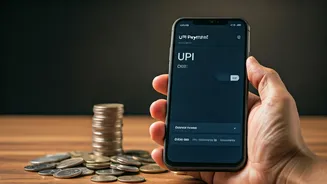
now use your favourite UPI app to pay merchants in popular destinations like France, the UAE, Singapore, Sri Lanka, and Mauritius, with more countries being added to the list. The process is designed to be seamless: you scan a local QR code at a shop, and the payment is debited from your Indian bank account in rupees. This move aims to reduce reliance on cash and costly international card swipes, making travel payments much simpler. Before you jet off, you'll typically need to activate the 'international payments' feature within your specific UPI app.
The New Rule: Live QR Scans Only
While global UPI is expanding, a key circular issued by NPCI in April 2025 introduced a significant security measure that directly impacts travellers. The directive has stopped all international merchant payments made through the “QR Share & Pay” method. This means you can no longer make a payment by scanning a QR code that a merchant has sent you via WhatsApp or email, or one that you have saved in your phone’s gallery. The new rule requires you to perform a 'live scan' of a physical QR code at the merchant’s location. This change was implemented to curb potential fraud and improve the security and oversight of cross-border financial transactions, ensuring that payments are made legitimately at the point of sale.
Clarity on Currency Conversion
One of the perennial worries for international travellers is currency conversion rates. A very recent development in July 2026 aims to tackle this head-on. NPCI has announced a collaboration with J.P. Morgan Payments to enable real-time foreign exchange (FX) rates for cross-border UPI transactions. Previously, the exact conversion rate might not have been clear at the moment of payment. This new integration means that when you scan a QR code abroad, your UPI app will show you the converted amount in Indian Rupees on the spot, based on live exchange rates. This provides much-needed transparency, allowing you to see exactly how much you are paying in your home currency before you approve the transaction, eliminating guesswork and post-transaction surprises.
Understanding Your Transaction Limits
With the convenience of UPI abroad comes the question of limits. The standard per-transaction limit for most international UPI payments is generally aligned with the domestic limit of ₹1 lakh. However, recognising the higher costs associated with travel, NPCI has increased the per-transaction limit to ₹5 lakh for specific categories, including travel and hotel payments. It is crucial to remember that these are the limits set by NPCI. Your individual bank or UPI app provider has the discretion to set their own, often lower, daily or per-transaction limits. Therefore, before travelling, it is always wise to check with your bank to understand the exact international UPI transaction limits applicable to your account to avoid payment failures.
Welcoming the World to India
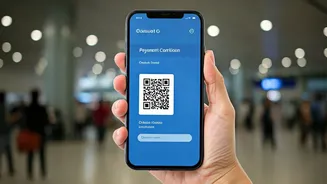
The flow of payment innovation is not just one-way. NPCI is also making it easier for foreign nationals and Non-Resident Indians (NRIs) to use digital payments when visiting India. The UPI One World initiative allows international travellers to set up a prepaid UPI wallet without needing an Indian bank account or local SIM card. Travellers from G20 countries and others can get this facility at select international airports. They can load the wallet with funds and then scan UPI QR codes to pay merchants across India, removing the hassle of carrying large amounts of cash or dealing with currency exchange.