


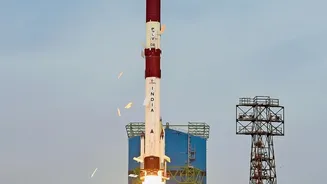
A Historic First for India and the World
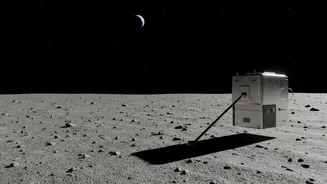
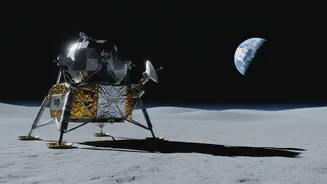
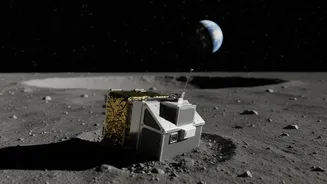
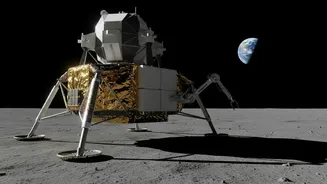
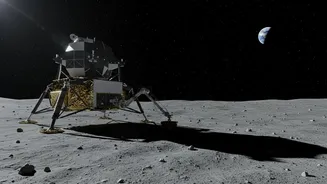
When ISRO's lander successfully touched down on the Moon's south pole, it marked a monumental achievement. India became the first nation to explore this challenging and scientifically promising region on the ground. Unlike the well-studied equatorial
regions visited by past missions, the south pole is a land of extremes, with permanently shadowed craters and the potential for frozen water. Previous knowledge of this area came from orbiters, which could only observe from a distance. The lander's success lies in its ability to perform in-situ analysis, which means studying the lunar soil and environment directly on the surface, providing a level of detail that was previously impossible to achieve.
The Advanced Eyes and Hands on the Moon
The lander isn't just a static platform; it's a sophisticated laboratory equipped with a suite of instruments designed to decode the Moon's secrets. The key players are the Laser-Induced Breakdown Spectroscope (LIBS) and the Alpha Particle X-ray Spectrometer (APXS). LIBS works by firing a high-intensity laser at the soil, vaporizing a tiny amount into plasma. By analyzing the light from this plasma, it can identify the elements present. APXS, meanwhile, bombards the surface with alpha particles and X-rays and reads the resulting energy signatures to determine the elemental makeup of the rocks and soil. Together, these instruments provide a comprehensive chemical profile of the landing site. Another critical instrument is Chandra’s Surface Thermophysical Experiment (ChaSTE), a probe that physically penetrates the lunar topsoil to measure its temperature at different depths.
Groundbreaking Finding: The Sulphur Surprise
One of the most significant early discoveries has been the unambiguous confirmation of sulphur in the lunar soil. While other elements like aluminum, calcium, iron, and silicon were expected, sulphur was a surprise. Orbiting instruments were not capable of definitively detecting it in this region. The in-situ measurements by both LIBS and APXS leave no doubt about its presence. This is a crucial finding because sulphur is a volatile element. Its existence provides clues about the Moon’s geological history, possibly pointing to past volcanic activity. Scientists are also exploring the connection between sulphur and the potential presence of water ice, as the element could be trapped within frozen deposits, offering a new marker in the search for this vital resource.
More Than Just Rocks: A Tale of Two Temperatures
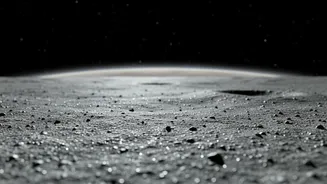
Perhaps just as groundbreaking is the data from the ChaSTE instrument. For the first time ever, we have a temperature profile of the lunar south pole's subsurface. The results were astounding. While the surface temperature can be a balmy 50-60 degrees Celsius in the sunlight, just 10 centimeters below, it plummets to a frigid minus 10 degrees Celsius. This massive temperature difference of around 60 degrees reveals that the lunar topsoil, or regolith, is an incredibly powerful thermal insulator. This fine, powdery dust doesn't conduct heat well, meaning the Sun's warmth barely penetrates the surface. This has enormous implications for future lunar exploration. It suggests that water ice could be stable at very shallow depths, protected from the harsh solar radiation by this insulating blanket of soil.
Why This Data Changes Everything
The unprecedented data from ISRO’s lander is more than just a scientific curiosity; it's a roadmap for the future of lunar exploration. The confirmation of sulphur and other elements provides a ground truth for a region ripe for resource utilization. The extreme temperature gradient informs engineers how to design future habitats, rovers, and equipment that can survive and operate in this environment. Furthermore, a clever 'hop' experiment, where the lander fired its engines to move a short distance, revealed that the soil has a two-layer structure: a loose, fluffy top layer over a much denser, more compact material underneath. This is vital information for designing future landing systems and for any construction activities. These findings place India at the forefront of lunar science, providing the foundational data upon which the next generation of missions—from India and around the world—will be built.