







The Power of a Single Booking
In the world of air travel, not all connections are created equal. The key distinction lies in whether your entire journey is under a single booking reference, also known as a Passenger Name Record (PNR). When you book a multi-leg trip in one transaction,
you create what's called a 'protected connection'. This means the airline has sold you a complete journey from your origin to your final destination, not just a series of separate flights. Even if the flights are operated by different partner airlines, having one ticket number means the airline that sold it is responsible for getting you there. This is fundamentally different from a 'self-transfer', where you book separate tickets for each leg. With a self-transfer, you are entirely responsible for making the connection, and if a delay on the first flight causes you to miss the second, the second airline considers you a no-show.
Your Rights on a Protected Connection
If a delay on your first flight causes you to miss a protected connection, the airline has a duty of care. Their primary responsibility is to rebook you on the next available flight to your destination at no extra cost. In India, the Directorate General of Civil Aviation (DGCA) has specific rules. If you miss a connecting flight booked on the same ticket number, the airline must provide an alternate flight or compensation in addition to a full refund if you choose not to travel. While specific cash compensation for a simple delay is not standard in India, the airline's duty of care during the wait is mandated. This often includes providing meal vouchers for significant delays and, if the rebooked flight results in an overnight stay, arranging for hotel accommodation and transport.
When the Airline Isn't at Fault
The airline's responsibility is not absolute. If you miss your connection for reasons within your control—like spending too much time shopping, getting lost in the airport, or not leaving enough time for security—the airline is not obligated to help. This is why booking itineraries with very short layovers can be risky. Furthermore, airlines are often exempt from paying compensation for delays caused by 'extraordinary circumstances'. These are events outside the airline's control, such as severe weather, air traffic control strikes, or security risks. However, even in these situations, many jurisdictions, including India, maintain that the airline's 'duty of care' (providing meals or accommodation during long waits) still applies, even if financial compensation does not.
Immediate Steps to Take at the Airport
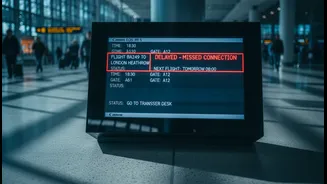
The moment you realize you’ve missed your connection, act quickly and calmly. Your first stop should be the airline’s transfer desk, which is specifically set up to handle these situations. Do not go to the main check-in counter. Have your boarding passes for both flights and your passport ready. Explain the situation clearly and calmly. The staff are there to rebook you. It's also wise to ask for confirmation of the delay's cause from the airline that operated the delayed flight, sometimes called a 'missed connection certificate'. This document can be crucial if you need to make a claim on your travel insurance. Also, inquire about the status of your checked baggage; typically, it will be retagged and forwarded on your new flight, but it's always best to confirm.