




The Sun's Violent Outbursts
Our modern world runs on a fragile web of technology. From making a UPI payment to navigating with GPS or simply turning on a light, we depend on systems that feel constant and reliable. Yet, this entire infrastructure is vulnerable to violent outbursts
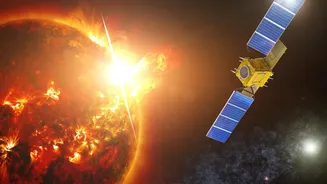
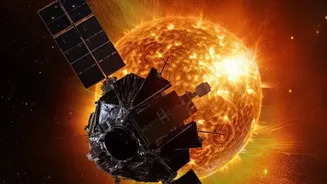
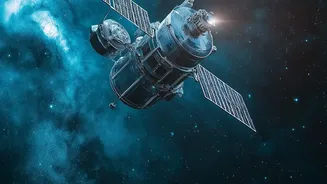
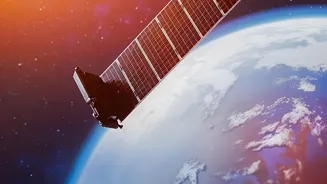
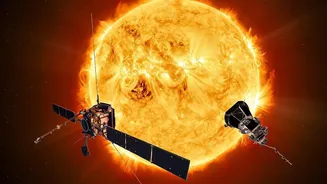
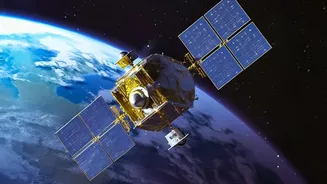
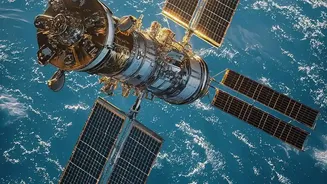
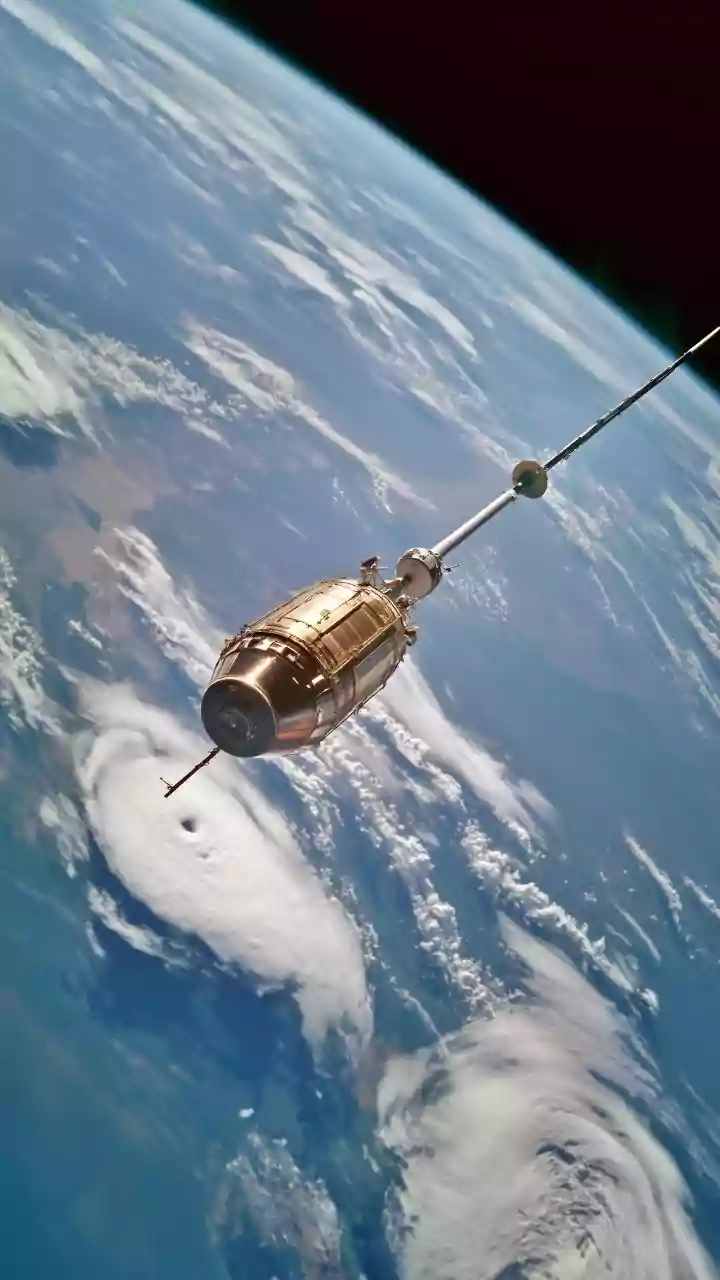
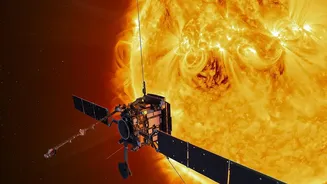
from a source 93 million miles away: the Sun. Occasionally, the Sun ejects massive clouds of charged particles and magnetic fields, known as coronal mass ejections (CMEs). If one of these heads towards Earth, it can trigger a geomagnetic storm—a major disturbance of our planet's protective magnetic shield. The consequences are not just theoretical. These storms can induce powerful, uncontrolled electrical currents in our power lines, potentially damaging critical transformers and causing widespread blackouts. In space, the storm is even more direct, capable of frying satellite electronics, disrupting communications, and increasing orbital drag, which can shorten a satellite's lifespan. This makes tracking these events a matter of national importance.
Earth's First Line of Defence
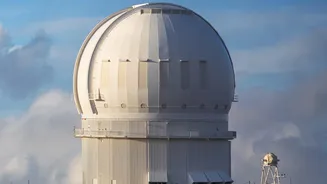
While satellites in space provide an early warning that a solar storm is on its way, the crucial task of monitoring its real-time impact on Earth falls to a global network of ground-based observatories. These facilities are the planet's nervous system, sensing the moment a storm begins to interact with our magnetic field. They are strategically placed across the globe, from the polar regions to the equator, to build a complete picture of the storm's effects. Without these ground stations, space weather forecasters would see the approaching storm but would be blind to its specific terrestrial impacts as they happen. These observatories provide the continuous, long-term data needed to understand, model, and ultimately prepare for these powerful natural events. They act as silent sentinels, providing vital information to power grid operators, airlines, and satellite companies so they can take protective measures.
The Tools of a Storm Tracker
The primary tool inside a geomagnetic observatory is a highly sensitive instrument called a magnetometer. Think of it as an incredibly precise compass that, instead of just pointing north, measures the full strength and direction of the local magnetic field down to the tiniest fluctuations. When a geomagnetic storm hits, the magnetometers record the frantic variations as Earth's magnetic field is battered by solar particles. These readings are translated into indices, like the Kp index, which grade the storm's intensity on a scale for forecasters and utility companies. Other instruments often work alongside magnetometers. Riometers (Relative Ionospheric Opacity Meters) measure the absorption of cosmic radio waves to gauge disturbances in the upper atmosphere, while ionosondes send radio pulses upward to probe the state of the ionosphere, a region critical for radio communications.
India's Watch on the Skies
India plays a significant role in this global effort through the Indian Institute of Geomagnetism (IIG), an autonomous body under the Department of Science and Technology. With a history stretching back to the Colaba Observatory in 1826, IIG now operates a network of a dozen magnetic observatories across the length and breadth of the country. This network includes stations in locations like Gulmarg in the Himalayas, Shillong in the northeast, and Tirunelveli near the magnetic equator. This wide geographic distribution is critical for understanding how space weather affects the Indian subcontinent specifically. Data from these observatories, alongside ISRO's space-based missions like Aditya-L1, helps create sophisticated models to predict the impact of solar events on India's vital infrastructure, from its power grid to its rapidly expanding satellite and navigation services.
From Data to Action
The data collected by these ground observatories is not just for scientific study; it's immediately actionable. When magnetometer readings indicate a severe storm is underway, alerts are sent to power grid operators. They might respond by rerouting power, taking certain transformers offline, or cancelling scheduled maintenance to reduce the grid's vulnerability to damaging induced currents. Similarly, satellite operators can put sensitive electronics into a safe mode to protect them from harmful radiation and electrical charging. Airlines may also alter flight paths, especially for planes flying over polar regions where the Earth's magnetic protection is weakest and radiation exposure and communication blackouts are more likely during a storm. This seamless flow of information from observatories to operators is what turns scientific measurement into practical protection, safeguarding the technologies that underpin modern life.