






The Role of an FSSAI License
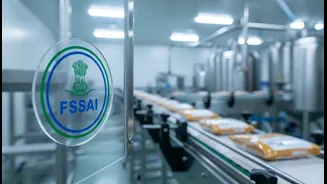
The Food Safety and Standards Authority of India (FSSAI) license is a mandatory legal requirement for any business involved in the manufacturing, processing, storage, distribution, or sale of food products in the country. Think of it as a 'license to operate'.
To obtain it, a Food Business Operator (FBO) must meet a baseline set of criteria concerning premises, hygiene, and basic food handling protocols. The license number, which must be displayed on packaging, signifies that the business has registered with the regulatory authority and, in principle, agrees to adhere to the standards laid out in the Food Safety and Standards Act, 2006. This initial step is crucial for accountability and builds a foundation of consumer trust, assuring the public that the business is on the government's radar.
What Are Routine Manufacturing Controls?
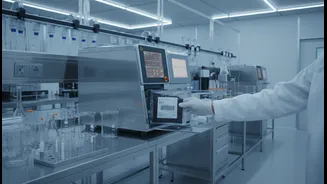
Routine manufacturing controls, often called Good Manufacturing Practices (GMP), are the daily, continuous systems and procedures that a manufacturer implements to ensure product safety and consistency. This goes far beyond a one-time license application. GMP covers every aspect of production: the quality and sourcing of raw materials, the cleanliness of equipment and facilities, proper staff training and hygiene, pest control, precise temperature management, and preventing cross-contamination between different ingredients. It's a proactive approach, focused on identifying potential hazards at every step and controlling them before they become a problem. Unlike a license, which is a static document, GMP is a dynamic, ongoing process that defines the culture of quality within a manufacturing unit.
A Periodic Check vs. Daily Diligence
Here lies the core of the issue. An FSSAI license is typically granted for a period of one to five years and involves inspections that are periodic, not constant. While FSSAI mandates that manufacturers follow GMP, the license itself is fundamentally a snapshot in time—a confirmation that, at the point of inspection, the facility met the required standards. However, food production is a 24/7 operation. The safety of a product depends entirely on the diligence, discipline, and controls applied every single day, to every single batch. A well-run company doesn't just clean up for the inspector; it maintains those high standards continuously. An FSSAI license ensures a business has a ticket to the game, but routine controls determine how well they actually play.
Shared Responsibility for Food Safety
Ensuring the food supply is safe is a shared responsibility. The FSSAI's role is to set the standards, issue licenses, and conduct surveillance. The manufacturer's responsibility is to go beyond mere compliance and embed a robust culture of safety and quality through stringent daily controls. This includes maintaining detailed records, conducting their own regular product testing, and investing in employee training. But consumers also play a part. Being an informed consumer means understanding what labels and certifications truly represent. It means looking beyond just the FSSAI logo to consider a brand's reputation, checking for intact packaging, and being aware of expiry dates.