




Sourcing the Soul of the Craft
The journey begins months before any festival, often as early as April or May for the autumn season that includes Durga Puja and Diwali. Artisans, known as 'kumhars', start by sourcing their primary material: clay. This isn't just any soil. Generations
of knowledge guide them to specific riverbeds and dried lakebeds to find the perfect blend. The clay must have the right stickiness and consistency. Once sourced, often at a significant cost as free sources become polluted or inaccessible, the preparation is painstaking. The clay is cleaned of impurities, mixed with materials like sand or rice husk to prevent cracking, and kneaded thoroughly with water to achieve a smooth, pliable consistency.
The Dance on the Wheel
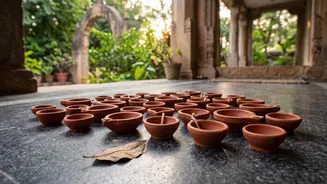
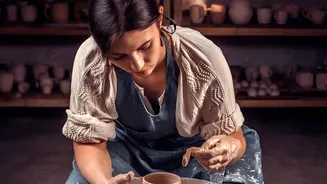
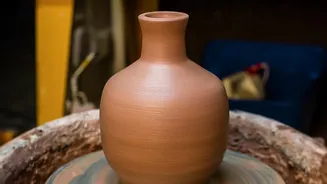
With the clay ready, the potter's wheel starts its rhythmic spin. This is where skill and speed merge. For items like diyas, small bowls, and pots, the wheel is essential for creating uniform shapes quickly. Traditionally, only men would work the wheel, while women handled other stages of the process. An experienced artisan can throw hundreds of diyas in a single day, their hands moving with a muscle memory passed down through generations. Each piece, though seemingly simple, is a testament to immense skill, shaped in anticipation of the millions of lamps that will eventually light up homes across the country.
Giving Form to Faith
For larger, more intricate pieces like the idols of Goddess Durga or Lord Ganesha, the process is more sculptural. It starts with building a sturdy frame, or skeleton, often from bamboo and straw. Upon this frame, artisans meticulously apply layers of clay. The first layer is rough, mixed with husk to build the basic form. Subsequent layers use finer, smoother clay, allowing for the detailed sculpting of facial features, hands, and adornments. This stage requires immense artistry and patience, as the artisans breathe life and divinity into the raw earth, creating not just a product, but a vessel for faith.
The Trial by Sun and Fire
Once shaped, the clay items must be dried completely. This is a delicate phase where the artisan is at the mercy of the weather. The products are left to dry slowly in the shade or at room temperature for several days to prevent cracking. Sudden rain can be disastrous, ruining weeks of hard work. After drying, the items are ready for firing. They are carefully stacked in a kiln, which can be a simple open pit on the ground. Insulated with materials like cow dung and sawdust, the kiln is fired for several hours at temperatures high enough to turn the fragile clay into hardened, durable terracotta. This firing process transforms the colour of the clay, often to a rich reddish-brown.
A Flourish of Festive Colour
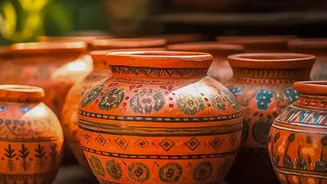
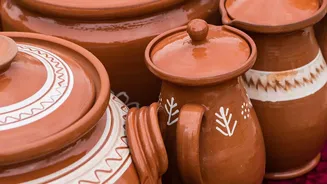
Out of the kiln, the baked clay is a blank canvas. The final stage is painting and decoration, which often becomes a family affair. A base coat is applied, followed by vibrant, colourful paints that bring the diyas and idols to life. Intricate patterns, expressive eyes, and decorative flourishes are added with fine brushes. For idols, this is also when clothing and jewellery are attached. The painting of the eyes, a ritual known as 'Chokhudan' for Durga idols, is considered a sacred moment, believed to be when the divine presence enters the idol. This final touch of colour transforms the earthy terracotta into a dazzling component of festive celebration.
The Race Against Time and Tide
With their workshops full of finished products, the artisans face their final challenge: the market. The demand for their craft is highly seasonal, peaking intensely during the festival weeks. This period is a frantic race to sell enough to sustain their families for the rest of the year. They face stiff competition from cheaper, mass-produced items, often made of plastic or plaster of Paris. Furthermore, many artisans sell to middlemen, who pay low prices and reap larger profits in city markets. Despite these struggles and the lure of more stable jobs for the younger generation, these potters continue their ancestral craft, ensuring that the light of tradition continues to shine.