





A New Kind of Satellite
On October 1, 2026, Indian space startup TakeMe2Space is scheduled to launch its MOI-1A satellite aboard a SpaceX rocket. This isn't just another satellite joining the thousands already circling the Earth. Described as India's first orbital computing
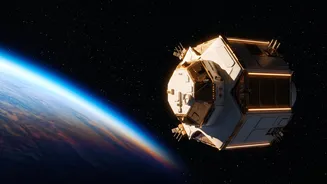
satellite, MOI-1A represents a fundamental change in how we use space. Developed by the Hyderabad-based startup, this sub-50 kg spacecraft is equipped with powerful Nvidia Orin NX chips designed for edge computing. Unlike its predecessors, which were designed to simply collect vast amounts of raw data and beam it back to ground stations for analysis, MOI-1A will do the heavy lifting in space itself. This mission follows a previous test satellite that successfully ran AI applications uploaded from Earth, proving the concept's viability.
The AI Edge in Orbit
The innovation behind MOI-1A is a concept called orbital computing, or edge AI at altitude. For decades, the model for Earth observation has been to capture images and sensor readings, then spend significant time and resources downlinking massive files to Earth. This creates a bottleneck, delaying access to critical insights. Orbital computing flips the script. By processing data directly on the satellite using artificial intelligence, only the valuable, finished analysis is sent back. This drastically cuts the delay from observation to action from hours down to minutes. Customers, including 23 already signed up for this mission, can upload their own AI models to the satellite. As the spacecraft passes over a specified area, it runs the analysis and transmits just the results—a game-changer for efficiency and speed.
Real-World Impact and Applications
The practical applications of this technology are vast and transformative for India. For disaster management teams, it means getting near-real-time assessments of floods or cyclones instead of waiting for data to be processed. In agriculture, farmers can receive timely insights about crop health. Other commercial users already on board span mining, supply-chain management, and insurance. Even defence and national security operations stand to benefit from faster, more secure intelligence. By processing sensitive data in orbit, it reduces reliance on terrestrial ground stations and enhances data security. TakeMe2Space also plans to offer in-orbit data storage, providing an additional layer of backup for financial and defence clients.
India's Growing Role in the Global Space Economy
The launch of MOI-1A is a significant milestone for India's burgeoning private space ecosystem. While global players like SpaceX and Starcloud are also developing orbital computing capabilities, often with more powerful hardware, TakeMe2Space's focused edge-computing approach carves out a crucial niche. This mission, along with projects from other Indian startups like GalaxEye and Pixxel, signals a strategic shift. The country is moving beyond providing launch services to creating high-value, inventive technologies that can compete on the world stage. By designing and manufacturing most of its subsystems in India, TakeMe2Space is also contributing to the nation's goal of technological self-reliance, or 'Atmanirbhar Bharat', in the critical space sector.