





Meet Pushpak, India’s Space Shuttle
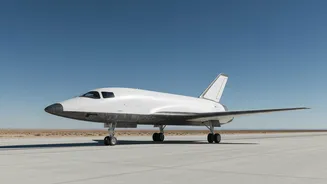
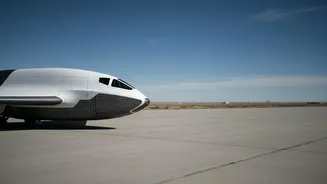
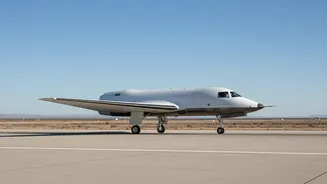
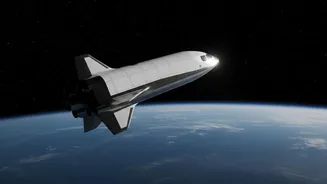
India's space agency, ISRO, recently celebrated a landmark achievement with its Reusable Launch Vehicle (RLV) program. The star of the show is a winged vehicle named 'Pushpak'. Think of it as a robotic space plane. The latest in a series of crucial landing
experiments (LEX) saw Pushpak dropped from an Indian Air Force Chinook helicopter at an altitude of 4.5 kilometres. From there, it was on its own. The vehicle had to autonomously navigate its way to a runway at the Aeronautical Test Range in Chitradurga, Karnataka, and perform a perfect landing. This test, the third of its kind, was designed to be even tougher than the last, proving Pushpak can handle challenging wind conditions and land precisely even when released further away from the runway. This success is a massive validation of the complex navigation and control systems developed indigenously by ISRO.
The Billion-Dollar Question: How Does This Save Money?
The core promise of reusable launch vehicles is a dramatic reduction in the cost of space access. Traditionally, rockets are single-use giants. The most expensive and technologically complex parts—the engines and booster stages—are discarded after every mission, burning up in the atmosphere or crashing into the ocean. This makes space launches incredibly expensive. A reusable system, however, is designed for the most valuable parts to return to Earth safely. Pushpak is designed to fly back and land on a runway like an airplane. By recovering, refurbishing, and reusing these components for multiple missions, ISRO aims to bring down the cost of putting a satellite into orbit by a factor of ten. This would transform the economics of space, making it cheaper for companies to launch communication satellites, for scientists to deploy research instruments, and for India to pursue ambitious future projects like its own space station.
Nailing the Landing: What the Test Achieved
The recent landing experiment was about more than just getting the vehicle back on the ground. It simulated the high-speed, unmanned conditions of a vehicle returning from orbit. Pushpak landed at a speed of over 320 kmph, faster than a commercial aircraft. It used a combination of a brake parachute, landing gear brakes, and a nose wheel steering system to slow down and stop safely on the runway. Critically, the winged body and flight systems used in this test were the very same ones used in the previous experiment, proving their robustness and reusability. The test successfully validated the advanced guidance algorithms that allow the vehicle to correct its own course, which is essential for the eventual goal of returning from an actual orbital flight.
The Road Ahead: From Atmosphere to Orbit
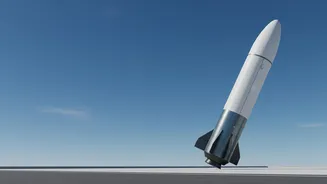
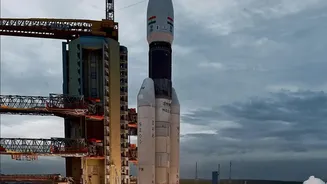
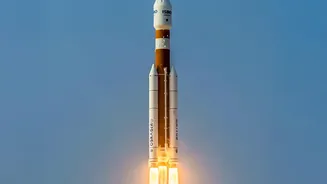
While a huge success, these landing experiments are just one piece of the puzzle. The 'LEX' series of tests are now complete. The next major leap for the Pushpak program is the Orbital Re-entry Experiment (ORE). In this future mission, a scaled-up version of Pushpak will be launched into a 400 km orbit on top of a conventional rocket, like a modified GSLV. It will then spend time in orbit before de-orbiting, re-entering the Earth's atmosphere at hypersonic speeds, and finally gliding back to land autonomously on a runway. This will be the ultimate test of the vehicle's thermal protection system, which must withstand the intense heat of re-entry, and its ability to perform a precise landing after a journey from space. ISRO is already preparing for this next phase, developing facilities to test crucial components like a retractable landing gear system.