







A Digital Lifeline from Orbit
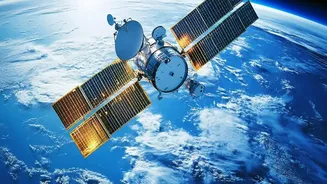
Since the early days of Russia's full-scale invasion, SpaceX's Starlink satellite internet service has been indispensable for Ukraine. When conventional communication networks were destroyed or jammed, thousands of Starlink terminals provided a vital
link for the military, government, and civilians. This network has enabled everything from basic communication for soldiers on the front lines and coordinating drone operations to ensuring humanitarian aid can be directed effectively. The system, which uses a constellation of low-Earth orbit satellites, proved resilient against Russian cyberattacks and became a symbol of how private-sector technology could have a decisive impact on a 21st-century conflict.
What Are the New Restrictions?
The core of the recent concern revolves around a newly imposed speed limit on the Starlink and the military-grade Starshield services within Ukraine. According to President Zelenskyy and other Ukrainian officials, the service is now being throttled once a terminal moves faster than approximately 161 kilometres per hour (100 mph). This has profound implications for Ukraine's military, as it effectively grounds the use of some of its fastest interceptor drones, which are used to defend against Russian attacks, including jet-powered Shahed drones. The restrictions also affect drones used to deliver critical supplies like food and water to frontline troops.
A 'Planned Operation'
President Zelenskyy has asserted that these restrictions are not a technical glitch but a deliberate action targeted specifically at Ukraine. He revealed that Ukrainian officials conducted tests by driving vehicles equipped with Starlink terminals at high speeds in neighbouring European Union countries. In those tests, the connection remained stable at speeds exceeding 180 km/h. However, the moment the vehicles crossed back into Ukraine, the service would cut out at the same speeds. "The conclusion is this: the restrictions apply in Ukraine, but they do not apply in European Union countries. This means it is a planned operation," Zelenskyy stated on October 17.
A Tangle of Blame
Pinpointing who ordered the slowdown has become a contentious issue. Elon Musk, the head of SpaceX, has stated that the military-grade Starshield systems are controlled by the U.S. government and that any limits are decided by the U.S. military and the President. However, President Zelenskyy has suggested he believes the order came from the U.S. government as a 'message'. Ukrainian officials have reported receiving conflicting information, with SpaceX personnel allegedly blaming the White House, and White House contacts pointing the finger back at Elon Musk. Meanwhile, U.S. officials have denied ordering any slowdown, creating a confusing and tense situation for Kyiv.
The Peril of Dependence
This incident highlights the precarious position Ukraine is in, relying heavily on a service provided by a private foreign company and its mercurial CEO, whose decisions are influenced by U.S. government policy. The history of the service has been fraught with uncertainty, including public disputes over funding. While Zelenskyy has stated that Kyiv is not actively looking to replace Starlink, he confirmed that Ukraine is working with partners, including France, to secure additional communications capabilities to reduce its dependency. The situation has also alarmed European partners, who now recognise the risk of relying on infrastructure that can be restricted regardless of contracts.