






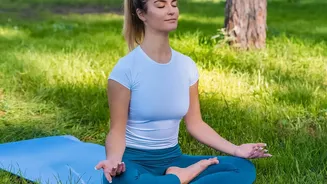
The Science of a Single Breath
When you feel stressed, your body enters a “fight-or-flight” state, activating the sympathetic nervous system. Your heart rate increases, breathing becomes shallow, and stress hormones like cortisol flood your system. Mindful breathing, or pranayama,
acts as a manual override. By taking slow, deliberate breaths, you stimulate the vagus nerve, a crucial part of the parasympathetic nervous system—your body’s “rest-and-digest” mode. This simple action signals to your brain that you are safe, helping to lower your heart rate, reduce blood pressure, and decrease cortisol levels. Deep diaphragmatic breathing, where you engage the large muscle at the base of your lungs, is especially effective at triggering this relaxation response.
From Boardroom Jitters to Family Friction
The applications for mindful breathing are endless. Before a major presentation at work, a few minutes of controlled breathing can sharpen your focus and reduce performance anxiety. Instead of reacting impulsively during a tense conversation with a colleague or family member, a conscious pause to take a deep breath can create the mental space needed for a more thoughtful response. This practice isn't just for moments of high stress; it helps build long-term emotional resilience. Regular practice can improve your ability to stay calm and centered, even when faced with unexpected challenges. By making you more aware of your internal state, mindful breathing allows you to identify and manage feelings of stress before they become overwhelming.
Three Simple Techniques to Start Today
You don’t need a yoga mat or a special studio to benefit from these practices. You can do them at your desk, in your car, or before you go to sleep. Here are three beginner-friendly techniques:1. Diaphragmatic (Belly) Breathing: Lie on your back or sit comfortably. Place one hand on your belly and the other on your chest. Inhale slowly through your nose, focusing on expanding your belly like a balloon while your chest stays relatively still. Exhale slowly through your mouth. This technique is foundational for calming the nervous system.2. Box Breathing (Sama Vritti): Used by everyone from Navy SEALs to surgeons, this technique is incredibly grounding. Inhale through your nose for a count of four. Hold your breath for a count of four. Exhale through your mouth for a count of four. Hold your breath again for a count of four. This four-part cycle helps regulate the nervous system and enhance focus.3. Alternate Nostril Breathing (Nadi Shodhana): This practice is known for its ability to create mental clarity and balance. Sit comfortably. Use your right thumb to gently close your right nostril and inhale slowly through your left nostril. Then, close your left nostril with your ring finger, release your thumb, and exhale through your right nostril. Inhale through the right nostril, close it, and exhale through the left. That completes one round. Continue for several rounds to feel more centered and calm.
Building a Consistent and Lasting Practice
The true power of mindful breathing lies in consistency. Just as you train muscles at the gym, you can train your nervous system to be more resilient to stress. Start small by setting aside just five minutes each day. You could link it to an existing habit, such as practicing a few rounds of Box Breathing before your morning coffee or using Alternate Nostril Breathing to wind down before bed. The goal is not to eliminate stress entirely—an impossible task—but to equip yourself with an effective tool to manage it. Over time, you’ll notice that your baseline level of calm is higher, and your reaction to stressful situations becomes less intense. You’ll be better able to navigate both professional pressures and personal challenges with a greater sense of ease and control.