



The End of an Era
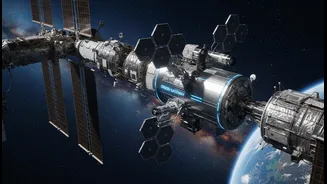
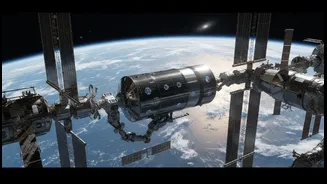
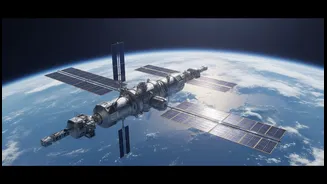
The International Space Station (ISS) stands as one of history's greatest engineering marvels, a continuously inhabited testament to global cooperation orbiting 400 kilometers above Earth. But after decades of service, the venerable station is showing
its age. With structural concerns mounting and an official retirement planned for 2030, NASA and its partners are preparing to deorbit the station in a controlled maneuver over a remote stretch of the Pacific Ocean. This planned end marks a pivotal moment, forcing a fundamental shift from a single, government-run platform to a dynamic marketplace of commercially owned and operated destinations in space. NASA has made it clear it will not build another ISS; instead, it plans to become a customer, buying services from private operators. This transition is critical to avoiding a gap in America's crewed presence in low Earth orbit.
A New Constellation of Players
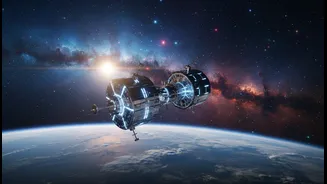
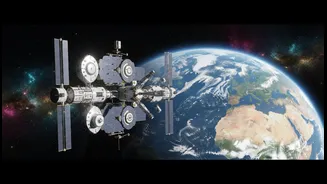
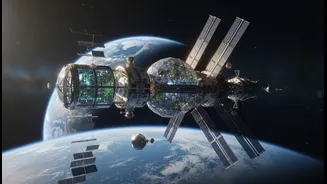
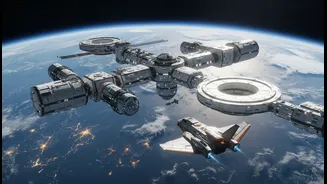
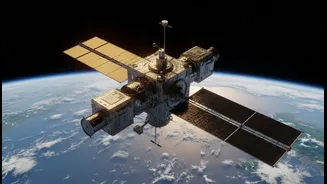
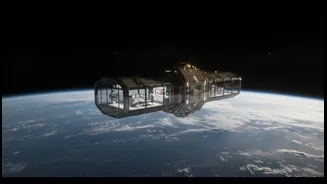
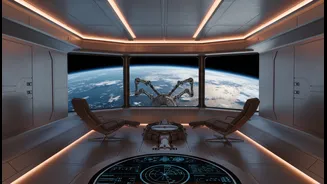
A new class of space entrepreneurs is racing to fill the void. Through its Commercial Low Earth Orbit Destinations (CLD) program, NASA is actively seeding this new industry. Several key players have emerged, each with a unique strategy. Axiom Space plans to first attach its modules to the ISS before detaching to become a free-flying station. The company has already flown several private astronaut missions to the ISS, gaining crucial operational experience. Another leading contender is Vast, which aims to launch its smaller, single-module Haven-1 station as early as 2027. Other major projects include Starlab, a joint venture between Voyager Space and Airbus, and Orbital Reef, a concept from Blue Origin and Sierra Space described as a "mixed-use business park" in orbit. After some uncertainty in early 2026, NASA has reaffirmed its commitment to supporting these free-flying commercial stations, releasing a draft request for proposals in July 2026 to formalize the next phase of its support.
The Billion-Dollar Business Model
How will these orbital outposts make money? The business model is a diverse portfolio of services that goes far beyond what the ISS was designed for. The primary anchor tenant for the near future will likely be NASA itself, purchasing crew time and research capacity to continue its microgravity experiments. Beyond that, a host of new markets are expected to open up. These include in-space manufacturing of high-value products like pharmaceuticals and advanced materials, dedicated research for private companies and universities, and media and entertainment projects. Space tourism and missions for foreign governments with their own national astronauts are also key revenue streams that companies like Axiom are already tapping into. The success of these ventures hinges on the assumption that falling launch costs, pioneered by companies like SpaceX, will make orbital access practical for a much wider range of customers.
Navigating the Final Frontier
The path to a vibrant commercial ecosystem in orbit is not without significant hurdles. The technical challenges of building, launching, and operating a human-rated space station are immense and incredibly expensive. While NASA's CLD program provides crucial seed funding, the total investment needed far exceeds government contributions, requiring companies to attract substantial private capital. Creating a sustainable business case remains a primary challenge, as the market for many proposed services is still nascent. Companies must prove not only that they can build safe and reliable stations, but that there is enough demand beyond NASA to sustain long-term operations. The race is on, not just to build the hardware, but to build the market itself. The next few years will be critical in determining whether these commercial pioneers can successfully launch not just stations, but a new and permanent economy in low Earth orbit.