



India’s Unblinking Eye on the Sun
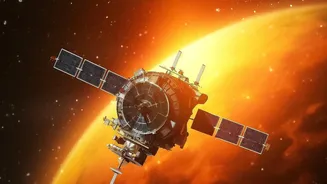
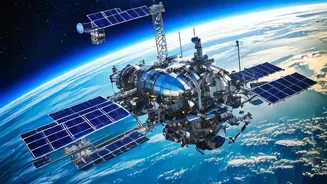
Launched by the Indian Space Research Organisation (ISRO), Aditya L1 is not just another satellite. It is India's first dedicated mission to study the Sun. After a journey of approximately 1.5 million kilometres, the spacecraft was placed in a special
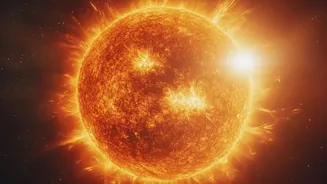
'halo orbit' around Lagrange Point 1 (L1). This unique spot provides an uninterrupted, 24/7 view of the Sun, free from any eclipses or occultations by Earth. Its primary mission is to observe the Sun's outer layers—the photosphere, chromosphere, and the corona—to understand the dynamics that drive solar activity and, consequently, space weather. Equipped with seven sophisticated instruments, Aditya L1 is poised to answer some of the longest-standing questions in solar physics.
What Are Solar Storms and Why Do They Matter?
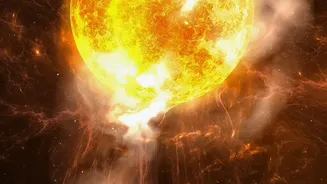
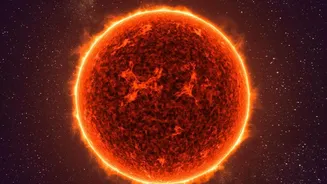
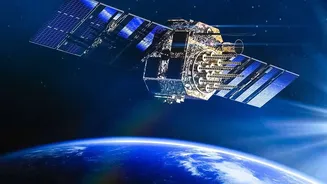
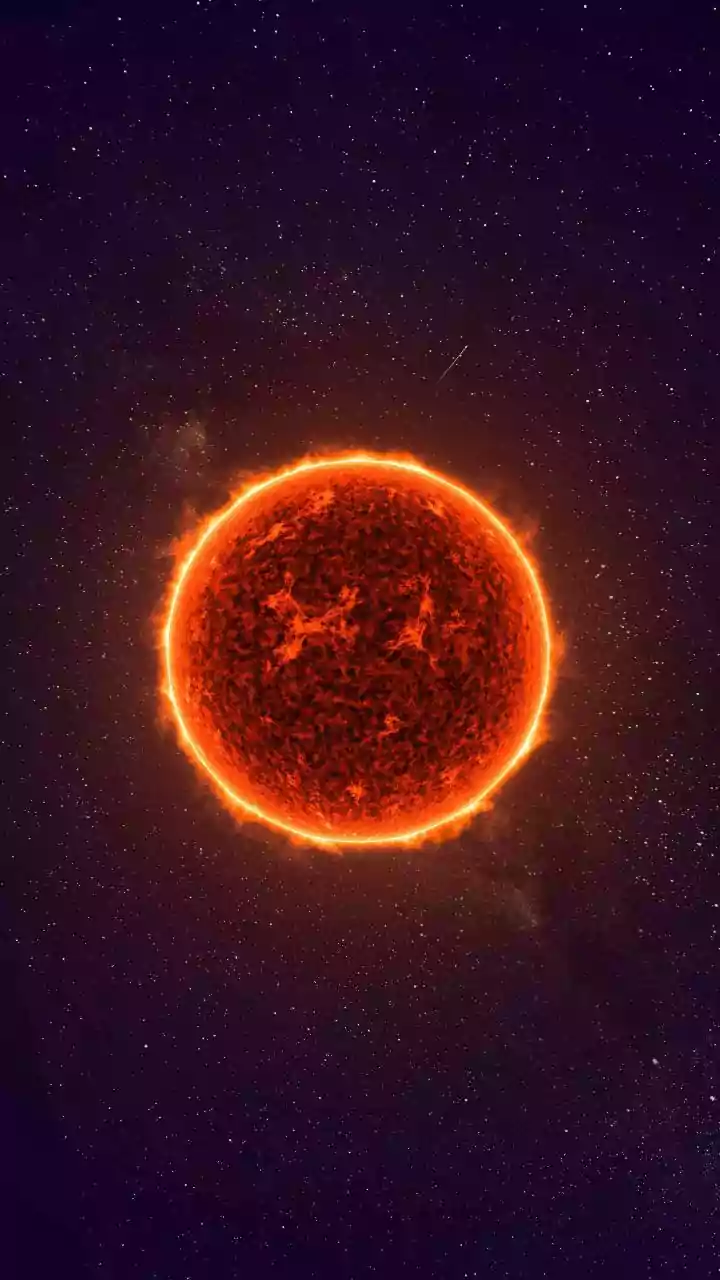
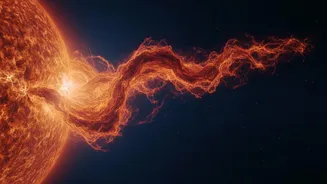
Imagine the Sun having a massive sneeze. That's essentially what a solar storm is. These events, which include solar flares and Coronal Mass Ejections (CMEs), involve the Sun releasing enormous bursts of energy, plasma, and magnetic fields into space. When a powerful CME is directed towards Earth, it can slam into our planet's magnetic shield, triggering a geomagnetic storm. In our hyper-connected world, the consequences can be severe. These storms can disrupt satellite communications, knock out GPS navigation, damage power grids, and pose risks to astronauts in space. As our reliance on technology grows, so does our vulnerability to the Sun's turbulent behaviour, making accurate prediction more critical than ever.
The Breakthrough Observations from Aditya L1
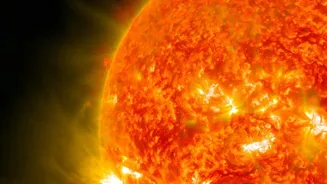
Aditya L1 has already delivered a wealth of groundbreaking data. The Solar Ultraviolet Imaging Telescope (SUIT) has captured high-resolution images of the Sun's lower atmosphere in the near-ultraviolet (NUV) wavelength range, a feat never accomplished before with such detail. These images have revealed the 'kernel' of solar flares, providing unprecedented insights into the initial moments of these explosive events. Another key instrument, the Solar Low Energy X-ray Spectrometer (SoLEXS), has observed a rare phenomenon called iron fluorescence during powerful X-class flares. This helps scientists pinpoint where these flares originate. Furthermore, the Visible Emission Line Coronagraph (VELC) is tracking CMEs closer to the Sun's surface than ever before, helping to solve mysteries like why the Sun's corona is millions of degrees hotter than its surface.
Better Predictions for a Safer Earth
The real magic happens when data from Aditya L1's different instruments are combined. By linking the ultraviolet observations from SUIT with the X-ray data from SoLEXS and coronagraph data from VELC, scientists can now connect the dots between activity on the Sun's surface and the subsequent eruption of a CME. This synergy fills a crucial gap in the prediction timeline. It allows for a more reliable forecast of which solar eruptions are 'geo-effective'—meaning they are likely to impact Earth. Having a clearer picture of a storm's structure, speed, and direction means we can get earlier and more accurate warnings. This advance notice gives operators of satellites, power grids, and communication networks precious time to take protective measures, mitigating potential damage and disruption.
A New Era for Indian Space Science
Aditya L1 is more than just a weather satellite for space. Its success marks a significant milestone for India, positioning the nation at the forefront of global solar research. The data collected is not just for Indian scientists; ISRO has committed to sharing these vital insights with the international community, contributing to a worldwide effort to understand our star. The mission is solving fundamental puzzles, such as the coronal heating problem, where the Sun's atmosphere is inexplicably hotter than its surface. Recent findings have suggested that the reconfiguration of magnetic fields could be the primary source of this intense heat. These discoveries are not only academically profound but also have practical implications for improving space weather models for generations to come.