



Light, crunchy, and endlessly versatile, puffed rice is a beloved snack across India. But this humble ingredient, known by names like murmura, muri, and pori, is more than just a uniform product; it's a reflection of regional culinary identity.
West Bengal's Zesty Muri
In West
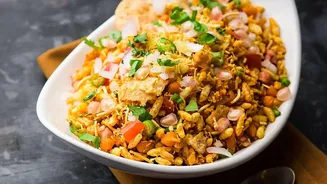
Bengal and the surrounding regions, puffed rice is called 'muri'. It is the star of the iconic street food, Jhalmuri, which translates to 'spicy puffed rice'. What sets Jhalmuri apart is its bold, pungent flavour, derived from a drizzle of raw mustard oil. This is tossed with finely chopped onions, green chillies, boiled potatoes, tomatoes, and a special spice blend known as 'muri masala'. Unlike its sweeter cousin, Bhel Puri, Jhalmuri is typically a drier, spicier snack that emphasizes sharpness and aroma over sweet and tangy chutneys. The result is a quick, zesty, and intensely flavourful snack that captures the essence of Kolkata's vibrant street food culture.
Maharashtra's Famous Murmura
Travel west to Maharashtra, and you'll find puffed rice called 'murmura' or 'kurmura'. Here, it forms the base of one of India's most famous chaat dishes: Bhel Puri. Associated with the bustling beaches of Mumbai, Bhel Puri is a delightful explosion of textures and flavours. Murmura is mixed with chopped onions, potatoes, and a generous amount of crunchy 'sev'. The key to its signature taste lies in the combination of sweet and tangy tamarind chutney and a spicy green chutney. This mixture creates a snack that is simultaneously soft, crunchy, sweet, sour, and spicy. Another popular Maharashtrian snack is Bhadang, a spicy, dry 'chivda' made by tempering murmura with garlic, peanuts, and red chilli powder.
Karnataka's Versatile Mandakki
In Karnataka, puffed rice goes by 'mandakki' or 'kadlepuri'. It is used to create a variety of popular evening snacks, with 'Churumuri' and 'Girmit' being the most well-known. Churumuri is a simple, dry snack where mandakki is tossed with freshly chopped onions, tomatoes, carrots, raw mango, and coriander, seasoned with chilli powder and lemon juice. Girmit, a specialty from the Hubballi-Dharwad region, is slightly more complex. It involves mixing the puffed rice with a prepared hot and sour 'gojju' or sauce made from onions, tomatoes, tamarind, and jaggery. Often served with a side of hot 'mirchi bajji' (chilli fritters), it makes for a hearty and satisfying snack. Another local preparation is Mandakki Usli (or Uggani), where the puffed rice is soaked and then cooked like an upma.
Odisha's Unique Mudhi
In Odisha, puffed rice is known as 'mudhi'. While it's enjoyed as a simple snack, its most famous application is in 'Mudhi Mansa', a delicacy from Baripada in the Mayurbhanj district. This unique dish pairs the light crunch of mudhi with a rich, spicy mutton curry (mansa tarkari). The puffed rice is mixed with the flavourful gravy, chopped onions, and green chillies, and served with pieces of tender mutton. This combination of crunchy mudhi soaking up the spicy meat gravy is a beloved local specialty and is even considered an essential part of wedding feasts in the region. It showcases a completely different way of using puffed rice, not just as a light snack but as a component of a substantial main course.
South India's Sweet Pori
In Tamil Nadu and Kerala, puffed rice is called 'pori'. While it's used in savoury preparations similar to other regions, one of its most cherished uses is in a sweet treat called 'Pori Urundai'. These are sweet,
crunchy balls made by binding puffed rice with a hot jaggery syrup,
often flavoured with cardamom and dry ginger.
Making Pori Urundai is especially popular during the Karthigai Deepam festival.
The key to a perfect Pori Urundai is achieving the correct 'hard ball'
consistency for the jaggery syrup,
ensuring the final product is firm and crunchy rather than sticky.
This sweet delicacy is a nostalgic treat for many and a testament to the versatility of pori in Southern cuisine.