




The Sun’s Hidden Temper
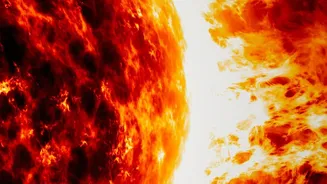
The Sun, our life-giving star, has a volatile side. It periodically releases enormous bursts of energy and matter in events known as solar flares and Coronal Mass Ejections (CMEs). A solar flare is an intense flash of radiation, while a CME is a massive
cloud of magnetised plasma hurled into space at speeds up to 3,000 kilometres per second. While flares can disrupt radio communications within minutes of erupting, it is the CMEs that pose the most significant threat to our infrastructure. If an Earth-directed CME collides with our planet’s magnetic field, it can trigger a powerful geomagnetic storm. These storms are the primary cause of what is broadly called 'space weather', and their effects can be felt right here on the ground.
A Fragile Digital World
Our 21st-century society is built on a complex web of technology that is surprisingly vulnerable to space weather. A severe geomagnetic storm can induce powerful electrical currents in long conductors like power lines and pipelines. These geomagnetically induced currents (GICs) can flow into electrical transformers, causing them to overheat and fail, potentially leading to widespread and long-lasting blackouts. History provides stark warnings. In March 1989, a solar storm caused the entire power grid of Quebec, Canada, to collapse in just 90 seconds, leaving millions in the dark for over nine hours. The most extreme event on record, the 1859 Carrington Event, caused telegraph systems worldwide to spark, catch fire, and shock their operators. A storm of that magnitude today could cripple satellite communications, disable GPS navigation, and cause trillions of dollars in economic damage.
Our Eyes on the Sun
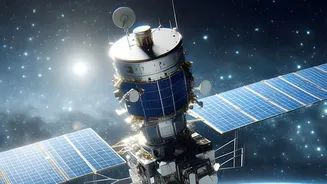
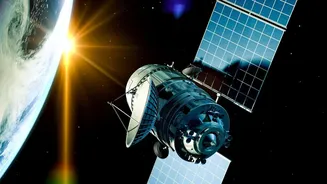
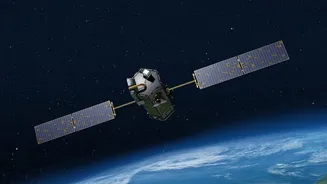
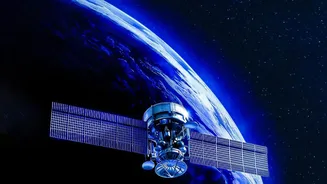
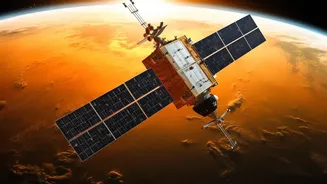
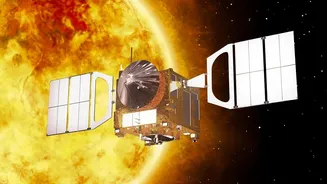
We cannot stop a solar storm, but we can see it coming. The key to defence is a robust early warning system. This is where a fleet of solar observatories, strategically positioned in space and on the ground, comes into play. Spacecraft like NASA's Solar and Heliospheric Observatory (SOHO) and the Deep Space Climate Observatory (DSCOVR) constantly monitor the Sun. By providing real-time data on solar wind and detecting CMEs as they erupt, these missions give us a crucial heads-up. A CME can take anywhere from 15 hours to several days to travel from the Sun to Earth, providing a valuable window to prepare for its impact. This network of solar sentinels forms a global surveillance system, working 24/7 to protect our planet from the Sun's fury.
India’s Solar Sentinel: Aditya-L1
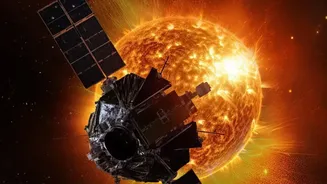
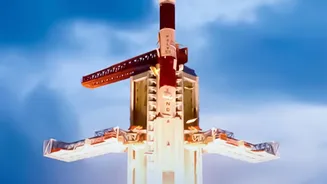
India has firmly established its presence in this critical field with the Aditya-L1 mission. Launched by ISRO, Aditya-L1 is the nation’s first space-based observatory dedicated to studying the Sun. It is positioned at Lagrange Point 1 (L1), a gravitationally stable point about 1.5 million kilometres from Earth, which allows it an uninterrupted view of the Sun. Equipped with seven advanced instruments, Aditya-L1 studies the Sun's atmosphere and magnetic field in unprecedented detail. In a significant breakthrough, scientists using Aditya-L1 have identified small, short-lived brightenings that occur hours before a major solar flare, offering a potential new method for earlier and more accurate forecasting. This capability enhances India’s self-reliance in space weather prediction and contributes vital data to the global effort.
From Warning to Action
The term 'defense' against solar storms doesn't mean a physical shield. Instead, it refers to mitigation strategies enabled by early warnings. When space weather agencies like NOAA's Space Weather Prediction Center issue a storm alert, it triggers a chain of protective actions. Power grid operators can reduce load on vulnerable transformers or temporarily take them offline to prevent catastrophic failure. Satellite operators can reorient their spacecraft to protect sensitive electronics or put them into a safe mode. Airlines can reroute flights, particularly those over polar regions, to avoid communication blackouts and elevated radiation levels. These proactive measures are the essence of our defence, turning a potentially devastating natural disaster into a manageable operational challenge.