






The Eighth Wonder of the World
Albert Einstein is often credited with calling compound interest the “eighth wonder of the world.” While the attribution might be legendary, the power it describes is very real. So, what is it? In simple terms, compounding is the process where your investment
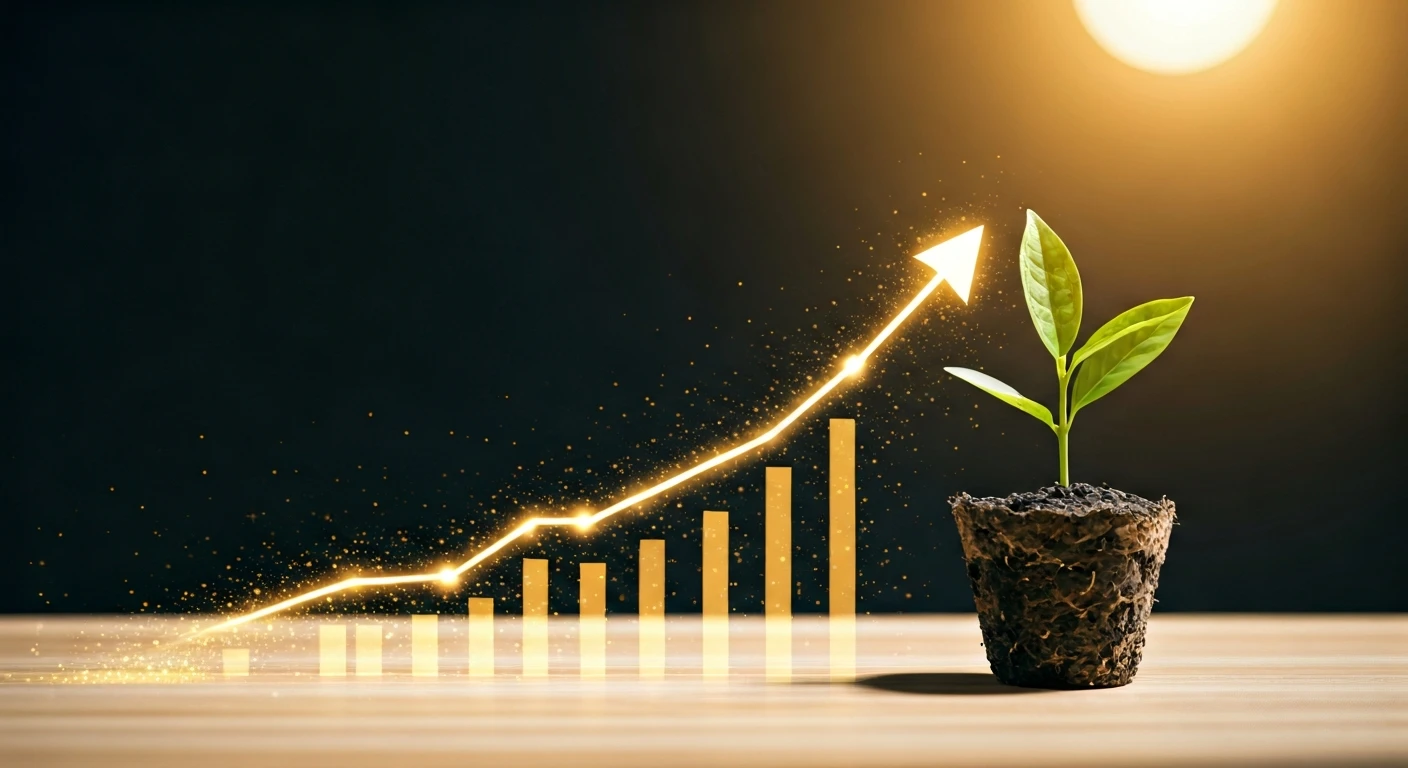
returns start generating their own returns. It's the snowball effect in action. Your initial investment (the principal) earns interest. The next year, you earn interest on both the principal and the previously earned interest. Over time, this cycle creates exponential growth, where your money starts working for you, and then the money it makes also starts working for you. It transforms a linear saving process into a powerful, self-fuelling engine for wealth creation.
A Tale of Two Investors
Let’s see this in action with a simple story. Meet Priya and Rahul. Priya starts a Systematic Investment Plan (SIP) of ₹5,000 per month on her 25th birthday. She invests consistently for 10 years and then stops, having invested a total of ₹6 lakhs. She leaves the accumulated amount to grow. Rahul, on the other hand, waits until he's 35 to start. He also invests ₹5,000 per month, but he continues for the next 25 years, right up to his retirement at 60. He invests a total of ₹15 lakhs. Assuming a conservative 12% annual return for both, who has more money at age 60? The answer is staggering: Priya. Her initial 10-year investment, which was left to compound for an extra decade, would grow to nearly ₹1.9 crores. Rahul, despite investing two and a half times more money, would end up with around ₹95 lakhs. Priya’s advantage wasn't how much she invested, but how early she started. Her money simply had more time to work its magic.
The Real Cost of Waiting
The story of Priya and Rahul highlights the true cost of delay. It's not just the missed contributions; it's the forfeiture of the most powerful years of compounding. The initial years of an investment's life are the most critical. This is when the foundation for future exponential growth is laid. Each year you wait, you are not just one year behind; you are surrendering the longest period of potential growth. The feeling of “I’ll start when I earn more” is a common trap. But as the math shows, starting with a smaller amount today is vastly more powerful than starting with a larger amount a decade from now. Time is the most valuable asset in your investment portfolio, and it's the one asset that, once spent, you can never get back.
Beyond Your Bank Account
This principle of ‘early advantage’ isn’t limited to finance. Think of it as the ‘compounding of life’. Learning a new language, a musical instrument, or a professional skill follows the same pattern. The small efforts you make early in your career—building your network, acquiring certifications, mastering a new software—compound over time. They open doors to opportunities that wouldn't exist otherwise. A person who reads 15 minutes a day builds a compounding library of knowledge that sets them apart years down the line. Similarly, small, consistent health choices made in your 20s and 30s—like regular exercise or a balanced diet—compound into a healthier, more energetic life in your 50s and 60s, preventing problems that are much harder to fix later. The logic is universal: early, consistent effort yields disproportionately large rewards over time.
How to Start Today
The best time to plant a tree was 20 years ago. The second-best time is now. Don't be discouraged if you feel you're late to the party. The key is to start. In India today, the barriers to investing have never been lower. You don't need a huge lump sum. You can start an SIP with as little as ₹500 through countless user-friendly mobile apps. Automate your investments so the money is invested before you have a chance to spend it. The goal isn't to get rich overnight; it's to build a habit. Make your first, small investment today. The future version of you will be profoundly grateful.