



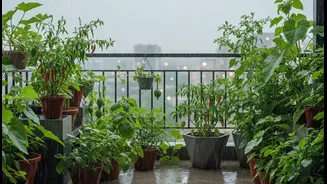
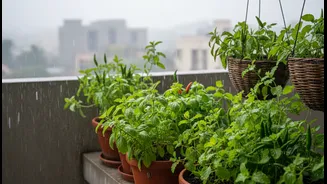
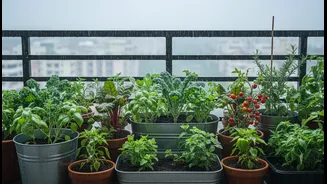


Mint: The Resilient Favourite
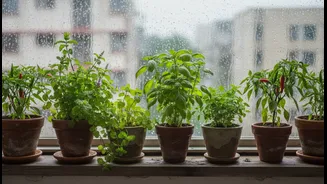
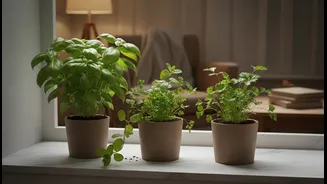
Known as 'pudina' in India, mint is one of the most forgiving and rewarding herbs for a beginner gardener. It's famously resilient and adapts wonderfully to the lower light conditions of a monsoon-season windowsill. In fact, mint often prefers partial
shade over harsh, direct sunlight. Its love for moisture makes it a natural fit for the humid monsoon climate, as long as its roots aren't waterlogged. To get started, you can easily propagate mint from a cutting taken from a mature plant. Place the stem in a glass of water, and within a few weeks, you'll see roots form. Plant it in a pot with good drainage, using a standard potting mix. Keep the soil consistently moist but not soggy, and trim the tips regularly to encourage a bushier plant. Soon, you’ll have a fresh supply for everything from morning tea to vibrant chutneys.
Coriander: The Kitchen Essential
No Indian kitchen feels complete without the fresh, citrusy aroma of 'dhania', or coriander. While it can be tricky to grow in intense heat, the milder temperatures and filtered sunlight of the monsoon season provide an ideal environment. Coriander thrives in the increased humidity and appreciates the gentle light from a cloudy sky, which prevents it from flowering too early, a process known as bolting. For a successful windowsill crop, start with whole coriander seeds, which you can gently crush to split them in two. Soaking them overnight can speed up germination. Sow the seeds in a pot that is at least six inches deep to accommodate its taproot, using a well-draining soil mix. Place it on a windowsill that receives four to six hours of indirect sunlight. Keep the soil moist, and you can begin harvesting the outer leaves once the plant is a few inches tall. Sowing a new batch of seeds every few weeks will ensure a continuous supply throughout the season.
Chives: The Subtle Allium
If you love the flavour of onion but want something milder and easier to manage, chives are your answer. These slender, graceful herbs are part of the onion family and are exceptionally well-suited for low-light indoor growing. They look like delicate green grass and deliver a subtle, fresh oniony taste perfect for garnishing soups, salads, and eggs. Chives are perennials that can be grown from seeds or bulbs. They are not demanding and will do just fine in a pot on a windowsill that gets a few hours of light each day. They prefer moist soil but are susceptible to rot if overwatered, so ensure your pot has good drainage. The best part about growing chives is the continuous harvest; simply snip the leaves near the base, and they will grow right back. Even their edible, light purple flowers can add a decorative touch to your dishes.
Lemon Balm: The Zesty Surprise
For a truly aromatic addition to your windowsill, look no further than lemon balm. A member of the mint family, it shares the same resilience and ease of care. Lemon balm thrives in containers and adapts well to partial shade, making it another excellent choice for monsoon gardening. The plant releases a delightful, fresh lemon scent when you brush past its leaves. This fragrance is more than just pleasant; the leaves can be used to make a calming herbal tea or add a zesty, citrusy note to salads and drinks. Grow it in a pot with good drainage and provide it with a few hours of indirect sunlight daily. Like mint, it prefers consistently moist soil. Regular trimming will not only give you leaves to use but will also keep the plant compact and lush, filling your home with its uplifting aroma.