




Plan Your Wardrobe Before You Pack
The secret to a light suitcase begins with your clothing choices. Instead of packing individual outfits, think in terms of a versatile capsule wardrobe. Opt for a neutral colour palette—like black, grey, navy, and beige—where every top matches every bottom.
This allows you to create numerous outfits from a few core pieces. Prioritise high-performance fabrics. A thin merino wool base layer provides exceptional warmth without the bulk of traditional cotton. These items serve as a warm foundation, meaning you can get away with fewer bulky sweaters. Planning your outfits in advance prevents you from throwing in last-minute items you won't wear.
Embrace the Three-Layer System
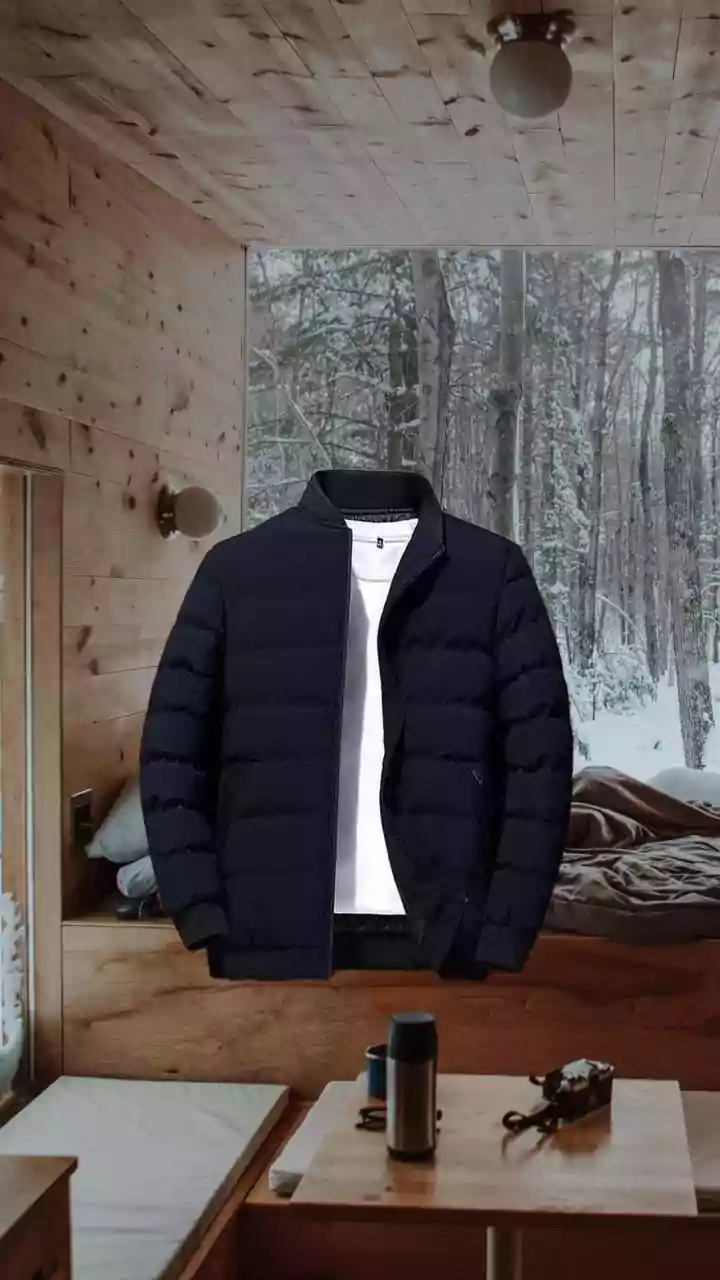
Rather than relying on one enormous, space-hogging coat, adopt the three-layer principle used by seasoned cold-weather adventurers. This system is both space-efficient and adaptable to changing temperatures. Your first layer should be a moisture-wicking base layer to keep you dry. The second is an insulating mid-layer, such as a fleece or a packable down jacket, which traps body heat. The third is a waterproof and windproof outer shell that protects you from the elements. This approach allows you to add or remove layers as needed and means you only need to pack thinner, more manageable garments instead of multiple heavy sweaters.
Master the Magic of Compression
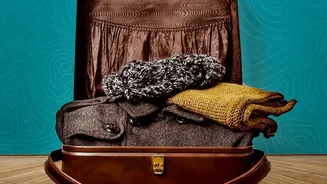
For truly bulky items like puffer jackets and thick sweaters, compression is your best friend. Vacuum-sealed bags are a game-changer, capable of reducing the volume of soft garments by up to 50% or more. Simply place your items inside, seal the bag, and roll or use a pump to force the air out. The result is a flat, dense package that takes up a fraction of the original space. Be mindful that this method can cause wrinkles, so it's best for items like down jackets, fleece, and casual sweaters. For clothes that you want to keep more organised, compression packing cubes offer a great alternative, providing structure while still squeezing out excess air.
Use Packing Cubes and Rolling Techniques
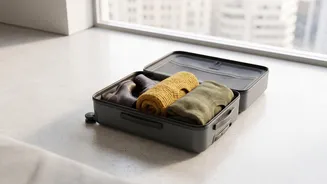
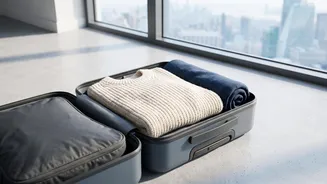
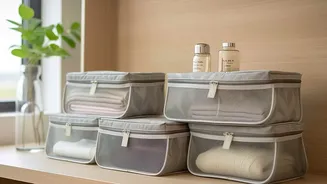
Packing cubes are essential for organisation and moderate compression. Group similar items together—one cube for tops, another for bottoms, and a third for undergarments. This not only keeps your trolley tidy but also makes it easy to find what you need without unpacking everything. To maximise space within the cubes, roll your clothes tightly instead of folding them. The 'ranger roll' method, where you tightly roll and tuck the garment into itself, is particularly effective at creating compact, secure bundles that won't unravel during transit. This combination of rolling and cubing turns a chaotic pile of clothes into a neat, easy-to-pack set of blocks.
Wear Your Heaviest Items on the Plane
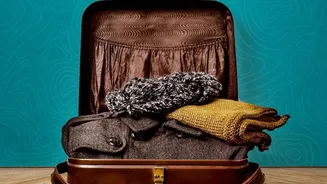
This is one of the simplest and most effective space-saving tips. Your bulkiest items—the heavy winter coat, the sturdy boots, and the thickest scarf—should never go in your suitcase if you can help it. Wear them onto the plane instead. While you might feel a bit warm running through the airport, you can easily remove the coat and use it as a blanket once you're on board. This single action can free up nearly half of your trolley's space, leaving ample room for other essentials. If you're traveling from a warm climate, you can still carry the coat over your arm until you board.
Optimise Every Inch of Space
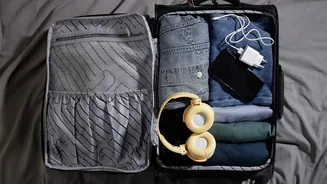
Think of your suitcase as a three-dimensional puzzle. Every empty space is an opportunity. Tuck smaller items like socks, underwear, and chargers inside your shoes. Place rolled-up belts along the perimeter of the suitcase to maintain its structure. Small pouches for toiletries or electronics can be squeezed into the gaps between packing cubes. By filling these voids, you create a denser, more stable pack that is less likely to shift during travel. This meticulous approach ensures that not a single inch of precious luggage real estate goes to waste.