




The Rise of the Seven-Kilo Rule
For years, the seven-kilogram carry-on limit felt like an arbitrary rule, but for modern travellers, it has become a guiding principle. The primary driver of this trend is the business model of low-cost carriers, which have made air travel more accessible
but at a cost. These airlines keep base fares low by unbundling services, turning checked luggage into a significant expense. For a budget-conscious backpacker, avoiding these fees means more money for actual experiences. Beyond savings, practicality is a major factor. Relying solely on a carry-on eliminates the dreaded wait at the baggage carousel and the anxiety of lost or delayed luggage. It offers unparalleled mobility, allowing travellers to navigate crowded airports, hop on and off trains, and check into hostels with ease. This agility is the new currency of modern travel. The 7kg rule, common across most Indian and international budget airlines, is also in place for safety and efficiency, ensuring overhead bins are not overloaded and boarding remains smooth.
A Mindset of Minimalist Freedom
Packing within a 7kg limit is more than just a financial decision; it's a philosophy. It forces a conscious shift from a 'just in case' mentality to a 'just what's necessary' approach. Minimalist travel is about reducing physical and mental baggage. With fewer possessions to manage, travellers can focus more on the present moment—the sights, sounds, and connections that make a journey memorable. This approach declutters the travel experience, reducing the stress of tracking multiple bags and making decisions about what to wear or use. The freedom of carrying your entire world on your back in a lightweight, manageable pack is liberating. It fosters resourcefulness and adaptability, proving that experiences, not things, are the true souvenirs. This conscious decision to travel light leads to a more intentional and unburdened adventure, where the focus is on exploration, not logistics.
Hack 1: Wear Your Heaviest Items
This is the oldest trick in the book for a reason: it's incredibly effective. Airlines weigh your bag, not you or the clothes on your body. Always wear your bulkiest and heaviest items during check-in and boarding. This typically includes your hiking shoes or boots, a jacket or hoodie, and your heaviest pair of trousers, like jeans. Layering a couple of shirts or wearing a coat can easily free up one to two kilograms of weight and significant volume inside your backpack. Once you're on the plane and settled, you can always remove the extra layers and stow them in the overhead bin or use your jacket as a pillow. It might feel a bit bulky for a few minutes at the gate, but it's a simple, no-cost way to stay compliant.
Hack 2: Switch to Solid Toiletries
Liquids are heavy, prone to leaking, and subject to security restrictions. The solution is to go solid. Today, there's a solid alternative for almost every liquid toiletry, including shampoo bars, conditioner bars, solid perfume, soap bars, and even toothpaste tablets. These products are highly concentrated, meaning a small bar can last for weeks or even months. They are lighter, spill-proof, and help you breeze through airport security without fumbling for a tiny plastic bag. Making the switch can significantly reduce the weight of your toiletry kit while also being a more environmentally friendly option. This single change is one of the most impactful for getting under the 7kg wire.
Hack 3: Embrace Multi-Purpose Gear
Every item in a seven-kilo bag must earn its place, and the best way to do that is by serving multiple functions. Instead of packing separate items for every conceivable situation, choose versatile gear. A classic example is a sarong or a large scarf, which can be used as a towel, a beach cover-up, a privacy screen in a dorm, a light blanket, or even a makeshift bag. A smartphone replaces a separate camera, map, guidebook, and flashlight. Think about clothing that can be dressed up or down, or a single pair of versatile, comfortable shoes that work for city walking and light trails. Packing multi-purpose items is the core principle of travelling smart and light.
Hack 4: Curate a Capsule Wardrobe
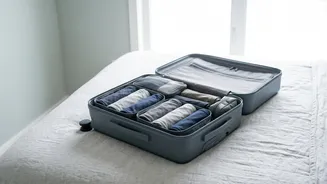
Instead of packing individual outfits, think in terms of a capsule wardrobe where every top matches every bottom. Stick to a neutral colour palette with one or two accent colours. This allows you to create numerous combinations from a small number of items. For a week-long trip, this might look like four versatile tops, two pairs of trousers or shorts, and one outer layer. Choose lightweight, quick-drying fabrics like merino wool or synthetic blends that can be easily washed in a sink and dried overnight. Rolling your clothes tightly or using packing cubes will further compress them, saving valuable space and keeping your bag organised, making it easier to find what you need without unpacking everything.