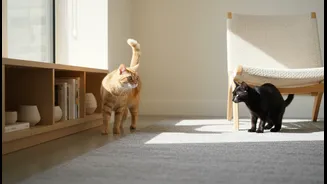






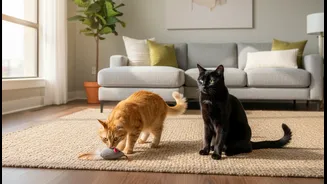


A Cat's World Is Scent and Territory
To a cat, territory is everything. It represents safety, resources, and predictability. In the wild, and in their minds, their space ensures they have access to food, water, and safe places to rest without competition. This territorial instinct doesn't
disappear just because they live in a cozy apartment. Cats mark their territory primarily through scent by rubbing their cheeks on furniture, scratching posts, and even you. This scent-marking creates a map of what is 'safe' and 'owned'. When a new, unknown cat suddenly appears, it’s not seen as a potential friend but as an intruder who poses a direct threat to this established safe zone. The resident cat’s immediate instinct is to defend its territory, leading to hissing, growling, and outright aggression.
The Mistake of a Face-to-Face 'Hello'
For humans, a face-to-face meeting is a polite way to introduce ourselves. For cats, it's a declaration of war. Forcing two unfamiliar cats together creates a high-stress 'fight or flight' scenario. Because neither cat can easily flee in a confined apartment, the 'fight' response is much more likely. This initial negative encounter can set the tone for their entire relationship, making it incredibly difficult to undo the damage. The stress can also manifest in other ways, such as hiding, urinating outside the litter box, or changes in eating habits for both the new and resident cat. Rushing the process sabotages the potential for a peaceful bond before it even has a chance to form.
The Foundation: A Separate Sanctuary
The golden rule of cat introductions is to start with complete separation. Before your new rescue cat even meets your resident cat, they need their own private room. This 'sanctuary' should be equipped with everything they need: food, water, a litter box, a comfortable bed, and toys. This separation serves two purposes. First, it allows the new, often-stressed rescue cat to decompress and acclimate to the general sounds and smells of your home in a secure environment. Second, it prevents a disastrous first meeting and allows you to control how and when the cats become aware of each other. This period of isolation can last from a few days to a week, depending on how quickly the new cat settles in.
Step 1: Introduction by Scent
Once the new cat is comfortable in its room, you can begin the introduction through their most powerful sense: smell. Start by swapping scents. Take a blanket or soft cloth that the new cat has slept on and place it in your resident cat's area, and vice versa. This allows them to investigate each other's smell without any physical threat. You can also brush each cat with the same brush to create a 'group scent'. Another key step is 'site swapping': allow the new cat to explore the main part of the apartment while your resident cat is temporarily placed in the new cat's sanctuary room. This lets them gather information about each other by exploring the other's marked territory, all without a stressful face-to-face confrontation.
Step 2: Gradual Visual Contact
When both cats are calm with scent swapping (no hissing or growling at the scented items or at the door), you can move to visual introductions. Do not simply open the door. Use a physical barrier like stacked baby gates or a screen door that allows them to see but not touch each other. Keep these initial visual meetings short and positive. Feed them special treats on their respective sides of the gate, so they start to associate the sight of the other cat with a pleasant experience. If there's any hissing or aggression, calmly end the session and try again later for a shorter duration. The cats’ body language will tell you when they are ready to progress; look for relaxed postures rather than stiff, tense bodies.
Step 3: Supervised Meetings
Only when the cats can see each other through the barrier without signs of stress should you attempt a supervised meeting in the same room. Choose a neutral space, and keep the initial interactions brief. Engage them in parallel play with wand toys to keep them distracted and create positive associations. It’s normal to see some mild hissing or swatting as they negotiate their new relationship, but you should be ready to calmly distract them with a loud clap or a toy if tensions rise. Never let them 'fight it out'. Gradually increase the duration of these supervised visits over several days or weeks until they can comfortably share the space without conflict.