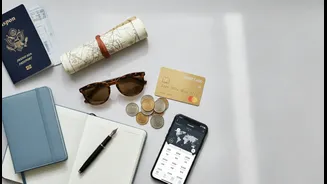







The Dual-Currency Dilemma
When you're overseas, it's easy to lose track of your spending. An item priced at 20 dollars or 15 euros might seem cheap, but when converted, that's over ₹1600. This mental gap between the foreign price tag and its actual cost in Rupees is where budgets
get broken. The key is to stop thinking of them as separate pools of money. Instead, view every foreign currency expense through the lens of your home budget. This mental shift is the first step to gaining control and making your money work for you, not against you, while you travel.
Your Pre-Trip Financial Toolkit
A stress-free trip starts with preparation. Before you leave India, create a solid financial plan. First, invest in a good multi-currency forex card. Cards from providers like Wise, Niyo Global, or HDFC Bank allow you to load foreign currency at a locked-in rate, often with zero markup fees, saving you from the 2.5% to 3.5% markup that standard Indian debit and credit cards charge. Next, exchange a small amount of cash in India for immediate expenses upon arrival, like taxis or snacks. Avoid exchanging large sums at the airport, where rates are notoriously poor. Finally, inform your bank about your travel dates to prevent them from flagging your card for unusual activity.
Choosing Your Payment Weapons
The best strategy is a mixed approach. A multi-currency forex card should be your primary tool for most payments, as it offers the best rates and security. They are widely accepted and save you the hassle of carrying large wads of cash. Your regular Indian credit card can serve as a reliable backup, but be mindful of the foreign transaction fees that can range from 1% to 3.5% plus GST. Use cash for small purchases, tipping, and at places that don't accept cards. Carrying about 20% of your budget in cash and the rest on a forex card is a balanced approach.
The App That Does the Math for You
To keep your Rupee and local currency budgets truly on the same page, use a smart budgeting app. Apps like Wallet by BudgetBakers, Spendee, or Lunch Money are designed for travellers and support multiple currencies. Before you even leave, set your total trip budget in Rupees. As you spend in the local currency, log each expense in the app. It will automatically convert the amount back to Rupees based on real-time exchange rates, showing you exactly how much of your overall budget you have spent. This real-time tracking eliminates guesswork and gives you a clear, consolidated view of your financial standing at all times.
Beware the 'Polite' Currency Scam
When paying with your card abroad, you will often be asked: “Would you like to pay in Rupees or the local currency?” This is a trap called Dynamic Currency Conversion (DCC). While it seems helpful, always choose to pay in the local currency. If you choose Rupees, the merchant applies their own, often terrible, exchange rate, which can be up to 10% higher than your bank's rate. By insisting on paying in the local currency (e.g., Euros in Europe, Baht in Thailand), you ensure that your own bank or card provider handles the conversion at a much more favourable rate. This single choice, made consistently, can save you a significant amount of money over your entire trip.