





A Cosmic Portrait
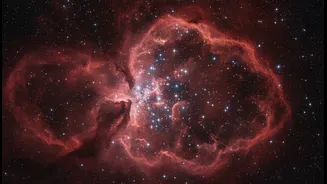
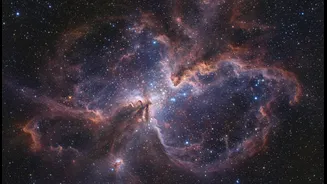
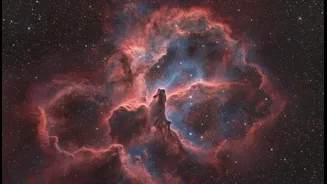
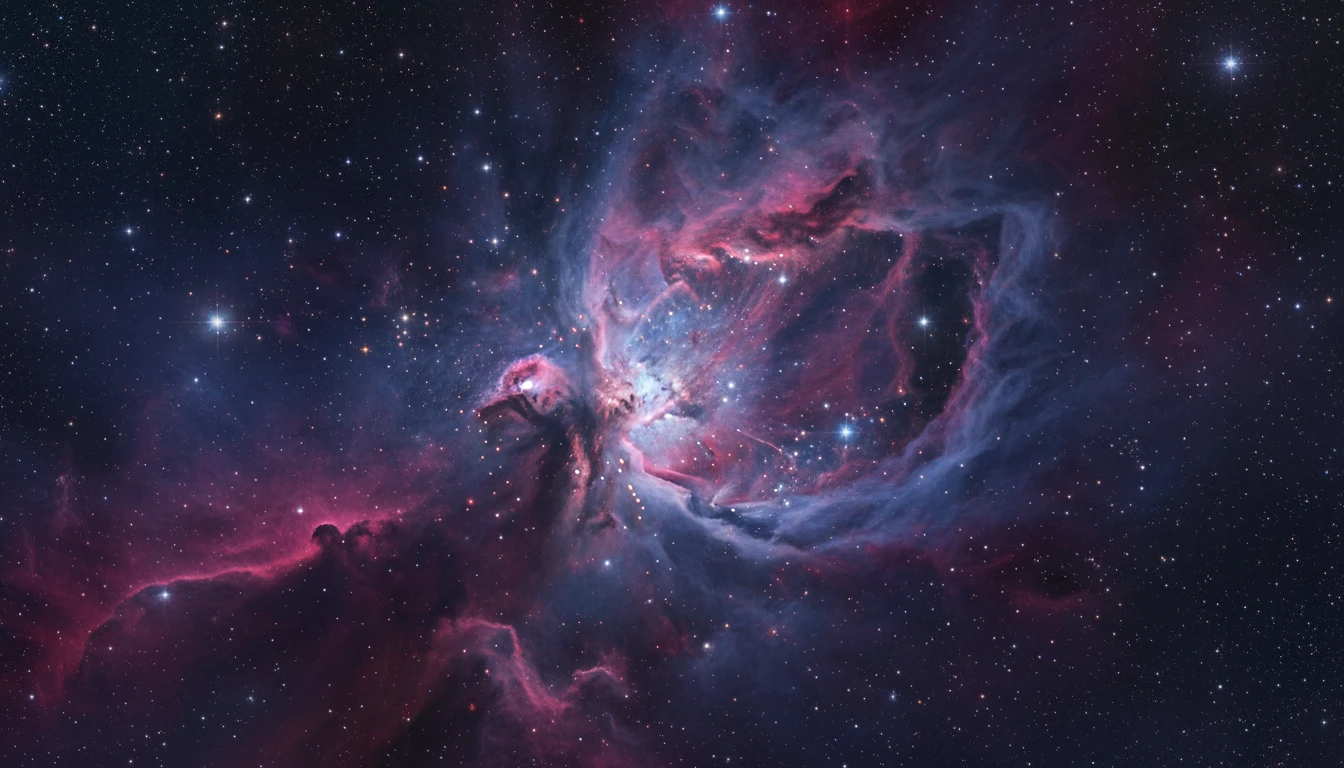
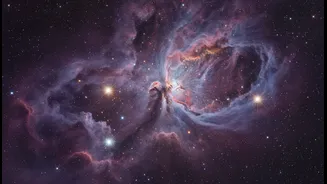
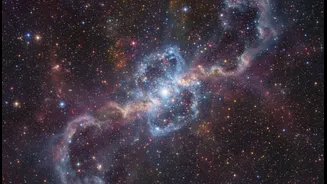
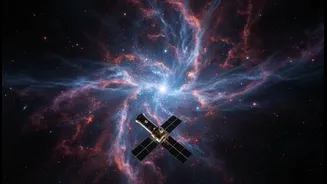
The new image, captured by the venerable Hubble Space Telescope, showcases a region known as LH 95. Located in the Large Magellanic Cloud, a dwarf galaxy that orbits our own Milky Way, this area is a hotbed of stellar creation. The photograph is a dramatic
canvas of colour and light. Brilliant blue and white stars sparkle against glowing crimson clouds of hydrogen gas. NASA has compared the scene to fireworks shining through drifting smoke. These vibrant colours are not just for show; they tell a scientific story. The striking crimson glow comes from hydrogen-alpha emissions, a telltale sign that new stars are actively forming within the gas. Dark lanes of thicker dust can be seen winding through the nebula, resisting the powerful forces of the newborn stars.
Inside the Stellar Nursery
LH 95 is what astronomers call a stellar association—a loosely connected group of stars that all formed from the same massive cloud of gas and dust. It's an extraordinary cosmic laboratory because it contains around 2,500 young stars in various stages of their development, all coexisting. This includes everything from low-mass infant stars, still growing, to massive blue giants that burn with incredible intensity. By studying a single region with multiple generations of stars living side-by-side, scientists can piece together a clearer timeline of how star formation unfolds over millions of years. It’s like having a family portrait that shows great-grandparents, parents, and newborns all in one frame.
The Power of Massive Stars
The most dominant features in the image are the brightest blue stars, some of which possess at least three times the mass of our Sun. These stellar heavyweights are immensely powerful. They blast the surrounding area with intense ultraviolet radiation and fierce stellar winds. These forces are responsible for sculpting the nebula, carving out cavities in the gas and heating it until it glows, creating the spectacle Hubble has captured. While these giants live fast and die young, their influence is crucial in shaping their cosmic neighbourhoods. The energy they pump into the nebula can trigger the collapse of nearby gas clouds, leading to new waves of star formation, but also blow away the raw material, halting the process in other areas.
What We Are Learning
This detailed view of LH 95 is providing fresh insights into a crucial, but often hidden, phase of a star’s life. Astronomers have been able to confirm that the youngest stars in the nursery are still actively growing. These "pre-main-sequence" stars are still pulling in gas and dust from the disks that surround them. The observations have helped researchers confirm that this process of accretion, or gathering material, naturally slows down as the stars age. This extends an important stage of stellar development, giving us a better understanding of the timeline for how stars like our own Sun come into being. The image serves as another reminder of the Hubble Space Telescope's enduring power, continuing to deliver fundamental scientific discoveries more than three decades after its launch.