




You may never get to visit Saturn’s largest moon, but your name can. NASA is offering a once-in-a-lifetime chance for the public to be part of a historic mission by sending their names to the alien world of Titan.
Your Name on a Mission to an Alien World
NASA has launched the 'Journey to Titan'
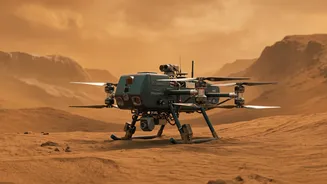
campaign, a public engagement initiative inviting people worldwide to add their name to a microchip that will travel aboard the Dragonfly rotorcraft. This car-sized, nuclear-powered drone is set to launch in 2028 on a multi-year journey to Titan, arriving in 2034. The campaign is similar to previous successful projects that sent millions of names to Mars on the Perseverance rover and to Jupiter's moon Europa aboard the Europa Clipper. By participating, your name will be etched into the history of space exploration, flying alongside a cutting-edge scientific vehicle on a quest to unlock some of the solar system's deepest secrets.
How to Get Your Boarding Pass
Becoming a symbolic passenger on this extraordinary journey is simple. Members of the public can visit NASA's official campaign website (go.nasa.gov/dragonfly-names) and fill out a short form to have their name included. Upon submission, participants receive a personalized digital 'boarding pass' as a commemorative keepsake of their role in the mission. The opportunity is open to everyone, but there is a deadline. All names must be submitted by 11:59 p.m. EST on January 15, 2027, so be sure to sign up before time runs out.
Destination: The Enigmatic Moon Titan
So, why Titan? Saturn's largest moon is one of the most compelling destinations in our solar system. It is the only moon with a thick atmosphere, which is four times denser than Earth's. Titan boasts an Earth-like landscape of rivers, lakes, and seas, but these are filled with liquid methane and ethane, not water. Its surface is covered in dunes made of frozen hydrocarbon grains and it features a rich diversity of organic materials. Scientists believe Titan's environment may resemble a frozen version of early Earth, making it a unique natural laboratory to study prebiotic chemistry — the chemical processes that occurred before life emerged.
Meet Dragonfly, the Revolutionary Rotorcraft
The Dragonfly mission is unlike any other planetary exploration mission attempted before. Instead of a stationary lander or a slow-moving rover, NASA is sending a dual-quadcopter designed to fly through Titan's dense, calm atmosphere. This will allow Dragonfly to travel miles in a single flight, visiting dozens of geologically diverse locations over its planned 3.3rd year mission. The rotorcraft will land, collect samples, and analyze them with a suite of onboard instruments, searching for clues about the building blocks of life. Its primary destinations include vast dune fields and the Selk impact crater, where liquid water may have mixed with organic compounds in the past.
A Cosmic Message in a Bottle
Sending names into space has become a beloved tradition for NASA, a way to connect the public with the grand endeavor of exploration and share in the journey. This 'message in a bottle' concept carries a powerful symbolic weight, representing humanity's collective curiosity and desire to reach for the stars. As Nicky Fox, associate administrator of NASA's Science Mission Directorate, stated, the Dragonfly mission will 'simply blow your mind'. She noted that by flying the first ever rotorcraft science mission, NASA is exploring a world similar to our own in the search for habitability. By adding your name, you become part of this incredible story, a silent passenger on a billion mile flight to a world that could redefine our understanding of life in the universe.