




The Age of the Red Ball
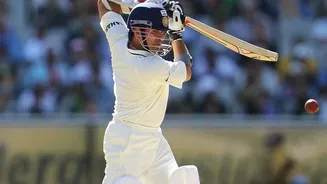
For decades, cricket knew only one colour: red. The deep cherry red ball, used in Test matches, was perfectly visible against the traditional white clothing worn by players during daytime play. When One-Day International cricket began in 1971, it naturally
adopted the red ball and white kits. The first few World Cups, including India's historic 1983 win, were all played with the red ball. However, the red ball has a significant drawback: it's incredibly difficult to see under artificial floodlights, appearing brownish and blending in with the pitch. This limitation meant that cricket's shorter format was confined to daylight hours, limiting its broadcast and audience potential.
A Media Revolution Brings Change
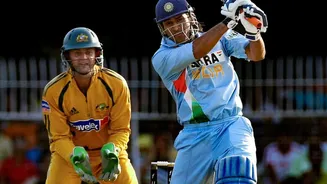
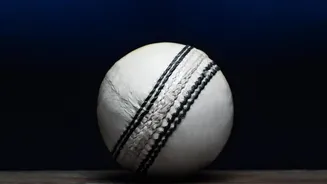
The major shift came not from cricket's governing bodies, but from a rebellion. In 1977, Australian media mogul Kerry Packer, frustrated at being denied the broadcast rights for Australian cricket, launched his own breakaway competition called World Series Cricket (WSC). Packer’s vision was to make cricket a primetime television spectacle. To do this, he introduced a series of radical innovations designed for TV: matches played at night under floodlights, colourful team uniforms instead of whites, and, crucially, a ball that everyone could see. The white ball was introduced specifically for these night matches, making it easily visible for players, umpires, and television viewers alike against the coloured clothing and the dark sky.
The White Ball's Unique Character
The switch was not just cosmetic. The white ball behaves very differently from the red one. While both are made of cork, string, and leather, the manufacturing process differs. The red ball is dyed, allowing it to wear naturally and assist with reverse swing later in an innings. The white ball, however, is painted and coated with a polyurethane finish to maintain its colour. This makes it swing conventionally far more in the early overs, but it also causes the ball to deteriorate faster. It tends to lose its shine and hardness quickly, becoming softer and making big-hitting more difficult as the innings progresses.
Solving the Durability Puzzle
The rapid deterioration of the white ball created a new problem. After about 30-35 overs, the ball would become discoloured, soft, and difficult for both batsmen and fielders to see. It also largely neutralised the contest between bat and ball, as reverse swing was almost non-existent. To solve this, the ICC introduced a rule in 2011 to use two new white balls in each innings, one from each end. This meant that at the end of 50 overs, each ball was only 25 overs old. This kept the ball harder and more visible throughout the innings, leading to an era of higher scores as batsmen found it easier to hit a hard ball, but it also controversially took reverse swing almost completely out of the game.